Where Did Yoga Come From? Its Meaning, Early Texts and What Scholars Can Say

by on July 22nd, 2011

The old version of this post opened with a list of modern worries (stress, a sedentary lifestyle, toxins in food and air) and then said that yoga “was developed over 5,000 years ago in India,” that it “predates all other religions,” and that its “holistic benefits” suit everyone. The history is more interesting, and less certain, than that. This rewrite looks at what yoga means, where it first appears and what the evidence does not show.

What does the word “yoga” mean?

The old post is right that yoga is a Sanskrit word connected with the idea of union, and that it is often explained as “to join” or “to yoke.” The Bhagavad Gita, one of the best-known Indian texts, defines it in several ways, including equanimity and skill in action. In many traditions the aim is a union of the individual self with a universal self, which is how the old post described it. That is a spiritual goal, not something research can measure, and today many people practice yoga for exercise and relaxation instead.

How old is yoga?

The old claim of 5,000 years cannot be proven. In the introduction to their scholarly collection Roots of Yoga, the historians James Mallinson and Mark Singleton write that before about 500 BCE there is very little evidence in South Asian texts or archaeology for systematic, psychophysical techniques of the kind the word “yoga” later came to describe. The Rig Veda, the oldest Sanskrit text (dated to the fifteenth to twelfth centuries BCE), points to visionary meditation, and a hymn to a long-haired sage suggests an ascetic tradition like that of later yogis. But they call it “entirely speculative” to claim that the Vedic texts show evidence of systematic yoga practice.

Some older books also point to a carved seal from the Indus Valley civilization as showing a figure in a yoga pose. Scholars such as Geoffrey Samuel, Andrea Jain and Wendy Doniger now describe that reading as speculative, so it cannot be used to date yoga. A fair summary is that yoga-like practices go back well over two thousand years, and that the precise starting point is unknown.

Where is yoga first written about?

Ideas about yoga appear in the early Upanishads, philosophical texts from the first half of the first millennium BCE, and in the Bhagavad Gita, which the old post alludes to when it talks about yoga as a path. The Yoga Sutras attributed to Patanjali are the best-known classical text, and our guide to Patanjali’s Yoga Sutras explains why the date is debated. Much later, texts on hatha yoga describe the postures and breathing methods that most Americans now think of as yoga. According to Mallinson and Singleton, by the late eighteenth century hatha yoga techniques held a “virtual hegemony” across many yoga-practicing traditions in India.

Is yoga a religion?

The old post said that yoga is a spiritual path but that you do not have to make an ethical decision to practice, and that people of any background can take part. Britannica’s article on Hinduism is similar: yoga may be atheistic or theistic and may adopt various philosophical or religious principles. Practiced in a gym or studio, yoga is usually taught as exercise and relaxation, but you can ask a teacher how much spiritual material their classes include. See the Britannica entry on yoga in Hinduism for more background.

What did the old post get wrong?

The claim that yoga “predates all other religions” is not something history can support, and the line that yoga “purifies” the mind and body with “cleansing thoughts and food” should not be taken as a health claim. Yoga is not a cure or a detox; see how yoga became popular in America and what the numbers show and yoga explained: what it is and what the research supports for what studies do say. If you want to try it, start with a beginner class and a qualified teacher, as the NIH advises.
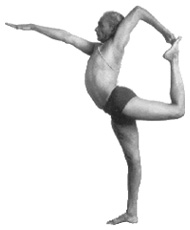
Origins of Yoga

Origins of Yoga

Yoga in Your Hands Mudras

by on July 20th, 2011

Energize your meditation practice with the use of mudras. Mudra means hand gesture, and the best known mudra is the Jnana Mudra where the thumb and the index finger touch. This mudra or gesture represents, “the oneness of humanity with cosmic consciousness.” If you try this mudra while in meditation, you may feel the sensation of energy cycling through and around you. In her book, Ms. Hirschi demonstrates over 70 mudras that range from assisting you with weight-loss (Ling Mudra, pg. 72) to mudras that help with enlightenment (Bhumisparsha Mudra, pg. 156). “Mudras, Yoga in your Hands,” is a wonderful resource to have on your journey of health and well-being.

Yoga for the hands–sounds too good to be true. Do it at the office, on an airplane, lying in bed. Seasoned yoga teacher Gertrud Hirschi has used these hand postures to ease asthma, relieve flu symptoms, think more effectively, relieve tension, even have a bowel movement. The possibilities she attributes to these ancient Indian techniques are endless. Join the tips of the index finger and thumb: this clears the mind. Switch the thumb to the little finger: this restores the body’s fluid balance. It’s not quite that easy, of course. Hirschi is careful to lay out exercise regimens, related herbal remedies, and associated affirmations. Like a classroom instructor, she guides with simultaneous breathing advice and conjures up helpful images. From building character to healing emotional pain, from bringing luck to connecting with the divine, mudras can work wonders. Now limber up those digits and lets get into spiritual shape.

View this book on Amazon (affiliate link: we may earn a commission at no cost to you)

A Guide to Practice Kripalu Yoga

by on July 18th, 2011

A Guide to Practice On and Off the Mat
Beginning with step-by-step “experiences” that teach essential body and breath awareness, Kripalu Yoga features fully illustrated routines for beginners and intermediate students , including Kripalu’s easy-to-follow “press point” instructions. For advanced students, there is a broad menu of additional poses to increase strength, flexibility, and challenge.
Far more than an exercise program, Kripalu Yoga also teaches the lifestyle practices and energy techniques that make yoga a powerful catalyst for physical healing, psychological growth, and spiritual awakening.

“Over an extraordinary thirty year history, Kripalu Center has been a pioneer in combining authentic yoga with a contemporary Western lifestyle.” —John Abbott, President, Yoga Journal
From the senior teachers of the world-renowned Kripalu Center for Yoga & Health–the largest yoga and retreat center in North America–comes this comprehensive guide to the unique and influential Kripalu method, which emphasizes individual growth over outward perfection of form, making it accessible to people of all ages, fitness levels, and body types.

View this book on Amazon (affiliate link: we may earn a commission at no cost to you)

Choosing a Facial Skin Care Product

by on July 16th, 2011

Choosing a facial skin care product

When it comes to skin care, facial skin care seems to top the chart. There are lots of facial skin care products available in the market. The most common facial skin care products are the ones used as part of a daily routine, such as cleansers and moisturizers. Toners and exfoliators are well known too, but fewer people use them.

The general classification of facial skin care products is based on the following:

* Gender (there are facial skin care products for men and facial skin care products for women)
* Skin type (facial skin care products for oily skin, for dry skin, for normal skin and for sensitive skin)
* Age (facial skin care products for older and for younger skin)
* Skin problems (i.e. facial skin care products for the treatment of different skin conditions like eczema, acne etc.)

So that is your first tip for picking a facial skin care product that suits you. A good way to start is by working out your skin type. Also note that skin type changes with age, so the facial skin care product that suits you today might not suit you forever, and you need to keep checking how well your product works.

Facial skin care products come in many forms, such as creams, lotions, gels and masks, and many people like to argue about which form is best. However, no form is really better than another. What suits you (and whatever you are comfortable with) is the best form of facial skin care product for you.

However, it is important to note that these products work differently for different people. So the best approach is to test the facial skin care product on a small patch of skin (e.g. behind the ear) before you start using it.

Another important factor is the condition of your skin. If you suffer from a skin problem of any kind, it is best to ask a dermatologist for advice before you choose and start using a facial skin care product.

Once you have chosen a facial skin care product, make sure you use it in the right way, i.e. follow the instructions for application, use the correct quantity and make the product a regular part of your skin care routine.

Bringing Yoga to Life by Donna Farhi

by on July 13th, 2011

Internationally renowned and bestselling author Donna Farhi moves yoga practice beyond the mat into our everyday lives, restoring the tradition`s intended functionas a complete practical philosophy for daily living.

Expanding upon the teachings of Patanjali`s Yoga Sutras, the core text of the yoga tradition, Donna Farhi describes yoga`s transforming power as a complete life practice, far beyond its common reduction to mere exercise or stress management. This is the philosophy of yoga as a path to a deeper awareness of self. Drawing upon her years of teaching with students, Farhi guides readers through all the pitfalls and promises of navigating a spiritual practice.

Farhi`s engaging and accessible style and broad experience offer important teachings for newcomers and seasoned practitioners of yoga alike. And because her teachings of yoga philosophy extend into every corner of daily life, this book is an equally accessible guide to those seeking spiritual guidance without learning the pretzel bendings of the physical practice itself. As one of the top teachers worldwide, Farhi`s exploration of the core philosophy of yoga is destined to become an instant classic.

Book: Bringing Yoga to Life by Donna Farhi
View this book on Amazon (affiliate link: we may earn a commission at no cost to you)