Archive for April, 2007

How to Make Vegetarian Chili Taste Better: Easy Flavor Fixes, Toppings & Leftovers

by on Wednesday, April 18th, 2007

The featured image above is an AI-generated illustration of vegetarian chili, not a photo of a dish the author cooked.

A pot of vegetarian chili can be simple, affordable and satisfying. Yet even when you use good beans, tomatoes, vegetables or plant-based crumbles, the first spoonful can taste a little flat. Usually, you don’t need to start over. A few small adjustments to the seasoning, texture and finishing ingredients can help.

This guide is an update to a short Veggie Blog kitchen diary entry published on April 18, 2007. In it, the writer made chili from a recipe in the book Meatless Meals for Working People, added Lightlife meatless crumbles, and estimated the protein at about 16 grams. The writer’s own verdict was that more chili powder and more seasoning on the crumbles would have helped. That is a useful cooking lesson to revisit: adding a meat substitute doesn’t automatically give chili a rich, balanced flavor.

Below, you’ll find how to make vegetarian chili taste better, how to rescue common problems, which toppings work well, and what to do with leftovers. This is a companion guide, not a new recipe. The recipe from the book is reprinted in our original vegetarian chili recipe post, which uses 1 teaspoon of chili powder for six servings, so there is plenty of room to adjust to taste.

Why Does Vegetarian Chili Sometimes Taste Bland?

Chili flavor depends on several components working together: aromatic vegetables, spices, salt, acidity, a savory base, and enough cooking time for everything to come together. A pot can have plenty of beans yet still seem dull if one of those elements is missing.

For example, adding dry chili powder at the very end may give you heat without the rounded flavor you expected. Using a low-sodium tomato product is convenient, but it may mean the pot needs more salt than usual. And plant-based crumbles often benefit from their own seasoning, because they don’t necessarily bring a deep browned flavor to the dish.

The first question to ask is not simply “How can I make it hotter?” but “What’s missing: salt, warmth, tang, thickness or savoriness?” Correcting that specific issue works better than tipping in random spices.

10 Ways to Make Vegetarian Chili More Flavorful

1. Build a base with onion and garlic

When you’re starting a new pot, soften chopped onion in a little oil before adding garlic. Give the onion several minutes to turn translucent and lightly golden. Add garlic for the final 30–60 seconds so it smells fragrant without burning. This simple foundation works whether the chili contains beans, lentils, vegetables or meatless crumbles.

For chili that’s already cooked: sauté a small amount of onion and garlic separately, then stir it in and simmer briefly. Don’t add raw onion late unless you want a noticeably sharp bite.

2. Bloom spices before adding more liquid

Chili powder, ground cumin, smoked paprika and oregano taste more integrated when heated briefly in a little oil with the sautéed vegetables. About 30 seconds to a minute over moderate heat is usually enough. Stir continuously: powdered spices can burn quickly, especially if the pan is dry.

If your chili is finished and needs a boost, heat a teaspoon of oil in a small pan, add a little extra chili powder and cumin, stir for 20–30 seconds, then mix the fragrant oil into the chili. Start with small quantities and taste again after a few minutes.

3. Season plant-based crumbles separately

This tip follows directly from the 2007 diary entry. Plant-based crumbles are convenient, but their flavor and salt levels vary by brand. Read the package instructions, as different products are handled differently.

If the instructions allow pan-browning, cook the crumbles in a skillet with a little oil, onion powder, cumin, smoked paprika or a spoon of tomato paste before adding them to the pot. Light browning can give the pieces a more satisfying texture. Taste before adding more salt, because prepared meat alternatives can already contain plenty.

For an alternative without packaged crumbles, try cooked brown lentils, finely chopped mushrooms, or a combination of beans and walnuts (if no nut allergy is present). Each gives a different texture, and none is guaranteed to taste just like meat.

4. Use tomato paste for depth

A tablespoon or two of tomato paste can make a chili seem fuller and more concentrated. In a new recipe, fry the paste with the aromatics for a minute before adding the canned tomatoes or stock. In finished chili, stir a spoonful into a little hot liquid until smooth before adding it back to the pot.

Tomato paste thickens as well as flavors, so don’t add too much at once. If your chili is already intensely tomato-forward, try another adjustment first.

5. Add a savory note, not just heat

A little umami can help vegetarian chili feel more complete. Options include sautéed mushrooms, a small splash of soy sauce or tamari, nutritional yeast, or a modest amount of miso stirred in toward the end. Choose one and start small, because some of these are salty. For gluten-free chili, check that the soy sauce, tamari, crumbles and other packaged seasonings meet your dietary needs.

You don’t need all of these additions. Sometimes the simplest fix is a few more minutes of simmering with proper seasoning.

6. Balance with acidity at the end

When a chili tastes heavy or muted but already has enough salt, a little lime juice or red-wine vinegar can brighten it. Add about ½ teaspoon at a time to a medium pot, stir, taste, and stop when the flavors feel livelier. Tomatoes contribute acidity too, so taste before adding more.

Too sour already? Skip the vinegar. Cook a little longer, add more beans or vegetables if appropriate, and check whether it needs salt or a small amount of sweetness to rebalance. Don’t automatically add sugar to every chili.

7. Adjust salt carefully and in stages

Salt can make spices and tomatoes taste more distinct, but too much is hard to reverse. Taste a spoonful once the chili has simmered, add a small pinch of salt, stir well, and give it time to dissolve before tasting again. Remember that canned beans, broth, packaged crumbles and toppings such as cheese may already contribute sodium.

If you need to reduce sodium, try herbs, spices, lime and unsalted ingredients instead of simply adding more salt.

8. Give it a gentle simmer

Even a fast weeknight chili can benefit from 15–25 minutes at a gentle simmer once the ingredients are cooked. This helps tomatoes, spices and beans blend together. Stir periodically, especially if your pot contains dense crumbles or lentils that can settle at the bottom. Add a splash of water or broth if it becomes too thick.

A longer simmer is optional rather than a rule: the right timing depends on whether you’re working with canned beans, fully cooked lentils or ingredients that still need cooking. Cook dried beans completely before they go into the chili. Tomatoes and other acidic ingredients can keep beans from softening, and undercooked red kidney beans can make you ill. Health Canada advises soaking dry red kidney beans, discarding the soaking water and boiling them vigorously for at least 10 minutes. It also warns that slow cookers don’t reach high enough temperatures to cook dry kidney beans safely. Canned beans are already cooked. See Health Canada’s guidance on lectins in dry legumes.

9. Make the texture hearty without flour

If your chili is watery, simmer it uncovered to let some liquid evaporate. Another easy method is to mash a small scoop of fully cooked beans against the side of the pot and stir them back in. Their starch naturally thickens the sauce, and Food Network’s guide to thickening chili lists both reducing and adding mashed beans among its methods. If the chili becomes too thick, add a little water or vegetable broth.

Aim for a spoonable consistency rather than a rigid definition of “authentic” chili. Some people love a thick bean chili; others prefer a more brothy bowl.

10. Finish with fresh toppings

A rich pot of chili becomes more interesting with a contrast of textures and temperatures. Try diced avocado, cilantro, chopped scallions, lime wedges, crushed tortilla chips or a spoonful of plain yogurt. For a vegan chili, choose plant-based yogurt and dairy-free toppings. If you’re vegetarian, cheese or sour cream can also work, depending on your dietary preferences.

Toppings are more than decoration: lime brings freshness, crunchy toppings add texture, and avocado or yogurt can soften spicy heat.

Quick Fixes: What to Do When Vegetarian Chili Goes Wrong

Problem Likely issue Easy fix
Chili tastes bland Needs seasoning, salt or savory depth Taste, add a small amount of warmed chili powder or cumin, and adjust salt slowly
Chili is too spicy Heat is out of balance Add more beans, tomato or other base ingredients; serve with avocado or yogurt
Chili is too watery Too much liquid Simmer uncovered or mash some fully cooked beans
Chili is too thick Excess evaporation or very starchy beans Stir in a little water or unsalted vegetable broth
Chili tastes too acidic Tomato and acidic ingredients dominate Add more beans or vegetables, simmer, and rebalance in small increments
Plant-based crumbles taste plain Crumbles weren’t seasoned Brown separately if package directions allow, then season before mixing in
Beans feel undercooked Beans need more cooking Don’t serve hard, undercooked beans; keep cooking until fully tender (see tip 8 for kidney bean safety)

One practical rule: make one small adjustment at a time, stir, and taste. That way you can tell what actually improved the pot.

A Simple Vegetarian Chili Seasoning Guide

If you already have an everyday chili recipe, use the following as a flexible seasoning starting point for about four servings, not as a substitute for a complete recipe:

  • 1–2 teaspoons chili powder blend, according to its heat level
  • 1 teaspoon ground cumin
  • ½ teaspoon smoked paprika
  • ½ teaspoon dried oregano
  • Optional: a small pinch of chipotle or cayenne for extra heat
  • Salt and black pepper to taste
  • Optional finishing squeeze of lime

“Chili powder” means different things in different places. In the United States it usually refers to a blend of ground chilies with cumin, oregano, garlic and sometimes salt. In other countries, “chilli powder” may mean pure ground hot chilies, although some supermarket products elsewhere are blends too. Check the ingredients on the label and start conservatively, especially with pure ground chili.

For a milder bowl, favor sweet or smoked paprika and use less hot chili. To bring gentle smoky flavor, choose smoked paprika rather than relying on excessive cayenne.

What Can You Put in Vegetarian Chili Instead of Meat?

There is no single ingredient that makes a perfect chili. Choose a mix based on the texture and budget you’re after.

Beans: Kidney, black, pinto and cannellini beans all provide body and make it easy to prepare a filling pot. Canned cooked beans are convenient; drain and rinse them if you want to control the salt in the packing liquid.

Lentils: Cooked brown or green lentils provide a slightly crumbly texture and absorb seasonings. Red lentils break down more easily, so they’re especially useful for thickening.

Mushrooms: Finely chopped mushrooms contribute an earthy, savory quality. Sauté them to drive off excess moisture before adding.

Plant-based crumbles: Packaged meatless crumbles can give chili a ground-meat-like texture. Ingredients and cooking directions vary; check the label for soy, wheat or other allergens, and verify that the product is vegan if that matters to you.

Vegetables: Bell peppers, zucchini, carrots, corn and sweet potatoes can all work. Cut firm vegetables small enough to cook through in the time your recipe allows. Sweet potatoes may need more simmering than zucchini or canned corn.

You can combine ingredients rather than relying on one: black beans and mushrooms, lentils and kidney beans, or crumbles and pinto beans all make sense.

How to Serve Vegetarian Chili

Vegetarian chili is flexible enough for a casual dinner or batch cooking. Here are a few serving ideas:

  • Over baked potatoes: Spoon thick chili over a hot baked potato or sweet potato, then add chives or scallions.
  • With rice: Serve over steamed rice, brown rice or another grain to stretch a pot into more meals.
  • Alongside cornbread: A warm slice is especially good for soaking up the sauce. Check the ingredients if you want your cornbread vegan.
  • As a burrito filling: Use thick, well-drained chili inside tortillas with lettuce, avocado or rice.
  • For chili bowls: Arrange chili over cooked grains and add chopped tomatoes, cilantro, shredded cabbage and lime.
  • Over nachos: Use a smaller amount of thick chili with chips and toppings so they don’t become soggy too quickly.

If you are cooking for a group, put toppings in separate bowls. People can choose their preferred level of heat and easily avoid dairy, nuts or ingredients that don’t work for them.

How to Store, Freeze and Reheat Vegetarian Chili Safely

Chili is an excellent make-ahead meal, but follow basic food safety rules even when it contains no meat. The guidance below follows the USDA Food Safety and Inspection Service.

Refrigerate promptly. Divide leftovers into shallow, covered containers so they cool more quickly. Refrigerate within two hours of cooking, or within one hour if the temperature is above 90°F (32°C). Keep the refrigerator at 40°F (4°C) or below.

Use refrigerated leftovers within three to four days. If you won’t eat them in that window, freeze portions promptly. The USDA says frozen leftovers stay safe indefinitely, but quality is best within about three to four months. Label containers with the date.

Reheat thoroughly. Heat leftovers until they reach 165°F (74°C) throughout, checking with a food thermometer. Stir during stovetop or microwave reheating to avoid cold spots, adding a splash of water if the chili has thickened in storage. The USDA also advises bringing soups, sauces and gravies to a rolling boil when reheating.

Thaw safely. Use the refrigerator, cold water or the microwave. You can also reheat chili from frozen in a saucepan or microwave, provided it heats thoroughly and evenly. Throw away food left out for more than two hours rather than trying to rescue it by reheating.

For full guidance, see the USDA’s pages on leftovers and food safety and steps to keep food safe.

5 Ways to Use Leftover Vegetarian Chili

Leftovers don’t have to mean the same dinner twice. Use properly stored chili as a starting point for another meal:

  1. Chili-stuffed sweet potatoes: Bake a sweet potato, split it open, and spoon hot chili into the center.
  2. Chili quesadillas: Use a thick spoonful between tortillas with your preferred dairy or dairy-free cheese, then heat until crisp and hot throughout.
  3. Chili rice bowls: Combine reheated chili with rice, crunchy lettuce, avocado and lime.
  4. Chili-loaded nachos: Scatter a modest amount over chips and add toppings just before serving.
  5. Chili vegetable soup: Thin chili with a little vegetable broth, add chopped vegetables, and simmer until they’re cooked.

For each new dish, heat the previously cooked chili thoroughly. Reheat only the portion you intend to eat, rather than repeatedly warming and cooling a large pot.

Frequently Asked Questions About Vegetarian Chili

How do I make vegetarian chili taste richer?

Build flavor with sautéed onion and garlic, briefly warmed cumin and chili powder, tomato paste, and one savory element such as mushrooms or a small splash of soy sauce. Taste for salt and acidity at the end rather than adding extra heat automatically.

What spices should I add to bland vegetarian chili?

Chili powder, cumin, smoked paprika and oregano are useful starting points. Their strength varies, so add small amounts, stir and taste. A pinch of cayenne helps if you specifically want more heat.

How can I thicken vegetarian chili without flour?

Simmer uncovered until some liquid evaporates, or mash a few spoonfuls of fully cooked beans into the sauce. Both methods work without wheat flour.

Is vegetarian chili vegan?

It can be, but not every vegetarian chili is vegan. Check packaged crumbles, broths, cheese, sour cream and other toppings for dairy, eggs, honey or other animal-derived ingredients if you need a fully vegan dish. Our guide to vegetarian and vegan terms explains the difference.

What is a good substitute for meatless crumbles?

Cooked lentils, chopped sautéed mushrooms, extra beans or a combination of them all work. They won’t reproduce the exact same texture, but they’re flavorful, widely available options.

How do I make chili less spicy after adding too much chili powder?

Increase the non-spicy portion of the dish with extra beans, cooked vegetables or tomato. Serve with avocado or yogurt to soften the perceived heat. Adding only water usually weakens flavor without solving the balance.

Do I need to drain canned beans for chili?

It depends on the recipe. Draining and rinsing gives you more control over the chili’s thickness and the salt in the canning liquid. Some cooks keep a little bean liquid to add body. If you use it, account for its flavor and sodium.

Is chili better the next day?

Many people enjoy its flavor after the ingredients spend time together, but it isn’t a food-safety exception. Cool and refrigerate it promptly, use it within three to four days, and reheat thoroughly before serving.

Can I freeze vegetarian chili with beans and meatless crumbles?

Generally, yes. Cool it promptly, portion it into suitable containers and freeze. Beans usually hold up well, while some packaged crumbles may soften after freezing and reheating; follow the product guidance if provided.

How much protein is in vegetarian chili?

It depends on the recipe, serving size, beans, and whether you add lentils or plant-based crumbles. The 2007 Veggie Blog entry said the total came to about 16 grams for that particular pot, but it didn’t say per serving or give a nutrient breakdown, so don’t apply that number to other recipes. For more protein ideas, see our high-protein vegetarian meals guide.

Can I use chili powder and cayenne interchangeably?

Not one-to-one. Many chili powders are seasoning blends, whereas cayenne is a single hot pepper and is usually much hotter. Read your spice label and use cayenne sparingly.

What should I serve with vegetarian chili for dinner?

Rice, cornbread, baked potatoes, roasted vegetables or a simple green salad are easy options. Add toppings such as lime and scallions to keep the meal fresh and balanced.

The Takeaway: Better Vegetarian Chili Starts With Small Adjustments

The 2007 chili update was short, but its central observation still holds: vegetarian chili needs intentional seasoning, especially when you add packaged meatless crumbles. Start with a flavorful aromatic base, toast the spices briefly, taste before adding extra heat, and adjust texture and acidity as needed.

What is your best trick for vegetarian chili: smoked paprika, extra cumin, fresh lime, beans, lentils, or something unexpected? Share it in the comments and help other home cooks make their next pot even better.

Vegetarian or Vegan? What Each Term Means and the Main Types of Vegetarian Diet

by on Monday, April 16th, 2007

People use the words vegetarian and vegan as if they mean the same thing, but they do not. Here are the basics, with a few of the points I made in the original short post.

What is a vegetarian?

A vegetarian does not eat meat. As the Vegetarian Society puts it, being a vegetarian means you simply stop eating meat and fish. Vegetarians plan their meals so that all their nutrients come from plant foods, and most also eat dairy, eggs or both. The main types are lacto-ovo vegetarians (dairy and eggs), lacto vegetarians (dairy but no eggs) and ovo vegetarians (eggs but no dairy).

What is a vegan?

Vegans eat no animal foods at all: no meat, no dairy, no eggs and no honey. The Vegan Society describes veganism as a way of living that seeks to avoid, as far as is possible and practicable, all exploitation of and cruelty to animals for food, clothing or any other purpose. That is why many vegans also avoid leather shoes and clothes, and cosmetics that were tested on animals, as I wrote in the first version of this post.

What is the difference in one line?

Vegetarians eat no meat but may eat dairy and eggs. Vegans eat no meat, no dairy and no animal products of any kind. Both are choices people make for health, ethical or environmental reasons, and many people start as vegetarians and move toward a vegan diet over time. If that sounds like you, see what veganism means and what vegans need to watch.

Are these diets healthy?

They can be. The Academy of Nutrition and Dietetics concluded that appropriately planned vegetarian diets, including vegan diets, are healthful and nutritionally adequate. The key words are appropriately planned. A reliable source of vitamin B12 is essential for vegans, because the NIH notes that plant foods have none unless they are fortified. Vegetarians and vegans should also pay attention to iron, calcium and protein.

Where to Buy Vegetarian Groceries: Natural-Food Stores, Supermarkets and What to Stock First

by on Saturday, April 14th, 2007

If you are new to vegetarian eating and want to stock up for the week, where you shop matters less than people think, but a good natural-food store can make the first few weeks much easier. When I first wrote this post in 2007, I named three national grocers. Some of that has changed, so here is an updated version.

Which stores are known for vegetarian food?

I started with Whole Foods, Wild Oats and Trader Joe’s. Whole Foods opened its first store in Austin, Texas, on September 20, 1980, according to the company’s own history. Wild Oats, which began with a vegetarian natural-foods store in Boulder, Colorado, merged with Whole Foods in 2007, as I mentioned in the old post. Amazon then acquired Whole Foods in 2017. The store counts and state lists in the 2007 post are out of date, so check each chain’s store locator. Many ordinary supermarkets and local co-ops also carry tofu, plant milks and vegetarian products, and an independent natural-food shop often has the most knowledgeable staff.

What should a new vegetarian buy first?

Start with staples that you can use in many meals: dried or canned beans and lentils, tofu, whole grains such as brown rice and oats, nuts and seeds, and plenty of vegetables and fruit. Add a calcium-fortified plant milk if you do not drink dairy. Vitamin B12 deserves a mention: the NIH says that plant foods have no vitamin B12 unless they are fortified, so vegans need fortified foods or a supplement, and some vegetarians may too. Our post on vitamin deficiency and who is at risk covers this in more detail.

How do you check that a product is vegetarian?

Read the label, because animal ingredients can hide in unexpected places, such as gelatin in sweets or animal rennet in cheese. The Vegetarian Society explains how to spot vegetarian cheese, and a clear “suitable for vegetarians” mark saves time. If you are unsure, ask the staff or the manufacturer.

Are natural-food stores cheap?

The old post said prices were low to moderate. That depends heavily on the store and the products. Dried beans, lentils, oats and rice are inexpensive almost everywhere, while specialty products cost more, so compare unit prices. For ideas on what to cook with your staples, see our guide to high-protein vegetarian meals.

Free Vegetarian Starter Kit: 7-Day Meal Plan, Grocery List & Printable Stickers

by on Saturday, April 14th, 2007

Want to eat more vegetarian meals without spending hours searching for recipes? Start here. This free vegetarian starter kit includes a 7-day meal plan, a printable vegetarian grocery list and six cheerful veggie sticker designs you can print at home. It is meant for people who are curious about meat-free eating, want a more plant-focused weekly menu, or simply need some easy dinner ideas.

The resources are free digital downloads: no purchase, shipping address or email signup required. The stickers are printable artwork, not physical bumper stickers being mailed to you.

Get your freebies:

What’s inside the free vegetarian starter kit?

You get a straightforward starting point, not a strict diet challenge. The meal plan mixes familiar meals with simple plant-protein staples such as lentils, chickpeas, tofu and beans. Some meals include eggs or dairy, and each can be adapted with the suggested vegan swaps. The printable grocery list is grouped by food type so you can shop efficiently and adjust quantities for your household.

The sticker sheet is a lighthearted bonus. It features six original designs reading “Eat More Plants,” “Veggie Power,” “Be Kind, Eat Greens,” “Plant-Powered,” “Meatless Monday” and “Hello, Veggies!” The artwork is AI-generated. The designs work well in notebooks, recipe binders or homemade labels when printed on suitable paper.

Your free 7-day vegetarian meal plan

This sample week is flexible inspiration for adults, not a calorie-controlled or personalized nutrition program. Adjust portion sizes and add sides or snacks according to appetite. Batch cooking once or twice can make several meals quicker.

Monday: start with foods you already know

Breakfast: Overnight oats with peanut butter and berries. Lunch: Hummus and crunchy-vegetable wraps with an apple. Dinner: Tomato-and-lentil spaghetti with a side salad.

Tip: Make extra lentil sauce. Tuesday’s lunch is taken care of.

Tuesday: taco night

Breakfast: Scrambled eggs with spinach and toast, or a tofu scramble. Lunch: Leftover lentil spaghetti. Dinner: Black bean tacos with shredded cabbage, salsa and avocado.

Vegan swap: Use tofu in the scramble and choose tortillas and toppings without dairy.

Wednesday: simple protein staples

Breakfast: Yogurt or fortified soy yogurt with granola and fruit. Lunch: Chickpea, cucumber and lemon salad in pita bread. Dinner: Tofu and mixed-vegetable stir-fry with brown rice.

Tip: Cook extra rice for Thursday’s lunch. The UK Food Standards Agency advises cooling cooked rice as quickly as possible (ideally within an hour), keeping it in the fridge for no more than a day, and reheating it until it is steaming hot all the way through. See its home food fact checker.

Thursday: comforting, budget-friendly meals

Breakfast: Peanut-butter banana toast and a glass of fortified soy drink. Lunch: Leftover tofu stir-fry and rice. Dinner: Baked sweet potatoes topped with kidney-bean chili, with steamed broccoli.

Tip: Make a double batch of chili for Friday.

Friday: easy leftovers

Breakfast: Apple-cinnamon oats with chia seeds. Lunch: Leftover bean chili over rice or a potato. Dinner: Spinach and ricotta pasta bake with peas; use a tofu-based filling and dairy-free topping for a vegan version.

Tip: A bag of frozen spinach or peas can be as convenient as fresh produce.

Saturday: a breakfast favorite

Breakfast: Vegetable omelet with toast, or a chickpea-flour omelet (our veggie omelette recipes include both). Lunch: Leftover pasta bake with salad. Dinner: Chickpea and spinach coconut curry with rice.

Tip: Check curry pastes and seasoning blends for fish sauce or shrimp paste if you’re cooking vegetarian or vegan.

Sunday: use what you have

Breakfast: Yogurt or soy yogurt with seasonal fruit and walnuts. Lunch: Leftover curry or a vegetable-and-grain bowl. Dinner: Sheet-pan roasted vegetables and chickpeas with lemon-tahini sauce and pita bread.

Tip: Finish the week with a quick fridge check, and roast leftover vegetables instead of wasting them.

You can print the complete, easy-to-scan plan here: Free 7-day vegetarian meal plan (PDF).

Five easy vegetarian meal ideas from the plan

1. Tomato and lentil spaghetti

For about four servings (enough for Monday dinner plus Tuesday’s lunch for two), sauté one large diced onion and two or three minced garlic cloves in olive oil until softened. Stir in two cans of drained cooked lentils, two cans of crushed tomatoes, a teaspoon of Italian herbs and a splash of water. Simmer while 250–300 g of spaghetti cooks. Toss the drained pasta with the sauce and finish with parsley or grated cheese if desired. This is vegan when the pasta and toppings are vegan.

2. Black bean and avocado tacos

Warm six small tortillas. Briefly heat one drained can of black beans with a little cumin, paprika and lime juice. Fill the tortillas with beans, shredded cabbage, diced tomatoes, salsa and avocado. Serve with lime wedges. Add rice or extra beans for a more filling meal, and check packaged tortillas and sauces if you need them to be vegan.

3. Crunchy lemon-chickpea pita filling

Drain a can of chickpeas. Combine with diced cucumber, a chopped tomato, lemon juice, olive oil, chopped parsley and black pepper. Mash a few chickpeas with a fork so the mixture holds together. Stuff into two or three wholegrain pita breads with salad leaves. For a creamier filling, add plain yogurt or unsweetened soy yogurt.

4. Tofu and vegetable stir-fry

Press and cube about 250 g of firm tofu. Sear it in a hot skillet with a small amount of oil, then add sliced bell pepper, carrots and broccoli. Stir-fry until the vegetables are tender-crisp and the tofu is hot all the way through. Add a quick sauce of reduced-sodium soy sauce, garlic, ginger and water. Serve with cooked brown rice. Soy sauce usually contains wheat, so use a gluten-free alternative if you need a gluten-free dish.

5. Chickpea and spinach coconut curry

Cook one finely chopped onion with garlic and a spoonful of vegetarian curry powder or a curry paste confirmed to be vegan. Add a drained can of chickpeas and a can of coconut milk, then simmer until hot. Fold in two handfuls of spinach until wilted and finish with lemon or lime juice. Serve over rice. For a lighter texture, replace some of the coconut milk with water or vegetable stock.

Printable vegetarian grocery list: how to shop once

A meal plan works best when the ingredients overlap. This week’s checklist uses lentils, black beans, kidney beans, chickpeas, spinach, onions, rice, pasta and common vegetables across several dishes. Buying a small set of flexible staples can be easier than shopping for seven unrelated recipes. If you need ideas for where to shop, see our guide to where to buy vegetarian groceries.

Use the free vegetarian grocery list (PDF) as a starting checklist for roughly two adults, assuming some lunches are leftovers. The quantities are approximate and depend on hunger, package sizes and what you already have at home. The checklist covers fruit and vegetables, beans and canned goods, grains and bread, protein and dairy options, and pantry flavorings.

If you prefer a fully vegan week, choose fortified dairy alternatives, tofu instead of eggs, and tofu or dairy-free substitutes instead of ricotta and other cheese. If you have allergies, replace anything that isn’t safe for you: the plan includes peanut butter, walnuts, soy, wheat, sesame (tahini), eggs and dairy.

Six free printable vegetarian stickers

This post began in 2007 as a pointer to a free ChooseVeg.com bumper sticker offered by Mercy For Animals. We can’t say whether any offer like that is still running, and it is not part of this kit. Instead, we made a downloadable sheet of six original vegetarian-themed designs that you can print yourself at home. The artwork is AI-generated and isn’t affiliated with ChooseVeg or Mercy For Animals.

The stickers say: Eat More Plants; Veggie Power; Be Kind, Eat Greens; Plant-Powered; Meatless Monday; and Hello, Veggies! They are playful, encouraging decorations, not food-label certifications.

Six printable vegetarian sticker designs featuring sprouts, vegetables and positive plant-based messages
Preview of the six printable sticker designs (AI-generated artwork)

Download the free A4 sticker sheet (PDF, 2.7 MB) or download the US Letter version (PDF, 2.7 MB). Choose “Actual size” or “100%” in the printer dialog, print on sticker paper if you have it, then cut around each shape. Ordinary paper with tape also works for crafts. Children should have adult supervision when using scissors, and craft stickers shouldn’t be placed on surfaces that touch food.

These designs are downloadable digital files. No physical stickers are shipped.

Vegetarian versus vegan: what beginners should know

A vegetarian diet excludes meat and fish; some vegetarians eat eggs and dairy, while others avoid one or both. A vegan diet excludes all animal-derived foods, including eggs and dairy. That difference matters when reading labels on sauces, baked goods, cheese and prepared meals. Our guide to vegetarian and vegan diet types has more detail.

For a varied vegetarian diet, build meals around vegetables, fruit, starchy foods such as wholegrain bread, rice and pasta, beans and pulses, nuts and seeds, and other protein sources. The NHS says vegetarians need to make sure they get enough iron and vitamin B12. Good vegetarian iron sources it lists include pulses, dark green vegetables, wholemeal bread, fortified cereals and nuts, and it suggests having vitamin C with a meal to help absorb iron. If you regularly eat eggs or dairy you probably get enough B12, but if you eat only small amounts or avoid animal products altogether, it’s important to have a reliable source.

If you’re fully vegan, the NHS advises fortified foods or supplements for the nutrients that are harder to get from a vegan diet, including vitamin D, vitamin B12, iodine, selenium and calcium. The NHS vegetarian diet guidance and NHS vegan diet guidance are useful starting points.

Everyone’s needs differ, and this free plan is not individualized medical or dietetic advice. People who are pregnant, feeding young children, managing allergies or living with a medical condition may benefit from guidance from a qualified healthcare professional or registered dietitian.

Frequently asked questions about free vegetarian resources

Is this vegetarian starter kit really free?

Yes. The meal plan, shopping list and printable sticker sheets are free to download from this page, with no payment, shipping charge or email address needed. They are the site’s own digital downloads, not another organization’s giveaway.

Is the 7-day vegetarian meal plan also vegan?

Not entirely. The default plan includes eggs, yogurt and ricotta. Each can be replaced with tofu or suitable fortified plant-based alternatives. Always check packaged ingredients before calling a meal vegan.

How much does a week of vegetarian groceries cost?

There is no single reliable price for every country or household. Cost varies by location, season, portion size and what is already in your cupboard. Using dried or canned beans, lentils, rice, oats and seasonal vegetables can help you plan affordable meals, but we can’t promise a specific total.

Do I need special ingredients to start eating vegetarian?

No. Many easy vegetarian meals use everyday foods such as pasta, rice, potatoes, beans, vegetables and bread. Tofu, tahini, chickpea flour and fortified plant drinks are optional additions rather than requirements for every recipe.

Can beginners get enough protein without meat?

Vegetarian meals can include protein from lentils, beans, chickpeas, tofu, eggs, dairy, nuts and seeds. The NHS recommends eating a variety of protein sources, and says pulses are particularly important for people who don’t get protein from meat, fish or dairy. Individual protein needs vary. For more ideas, see our high-protein vegetarian meals guide.

What nutrients deserve special attention in a vegetarian or vegan diet?

For vegetarians, the NHS highlights iron and vitamin B12. For fully vegan diets it also lists vitamin D, iodine, selenium and calcium, and says fortified foods or supplements may be needed, especially for B12. For personalized advice, consult a registered dietitian.

Can I print the vegetarian stickers on ordinary paper?

Yes. For a traditional sticker, use printable adhesive paper. On plain paper, cut out the designs and attach them with tape, or use them as scrapbook decorations. Set the printer to 100% or actual size if you want predictable sizing.

Are these the same as the original ChooseVeg bumper stickers?

No. The original 2007 post was about a ChooseVeg.com bumper sticker from Mercy For Animals. These are new printable designs from Veggie-Blog.com and are not an official ChooseVeg or Mercy For Animals product. If you’re curious about the organization, the ChooseVeg website is still online.

Can I use the meal plan if I have food allergies?

The sample menu contains peanuts, tree nuts (walnuts), wheat, soy, sesame, eggs and dairy, and packaged ingredients may contain others. Read every ingredient label and substitute safely; this generic plan is not allergy-specific advice.

May I share these downloads with friends?

You may share a link to this page so friends can download their own copies. The printable files are provided for personal, non-commercial use. Please ask before redistributing the image files commercially.

Share your favorite vegetarian freebie or beginner tip

Have you found a useful meat-free shopping trick, a simple bean recipe or a fun vegetarian craft idea? Tell us in the comments. We’d also like to know which download you used most: the 7-day meal plan, the grocery list or the printable veggie stickers.

You don’t have to change everything overnight. Try one new vegetarian meal, save the recipes you enjoy, and come back for fresh ideas. Happy veggie cooking!

4 Easy Veggie Omelette Recipes (Plus: Share Your Favorite!)

by on Friday, April 13th, 2007

Images are AI-generated illustrations, not photos of dishes the author cooked.

A good veggie omelette can turn a few eggs and some vegetables into a satisfying breakfast in minutes. The trick is simple: cook the vegetables first, keep the heat moderate, and add just enough filling that you can fold the omelette without tearing it.

Below are four easy vegetarian omelette recipes to try at home. Three use eggs, while the fourth is an egg-free, vegan omelette made with chickpea flour. Choose a classic spinach-and-feta combination, a hearty mushroom version, a Mediterranean-style omelette, or a fully plant-based breakfast. Then keep reading, because we’d love to hear your own veggie omelette recipe. (If you’re new to the terms, our guide to vegetarian and vegan diets explains the difference.)

Before You Start: How to Make a Better Vegetable Omelette

You don’t need fancy equipment. An 8-inch (20 cm) nonstick skillet, a spatula, a bowl, and a fork or whisk will do the job. For the three egg-based recipes, two large eggs make one generously filled serving. Have your vegetables chopped before you heat the pan.

Five quick tips for a fluffy, flavorful omelette:

  1. Cook wet vegetables first. Mushrooms, tomatoes, spinach and zucchini release moisture. Sauté them and let excess liquid evaporate before they meet the eggs.
  2. Use medium-low heat for the eggs. A pan that’s too hot can brown the outside while the center stays undercooked.
  3. Whisk the eggs just before cooking. Beat until the whites and yolks are fully combined; a tablespoon of water is optional.
  4. Keep fillings modest. Roughly ½ cup (about 75–100 g, depending on the vegetables) of cooked fillings per two-egg omelette is usually manageable.
  5. Cook eggs thoroughly. Cook until no liquid egg remains and both white and yolk are firm. The USDA gives 160°F (71°C) as the safe internal temperature for egg dishes, and a food thermometer is the sure way to check. See the USDA’s food safety basics and shell egg guidance.

Timing note: The preparation and cooking times below are estimates for one omelette. Your pan, stove and vegetable sizes may change them.

Recipe 1: Spinach and Feta Veggie Omelette

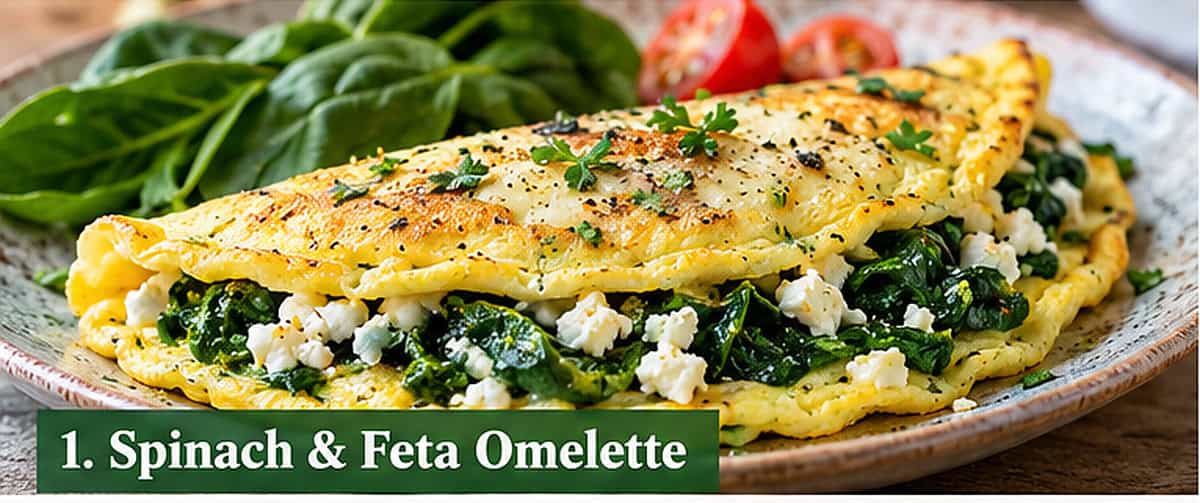
Spinach and feta veggie omelette with wilted greens on a plate
Recipe 1: Spinach and feta omelette

Best for: A quick vegetarian breakfast with a savory, tangy filling
Serves: 1 | Prep: 5 minutes | Cook: 7 minutes | Total: about 12 minutes
Diet: Vegetarian; contains eggs and dairy

Ingredients

  • 2 large eggs
  • 1 teaspoon (5 mL) olive oil, divided
  • 1 packed cup (30 g) baby spinach
  • 2 tablespoons (about 20 g) crumbled feta cheese
  • 1 tablespoon finely chopped scallion or spring onion
  • 1 tablespoon (15 mL) water, optional
  • A pinch of black pepper; salt to taste (feta is already salty)

Instructions

  1. Beat the eggs with the optional water and black pepper in a small bowl.
  2. Heat ½ teaspoon oil in an 8-inch (20 cm) nonstick skillet over medium heat. Add the scallion and spinach. Cook for 1–2 minutes, until the spinach wilts and its moisture evaporates. Transfer to a plate.
  3. Lower the heat to medium-low and add the remaining oil. Pour in the eggs, swirling to cover the bottom of the skillet.
  4. Let the eggs cook until the edges begin to set. Gently lift the edges and tilt the pan so any unset egg flows underneath.
  5. Place the spinach mixture and feta over one half. Continue cooking until the egg is fully set, then fold the other half over the filling.
  6. Slide onto a plate and serve immediately.

Try it with: Fresh dill, chopped parsley, or a few diced cherry tomatoes on the side. For a dairy-free version, omit the feta or use a plant-based alternative; the omelette still contains eggs and is not vegan. Strict vegetarians should also check the feta label: traditional feta can be made with animal rennet, while some brands use microbial or vegetarian rennet (see our post on what rennet is).

Recipe 2: Mushroom, Bell Pepper and Cheddar Omelette

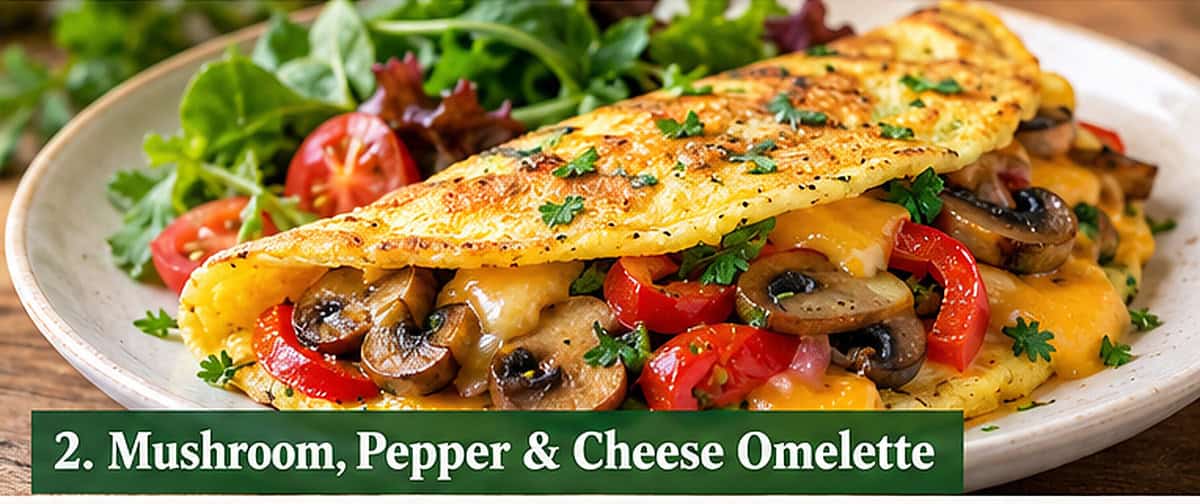
Mushroom, red bell pepper and cheese vegetarian omelette
Recipe 2: Mushroom, pepper and cheese omelette

Best for: A hearty, savory vegetable omelette
Serves: 1 | Prep: 7 minutes | Cook: 9 minutes | Total: about 16 minutes
Diet: Vegetarian; contains eggs and dairy

Ingredients

  • 2 large eggs
  • 1 teaspoon (5 mL) olive oil
  • ½ cup (about 35 g) sliced mushrooms
  • ¼ cup (about 35 g) finely diced red or green bell pepper
  • 1 tablespoon finely diced onion
  • 2 tablespoons (about 14 g) shredded vegetarian-suitable cheddar
  • 1 tablespoon (15 mL) water, optional
  • Black pepper and a pinch of salt

Instructions

  1. Whisk the eggs, optional water and pepper until evenly mixed.
  2. Heat half the oil in a nonstick skillet over medium heat. Cook the mushrooms for 3–4 minutes until most of their liquid has evaporated. Add the bell pepper and onion; cook for another 2 minutes until just tender. Set the filling aside.
  3. Reduce the heat to medium-low. Add the remaining oil and the beaten eggs, tilting the pan to make an even layer.
  4. When the edges are set, gently move the remaining liquid egg toward the outer edges. Add the vegetables and cheddar to one half of the omelette.
  5. Cook until the egg is completely set and the cheese is melting, then fold and serve.

Flavor variation: Sprinkle with smoked paprika or chopped chives. If you’re strictly vegetarian, check that your cheese is made without animal-derived rennet. According to the Vegetarian Society, rennet is still used in many cheeses and is traditionally made from animal stomach enzymes, so not every cheddar is vegetarian.

Recipe 3: Mediterranean Zucchini, Tomato and Herb Omelette

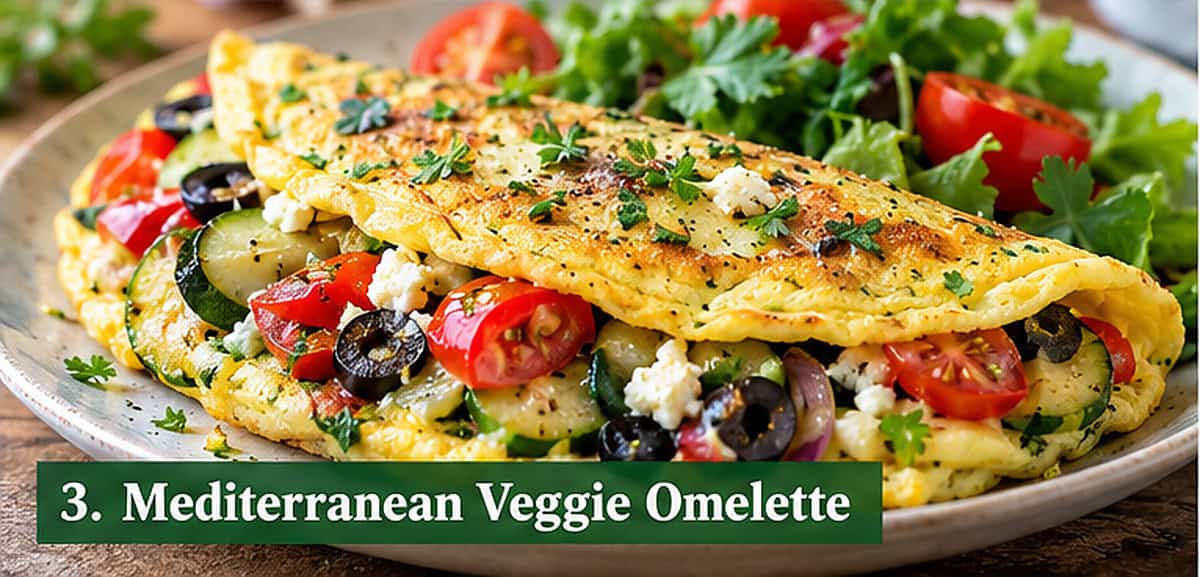
Mediterranean veggie omelette with zucchini, tomatoes, herbs and olives
Recipe 3: Mediterranean vegetable omelette

Best for: A fresh, colorful weekend breakfast or light lunch
Serves: 1 | Prep: 7 minutes | Cook: 9 minutes | Total: about 16 minutes
Diet: Vegetarian; contains eggs

Ingredients

  • 2 large eggs
  • 1 teaspoon (5 mL) olive oil
  • ¼ cup (about 30 g) diced zucchini
  • ¼ cup (about 40 g) diced cherry tomatoes, seeds and excess juice removed
  • 1 tablespoon chopped red onion
  • 1 tablespoon chopped fresh parsley or basil
  • 1 teaspoon chopped olives, optional
  • 1 tablespoon (15 mL) water, optional
  • Black pepper and a small pinch of dried oregano

Instructions

  1. Beat the eggs with the optional water, oregano and pepper.
  2. In a nonstick skillet, heat half the oil over medium heat. Cook the zucchini and onion for 3–4 minutes, stirring occasionally, until the zucchini begins to soften.
  3. Add the tomatoes and cook for about 1 minute, just long enough to drive off some liquid. Remove the vegetables from the skillet and mix with the herbs and optional olives.
  4. Reduce the heat to medium-low and add the remaining oil. Pour in the beaten eggs and cook, gently lifting the edges as they set.
  5. Spoon the vegetable filling onto one half. Continue cooking until the eggs are completely set, then fold carefully and transfer to a plate.

Serving idea: Pair it with whole-grain toast or a simple green salad. A little lemon zest on top makes the vegetables taste especially bright. The illustration above also shows crumbled cheese, which is not part of this recipe.

Recipe 4: Vegan Chickpea Flour Omelette with Vegetables (No Eggs)

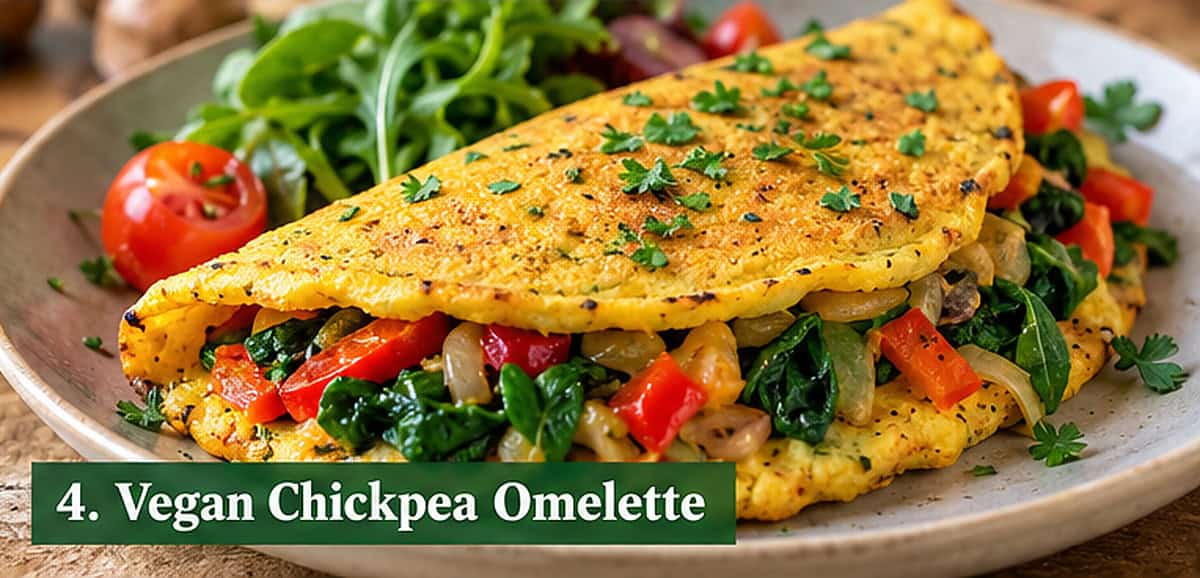
Vegan chickpea flour omelette filled with spinach, mushrooms and peppers
Recipe 4: Vegan chickpea flour omelette

Want a vegan omelette without eggs? Chickpea flour, sometimes labeled besan or gram flour, makes a savory batter that cooks into an omelette-style pancake. It is not identical to an egg omelette, but it’s a practical, filling option when you want a fully plant-based breakfast.

Best for: An egg-free, dairy-free veggie breakfast
Serves: 1 | Prep: 8 minutes | Cook: 10 minutes | Total: about 18 minutes
Diet: Vegan; contains chickpeas (a legume)

Ingredients

For the batter

  • ½ cup (about 45 g) chickpea flour
  • ½ cup (120 mL) water
  • 1 tablespoon nutritional yeast, optional
  • ¼ teaspoon baking powder, optional, for a lighter texture
  • ¼ teaspoon garlic powder
  • ⅛ teaspoon ground turmeric
  • ¼ teaspoon fine salt, or to taste
  • A pinch of black pepper

For the vegetables

  • 1 teaspoon (5 mL) olive oil, divided
  • 2 tablespoons finely diced bell pepper
  • 2 tablespoons finely sliced mushrooms
  • 2 tablespoons chopped baby spinach
  • 1 tablespoon chopped scallion or spring onion

Instructions

  1. Whisk the chickpea flour, water, nutritional yeast (if using), baking powder (if using), garlic powder, turmeric, salt and pepper until smooth. Let stand for 5 minutes while you cook the vegetables. If the batter looks unusually thick, whisk in water 1 teaspoon at a time until pourable but not runny.
  2. Heat half the oil in a small nonstick skillet over medium heat. Sauté the bell pepper and mushrooms for 3 minutes, until softened. Add the spinach and scallion for the final minute, then transfer to a plate.
  3. Add the remaining oil and reduce the heat to medium-low. Pour the batter into the skillet, gently spreading it into an even round.
  4. Scatter the cooked vegetables over one half of the batter. Cover the pan with a lid and cook for 4–5 minutes, until the surface looks mostly set and the bottom is golden.
  5. Carefully loosen the omelette with a wide spatula. Fold it in half, then cook another 2–3 minutes, turning gently if needed, until the center is fully cooked and no raw batter remains.
  6. Serve hot with herbs, salsa or avocado.

Helpful note: Chickpea flour needs thorough cooking. Don’t taste the raw batter; the FDA advises against eating or tasting raw flour, dough or batter. For a different flavor, add a small pinch of kala namak (black salt) after cooking; it has a sulfurous, egg-like aroma. Check that every topping or sauce is vegan if you’re serving this to someone avoiding all animal products. For more plant-based protein ideas, see our guide to high-protein vegetarian meals.

How to Customize Your Own Veggie Omelette

Once you know the basics, you can create dozens of combinations without following a new recipe every time. Start with the two-egg base, or the chickpea flour batter for an egg-free version, and choose one or two vegetables, one herb and an optional topping.

If you like… Try this combination
Earthy flavors Mushrooms + spinach + thyme
Sweet vegetables Roasted red pepper + onion + basil
A little heat Jalapeño + tomato + cilantro
Fresh, green flavors Zucchini + scallion + parsley
Rich, salty flavor Spinach + feta + dill
A dairy-free topping Avocado + salsa + fresh herbs

What about leftovers? Small amounts of cooked broccoli, roasted squash or sautéed peppers can work well. Drain any excess liquid and reheat vegetables before adding them to the egg mixture. Cool and refrigerate cooked leftovers within 2 hours, and see the storage notes in the FAQ below.

Common Veggie Omelette Mistakes (and Easy Fixes)

My omelette is watery. Tomatoes, spinach, mushrooms and zucchini can release moisture. Cook them separately and remove excess liquid before adding them to the eggs or chickpea batter.

The eggs tear when I fold them. The pan may be too hot, the omelette may be stuck, or the filling may be too heavy. Use a good nonstick skillet, lower the heat, and spread the fillings over only one half.

My chickpea omelette breaks apart. Let the batter rest briefly, use a small pan, and wait until the underside forms a firm crust before trying to fold it. A lid helps the top set without burning the bottom.

The filling tastes bland. Season the vegetables as you sauté them. Add herbs, pepper or a small squeeze of lemon after cooking, and adjust salt carefully when using salty cheeses or olives.

Frequently Asked Questions About Veggie Omelettes

What vegetables are best in an omelette?

Spinach, mushrooms, bell peppers, onions, tomatoes, zucchini and cooked broccoli all work well. Choose vegetables you like and chop them small, so they cook quickly and fit inside the folded omelette.

Should I cook vegetables before adding them to an omelette?

Usually, yes. Precooking makes firmer vegetables tender and removes moisture from mushrooms, spinach and zucchini. That helps prevent a watery omelette or a filling that’s still raw when the eggs have finished cooking.

How many eggs do I need for one vegetable omelette?

Two large eggs are a convenient starting point for one serving in an 8-inch (20 cm) skillet. Use three eggs and a slightly larger pan if you prefer a more substantial meal, and adjust the fillings accordingly.

Can a veggie omelette be vegan?

A traditional vegetable omelette made with eggs is vegetarian, not vegan. For an egg-free version, use chickpea flour batter or another clearly labeled vegan egg alternative, and leave out dairy-based cheese and butter. Our guide to what veganism is and what vegans eat has more background.

What can I use instead of cheese?

Try avocado, hummus on the side, sautéed mushrooms, fresh herbs or a dairy-free cheese alternative. Cheese is optional in all four recipes; flavor comes from well-seasoned vegetables too.

How do I stop my omelette from sticking?

Use a clean, well-maintained nonstick skillet, a small amount of oil, and medium-low heat once you add the eggs. Avoid moving or folding the omelette before the bottom has set.

Can I make veggie omelettes ahead of time?

You can wash and chop the vegetables ahead of time and refrigerate them, which speeds up breakfast. Cooked egg omelettes are best served fresh. If you do have leftovers, the USDA says to refrigerate perishable food within 2 hours, use most cooked leftovers (including omelettes) within 3 to 4 days, and reheat leftovers to 165°F (74°C). Its leftovers guidance has the details.

Is chickpea flour the same as regular flour?

No. Chickpea flour is made from chickpeas and behaves differently from wheat flour. Its flavor and structure make it useful for an egg-free savory omelette, but you should not replace it with all-purpose wheat flour in the vegan recipe without adjusting the method.

Your Turn: Share Your Favorite Veggie Omelette Recipe!

The original 2007 version of this post asked readers to email in their vegetarian and vegan omelette recipes, and we’d still love to build that community collection.

Have a veggie omelette combination we haven’t tried? Tell us in the comments below! Whether it’s a family favorite, a five-minute breakfast or a creative vegan twist, you’re welcome to share it.

To help other readers recreate your recipe, please include:

  • Your recipe name and where you’re writing from (optional)
  • Ingredients and approximate amounts
  • Simple cooking steps and estimated prep and cooking time
  • Whether your recipe is vegetarian or fully vegan
  • One useful tip, variation or story behind the recipe

Please don’t post private contact details in a public comment. If we’d like to feature your recipe in a future roundup, we’ll ask your permission first.

Which veggie omelette should we try next? Share your recipe and help other readers discover a new favorite breakfast.