4 Easy Veggie Omelette Recipes (Plus: Share Your Favorite!)
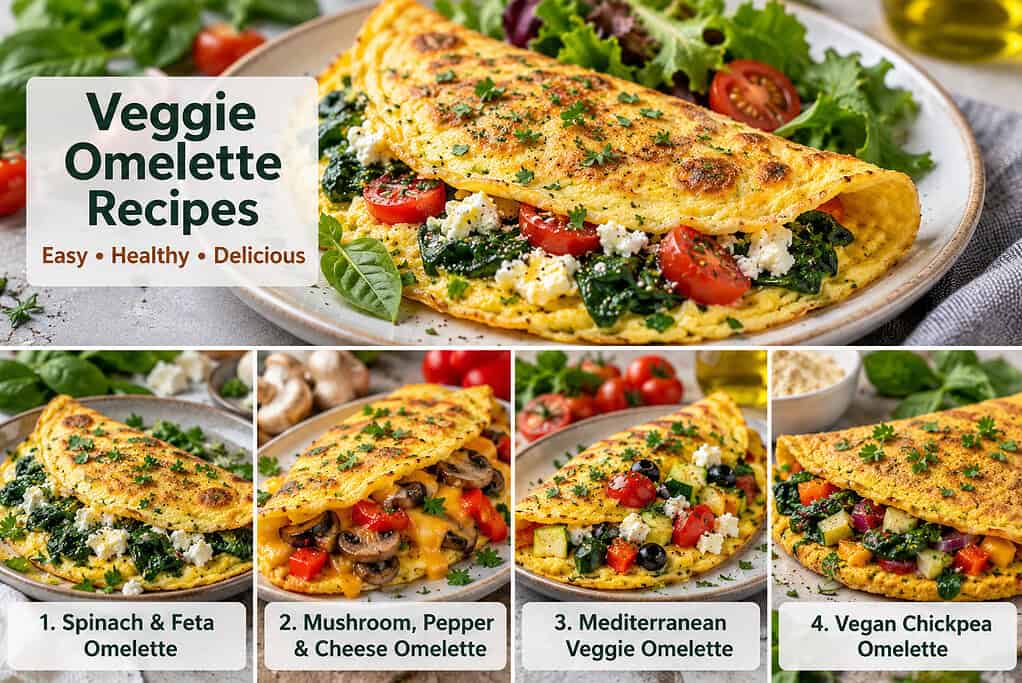
Images are AI-generated illustrations, not photos of dishes the author cooked.
A good veggie omelette can turn a few eggs and some vegetables into a satisfying breakfast in minutes. The trick is simple: cook the vegetables first, keep the heat moderate, and add just enough filling that you can fold the omelette without tearing it.
Below are four easy vegetarian omelette recipes to try at home. Three use eggs, while the fourth is an egg-free, vegan omelette made with chickpea flour. Choose a classic spinach-and-feta combination, a hearty mushroom version, a Mediterranean-style omelette, or a fully plant-based breakfast. Then keep reading, because we’d love to hear your own veggie omelette recipe. (If you’re new to the terms, our guide to vegetarian and vegan diets explains the difference.)
Before You Start: How to Make a Better Vegetable Omelette
You don’t need fancy equipment. An 8-inch (20 cm) nonstick skillet, a spatula, a bowl, and a fork or whisk will do the job. For the three egg-based recipes, two large eggs make one generously filled serving. Have your vegetables chopped before you heat the pan.
Five quick tips for a fluffy, flavorful omelette:
- Cook wet vegetables first. Mushrooms, tomatoes, spinach and zucchini release moisture. Sauté them and let excess liquid evaporate before they meet the eggs.
- Use medium-low heat for the eggs. A pan that’s too hot can brown the outside while the center stays undercooked.
- Whisk the eggs just before cooking. Beat until the whites and yolks are fully combined; a tablespoon of water is optional.
- Keep fillings modest. Roughly ½ cup (about 75–100 g, depending on the vegetables) of cooked fillings per two-egg omelette is usually manageable.
- Cook eggs thoroughly. Cook until no liquid egg remains and both white and yolk are firm. The USDA gives 160°F (71°C) as the safe internal temperature for egg dishes, and a food thermometer is the sure way to check. See the USDA’s food safety basics and shell egg guidance.
Timing note: The preparation and cooking times below are estimates for one omelette. Your pan, stove and vegetable sizes may change them.
Recipe 1: Spinach and Feta Veggie Omelette

Best for: A quick vegetarian breakfast with a savory, tangy filling
Serves: 1 | Prep: 5 minutes | Cook: 7 minutes | Total: about 12 minutes
Diet: Vegetarian; contains eggs and dairy
Ingredients
- 2 large eggs
- 1 teaspoon (5 mL) olive oil, divided
- 1 packed cup (30 g) baby spinach
- 2 tablespoons (about 20 g) crumbled feta cheese
- 1 tablespoon finely chopped scallion or spring onion
- 1 tablespoon (15 mL) water, optional
- A pinch of black pepper; salt to taste (feta is already salty)
Instructions
- Beat the eggs with the optional water and black pepper in a small bowl.
- Heat ½ teaspoon oil in an 8-inch (20 cm) nonstick skillet over medium heat. Add the scallion and spinach. Cook for 1–2 minutes, until the spinach wilts and its moisture evaporates. Transfer to a plate.
- Lower the heat to medium-low and add the remaining oil. Pour in the eggs, swirling to cover the bottom of the skillet.
- Let the eggs cook until the edges begin to set. Gently lift the edges and tilt the pan so any unset egg flows underneath.
- Place the spinach mixture and feta over one half. Continue cooking until the egg is fully set, then fold the other half over the filling.
- Slide onto a plate and serve immediately.
Try it with: Fresh dill, chopped parsley, or a few diced cherry tomatoes on the side. For a dairy-free version, omit the feta or use a plant-based alternative; the omelette still contains eggs and is not vegan. Strict vegetarians should also check the feta label: traditional feta can be made with animal rennet, while some brands use microbial or vegetarian rennet (see our post on what rennet is).
Recipe 2: Mushroom, Bell Pepper and Cheddar Omelette

Best for: A hearty, savory vegetable omelette
Serves: 1 | Prep: 7 minutes | Cook: 9 minutes | Total: about 16 minutes
Diet: Vegetarian; contains eggs and dairy
Ingredients
- 2 large eggs
- 1 teaspoon (5 mL) olive oil
- ½ cup (about 35 g) sliced mushrooms
- ¼ cup (about 35 g) finely diced red or green bell pepper
- 1 tablespoon finely diced onion
- 2 tablespoons (about 14 g) shredded vegetarian-suitable cheddar
- 1 tablespoon (15 mL) water, optional
- Black pepper and a pinch of salt
Instructions
- Whisk the eggs, optional water and pepper until evenly mixed.
- Heat half the oil in a nonstick skillet over medium heat. Cook the mushrooms for 3–4 minutes until most of their liquid has evaporated. Add the bell pepper and onion; cook for another 2 minutes until just tender. Set the filling aside.
- Reduce the heat to medium-low. Add the remaining oil and the beaten eggs, tilting the pan to make an even layer.
- When the edges are set, gently move the remaining liquid egg toward the outer edges. Add the vegetables and cheddar to one half of the omelette.
- Cook until the egg is completely set and the cheese is melting, then fold and serve.
Flavor variation: Sprinkle with smoked paprika or chopped chives. If you’re strictly vegetarian, check that your cheese is made without animal-derived rennet. According to the Vegetarian Society, rennet is still used in many cheeses and is traditionally made from animal stomach enzymes, so not every cheddar is vegetarian.
Recipe 3: Mediterranean Zucchini, Tomato and Herb Omelette
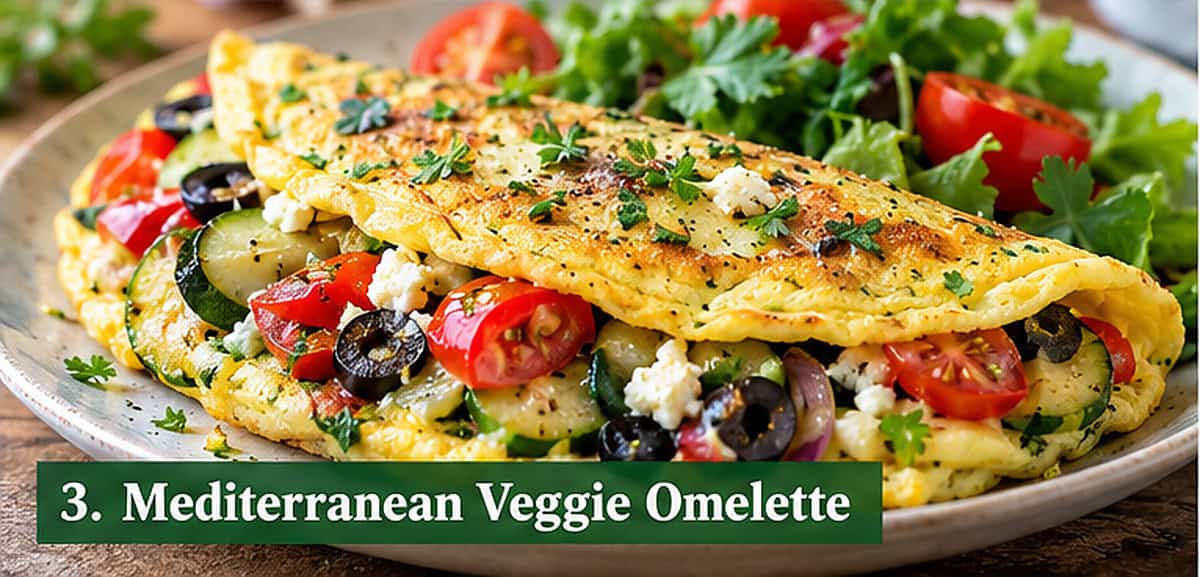
Best for: A fresh, colorful weekend breakfast or light lunch
Serves: 1 | Prep: 7 minutes | Cook: 9 minutes | Total: about 16 minutes
Diet: Vegetarian; contains eggs
Ingredients
- 2 large eggs
- 1 teaspoon (5 mL) olive oil
- ¼ cup (about 30 g) diced zucchini
- ¼ cup (about 40 g) diced cherry tomatoes, seeds and excess juice removed
- 1 tablespoon chopped red onion
- 1 tablespoon chopped fresh parsley or basil
- 1 teaspoon chopped olives, optional
- 1 tablespoon (15 mL) water, optional
- Black pepper and a small pinch of dried oregano
Instructions
- Beat the eggs with the optional water, oregano and pepper.
- In a nonstick skillet, heat half the oil over medium heat. Cook the zucchini and onion for 3–4 minutes, stirring occasionally, until the zucchini begins to soften.
- Add the tomatoes and cook for about 1 minute, just long enough to drive off some liquid. Remove the vegetables from the skillet and mix with the herbs and optional olives.
- Reduce the heat to medium-low and add the remaining oil. Pour in the beaten eggs and cook, gently lifting the edges as they set.
- Spoon the vegetable filling onto one half. Continue cooking until the eggs are completely set, then fold carefully and transfer to a plate.
Serving idea: Pair it with whole-grain toast or a simple green salad. A little lemon zest on top makes the vegetables taste especially bright. The illustration above also shows crumbled cheese, which is not part of this recipe.
Recipe 4: Vegan Chickpea Flour Omelette with Vegetables (No Eggs)
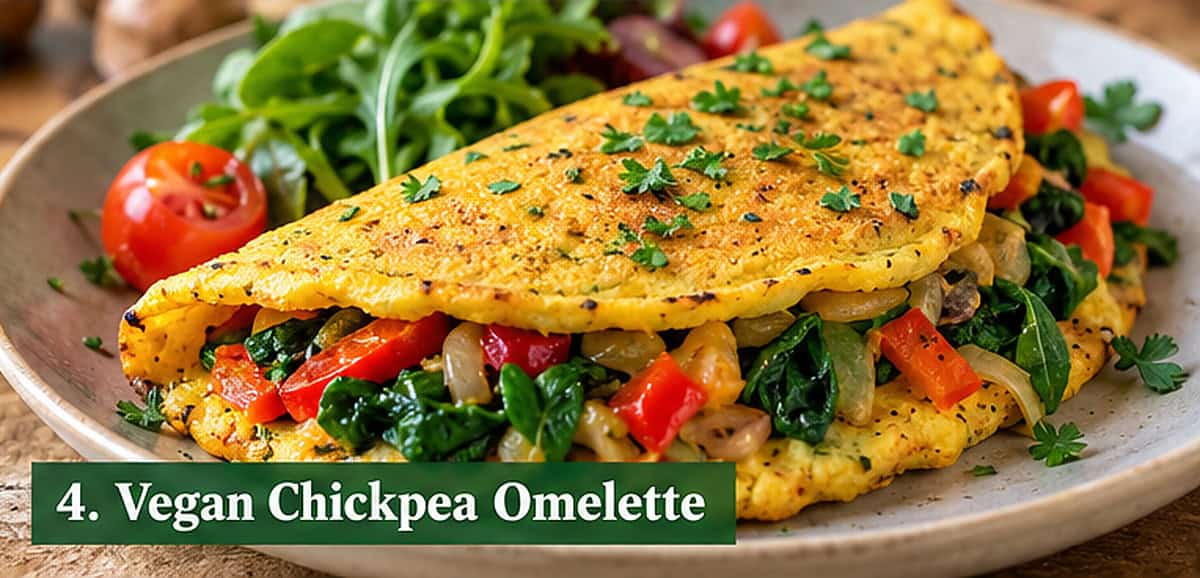
Want a vegan omelette without eggs? Chickpea flour, sometimes labeled besan or gram flour, makes a savory batter that cooks into an omelette-style pancake. It is not identical to an egg omelette, but it’s a practical, filling option when you want a fully plant-based breakfast.
Best for: An egg-free, dairy-free veggie breakfast
Serves: 1 | Prep: 8 minutes | Cook: 10 minutes | Total: about 18 minutes
Diet: Vegan; contains chickpeas (a legume)
Ingredients
For the batter
- ½ cup (about 45 g) chickpea flour
- ½ cup (120 mL) water
- 1 tablespoon nutritional yeast, optional
- ¼ teaspoon baking powder, optional, for a lighter texture
- ¼ teaspoon garlic powder
- ⅛ teaspoon ground turmeric
- ¼ teaspoon fine salt, or to taste
- A pinch of black pepper
For the vegetables
- 1 teaspoon (5 mL) olive oil, divided
- 2 tablespoons finely diced bell pepper
- 2 tablespoons finely sliced mushrooms
- 2 tablespoons chopped baby spinach
- 1 tablespoon chopped scallion or spring onion
Instructions
- Whisk the chickpea flour, water, nutritional yeast (if using), baking powder (if using), garlic powder, turmeric, salt and pepper until smooth. Let stand for 5 minutes while you cook the vegetables. If the batter looks unusually thick, whisk in water 1 teaspoon at a time until pourable but not runny.
- Heat half the oil in a small nonstick skillet over medium heat. Sauté the bell pepper and mushrooms for 3 minutes, until softened. Add the spinach and scallion for the final minute, then transfer to a plate.
- Add the remaining oil and reduce the heat to medium-low. Pour the batter into the skillet, gently spreading it into an even round.
- Scatter the cooked vegetables over one half of the batter. Cover the pan with a lid and cook for 4–5 minutes, until the surface looks mostly set and the bottom is golden.
- Carefully loosen the omelette with a wide spatula. Fold it in half, then cook another 2–3 minutes, turning gently if needed, until the center is fully cooked and no raw batter remains.
- Serve hot with herbs, salsa or avocado.
Helpful note: Chickpea flour needs thorough cooking. Don’t taste the raw batter; the FDA advises against eating or tasting raw flour, dough or batter. For a different flavor, add a small pinch of kala namak (black salt) after cooking; it has a sulfurous, egg-like aroma. Check that every topping or sauce is vegan if you’re serving this to someone avoiding all animal products. For more plant-based protein ideas, see our guide to high-protein vegetarian meals.
How to Customize Your Own Veggie Omelette
Once you know the basics, you can create dozens of combinations without following a new recipe every time. Start with the two-egg base, or the chickpea flour batter for an egg-free version, and choose one or two vegetables, one herb and an optional topping.
| If you like… | Try this combination |
|---|---|
| Earthy flavors | Mushrooms + spinach + thyme |
| Sweet vegetables | Roasted red pepper + onion + basil |
| A little heat | Jalapeño + tomato + cilantro |
| Fresh, green flavors | Zucchini + scallion + parsley |
| Rich, salty flavor | Spinach + feta + dill |
| A dairy-free topping | Avocado + salsa + fresh herbs |
What about leftovers? Small amounts of cooked broccoli, roasted squash or sautéed peppers can work well. Drain any excess liquid and reheat vegetables before adding them to the egg mixture. Cool and refrigerate cooked leftovers within 2 hours, and see the storage notes in the FAQ below.
Common Veggie Omelette Mistakes (and Easy Fixes)
My omelette is watery. Tomatoes, spinach, mushrooms and zucchini can release moisture. Cook them separately and remove excess liquid before adding them to the eggs or chickpea batter.
The eggs tear when I fold them. The pan may be too hot, the omelette may be stuck, or the filling may be too heavy. Use a good nonstick skillet, lower the heat, and spread the fillings over only one half.
My chickpea omelette breaks apart. Let the batter rest briefly, use a small pan, and wait until the underside forms a firm crust before trying to fold it. A lid helps the top set without burning the bottom.
The filling tastes bland. Season the vegetables as you sauté them. Add herbs, pepper or a small squeeze of lemon after cooking, and adjust salt carefully when using salty cheeses or olives.
Frequently Asked Questions About Veggie Omelettes
What vegetables are best in an omelette?
Spinach, mushrooms, bell peppers, onions, tomatoes, zucchini and cooked broccoli all work well. Choose vegetables you like and chop them small, so they cook quickly and fit inside the folded omelette.
Should I cook vegetables before adding them to an omelette?
Usually, yes. Precooking makes firmer vegetables tender and removes moisture from mushrooms, spinach and zucchini. That helps prevent a watery omelette or a filling that’s still raw when the eggs have finished cooking.
How many eggs do I need for one vegetable omelette?
Two large eggs are a convenient starting point for one serving in an 8-inch (20 cm) skillet. Use three eggs and a slightly larger pan if you prefer a more substantial meal, and adjust the fillings accordingly.
Can a veggie omelette be vegan?
A traditional vegetable omelette made with eggs is vegetarian, not vegan. For an egg-free version, use chickpea flour batter or another clearly labeled vegan egg alternative, and leave out dairy-based cheese and butter. Our guide to what veganism is and what vegans eat has more background.
What can I use instead of cheese?
Try avocado, hummus on the side, sautéed mushrooms, fresh herbs or a dairy-free cheese alternative. Cheese is optional in all four recipes; flavor comes from well-seasoned vegetables too.
How do I stop my omelette from sticking?
Use a clean, well-maintained nonstick skillet, a small amount of oil, and medium-low heat once you add the eggs. Avoid moving or folding the omelette before the bottom has set.
Can I make veggie omelettes ahead of time?
You can wash and chop the vegetables ahead of time and refrigerate them, which speeds up breakfast. Cooked egg omelettes are best served fresh. If you do have leftovers, the USDA says to refrigerate perishable food within 2 hours, use most cooked leftovers (including omelettes) within 3 to 4 days, and reheat leftovers to 165°F (74°C). Its leftovers guidance has the details.
Is chickpea flour the same as regular flour?
No. Chickpea flour is made from chickpeas and behaves differently from wheat flour. Its flavor and structure make it useful for an egg-free savory omelette, but you should not replace it with all-purpose wheat flour in the vegan recipe without adjusting the method.
Your Turn: Share Your Favorite Veggie Omelette Recipe!
The original 2007 version of this post asked readers to email in their vegetarian and vegan omelette recipes, and we’d still love to build that community collection.
Have a veggie omelette combination we haven’t tried? Tell us in the comments below! Whether it’s a family favorite, a five-minute breakfast or a creative vegan twist, you’re welcome to share it.
To help other readers recreate your recipe, please include:
- Your recipe name and where you’re writing from (optional)
- Ingredients and approximate amounts
- Simple cooking steps and estimated prep and cooking time
- Whether your recipe is vegetarian or fully vegan
- One useful tip, variation or story behind the recipe
Please don’t post private contact details in a public comment. If we’d like to feature your recipe in a future roundup, we’ll ask your permission first.
Which veggie omelette should we try next? Share your recipe and help other readers discover a new favorite breakfast.
Leave a Reply