Archive for the ‘Vegetarian Food’ Category

Vegan Chocolate Desserts: Easy Brownies, Muffins & Pastry Twists

by on Friday, April 20th, 2007

Rich chocolate desserts don’t need eggs, dairy milk, or butter. With a few smart ingredient choices, you can make brownies, muffins, and flaky pastries that fit a vegan diet.

Chocolate is a great place to explore plant-based baking. Cocoa powder provides deep flavor; plant milk adds moisture; and the right oil or dairy-free butter helps create the texture you want. The goal isn’t to imitate every traditional pastry exactly. It’s to make something delicious using ingredients that suit your preferences.

This guide includes three approachable vegan chocolate recipes, practical ingredient swaps, shopping questions for vegan bakeries, and answers to common baking problems. None of the recipes requires an egg substitute bought from a specialist store. Ovens and ingredients vary, so use the doneness cues in each method as well as the times.

The featured image is a computer-generated illustration, not a photo of these recipes.

A little history: Jin and “choc-ko-late”

This Veggie-Blog post started in April 2007 as a friendly shout-out to a vegan pastry chef named Jin and her chocolate creations. The original writer said the shop was based in Manitowoc, Wisconsin. It was a personal recommendation from that time, not a present-day review. We have not verified that the shop still operates, ships desserts, or uses the same business name today.

Rather than assume an old offer remains available, here are ways to enjoy vegan chocolate baking now—whether you’re making dessert at home or shopping at a local bakery.

What makes a chocolate pastry vegan?

A vegan pastry contains no animal-derived ingredients. In a chocolate dessert, the ingredients to check most carefully are milk, butter, eggs, whey, cream, honey, and milk chocolate. Chocolate labeled dark or bittersweet is not automatically vegan: some bars and chips contain milk ingredients. Always read the ingredient list on the actual package rather than relying on the front label.

For a simple vegan baking pantry, keep unsweetened cocoa powder, verified vegan chocolate chips, all-purpose flour, baking powder, baking soda, sugar, neutral oil, and unsweetened plant milk on hand. You can make an impressive range of desserts from these basics.

Simple swaps that actually help

Traditional ingredient Plant-based option Best use
Dairy milk Unsweetened soy, oat, or almond milk Muffins, cakes, batters
Melted butter Neutral vegetable oil or suitable vegan butter Brownies and cakes
Egg for binding Ground flaxseed mixed with water Cookies and dense bakes
Cream Suitable plant-based cream Ganache and dessert fillings
Milk chocolate Chocolate explicitly free from milk ingredients Chips, fillings, drizzle
Butter puff pastry Puff pastry with a vegan ingredient list Quick chocolate twists

One substitution cannot perform every job that eggs perform. Some eggs bind, some help a batter rise, and others add richness. The recipes below use combinations designed around the type of dessert instead of recommending an egg replacement indiscriminately.

Recipe 1: Fudgy vegan chocolate brownies

Yield: 9 brownies
Prep: about 15 minutes
Bake: about 23–28 minutes
Pan: 20-cm (8-inch) square pan
Oven: 175°C / 350°F

Ingredients

  • 1 tablespoon ground flaxseed
  • 3 tablespoons water
  • 125 g (1 cup) all-purpose flour
  • 45 g (about 1/2 cup) unsweetened cocoa powder
  • 150 g (3/4 cup) granulated sugar
  • 1/2 teaspoon baking powder
  • 1/4 teaspoon fine salt
  • 120 ml (1/2 cup) unsweetened plant milk
  • 80 ml (1/3 cup) neutral oil
  • 1 teaspoon vanilla extract
  • 75 g (about 1/2 cup) dairy-free dark chocolate chunks or chips

Method

  1. Heat the oven to 175°C / 350°F. Line the pan with parchment paper, leaving an overhang for lifting out the brownies.
  2. Stir the flaxseed and water together in a small bowl. Leave for 10 minutes, until slightly thickened.
  3. Whisk the flour, cocoa powder, sugar, baking powder, and salt in a mixing bowl.
  4. In a separate bowl, mix the plant milk, oil, vanilla, and flax mixture. Pour the wet ingredients into the dry ingredients and fold until no obvious dry patches remain. Do not overmix.
  5. Fold in the chocolate pieces. The batter will be fairly thick. Spread it evenly into the prepared pan.
  6. Bake for approximately 23–28 minutes. Look for set edges and a center that no longer looks wet; a toothpick should emerge with a few moist crumbs, not liquid batter.
  7. Cool completely before slicing into nine squares. Cooling helps a soft brownie become easier to cut.

Texture tip: For a firmer result, bake a few minutes longer; for the cleanest slices, cool and refrigerate briefly before cutting. Oven behavior and different cocoa brands can affect the result.

Recipe 2: Double-chocolate vegan muffins

Yield: 12 standard muffins
Prep: about 15 minutes
Bake: about 18–23 minutes
Oven: 180°C / 350°F

Ingredients

  • 220 g (about 1 3/4 cups) all-purpose flour
  • 40 g (about 1/2 cup) unsweetened cocoa powder
  • 130 g (about 2/3 cup) granulated sugar
  • 2 teaspoons baking powder
  • 1/2 teaspoon baking soda
  • 1/4 teaspoon fine salt
  • 240 ml (1 cup) unsweetened plant milk
  • 1 tablespoon apple cider vinegar or lemon juice
  • 80 ml (1/3 cup) neutral oil
  • 1 teaspoon vanilla extract
  • 90 g (about 1/2 cup) dairy-free chocolate chips, plus a few extra for the tops

Method

  1. Heat the oven to 180°C / 350°F. Line a 12-cup muffin tin with paper liners or lightly oil the cups.
  2. Combine plant milk and vinegar in a small jug; leave for five minutes.
  3. Whisk flour, cocoa powder, sugar, baking powder, baking soda, and salt in a large bowl.
  4. Add oil and vanilla to the milk mixture. Pour wet ingredients into dry ingredients and fold gently until combined. A few small lumps are fine.
  5. Fold in the chocolate chips. Divide the batter among the cups, filling each around two-thirds to three-quarters full. Sprinkle a few chips on top.
  6. Bake around 18–23 minutes, until the tops spring back lightly and a tester inserted away from melted chocolate comes out without raw batter.
  7. Rest five minutes in the tin, then cool on a wire rack.

Flavor variations: Add a little orange zest, a small pinch of cinnamon, or a spoonful of espresso powder for a different chocolate profile. Check that any toppings are vegan.

Recipe 3: Easy vegan chocolate pastry twists

Yield: about 10–12 twists
Prep: about 15 minutes
Bake: about 15–20 minutes
Oven: 200°C / 400°F

Ingredients

  • 1 sheet (approximately 250–300 g) ready-rolled puff pastry confirmed vegan on its label, thawed according to the package
  • 80 g (about 1/2 cup chopped) dairy-free dark chocolate, finely chopped
  • 1 teaspoon neutral oil, optional, to help the chocolate spread
  • 1 tablespoon plant milk for brushing
  • Optional: a little coarse sugar or finely chopped nuts for topping

Method

  1. Heat the oven to 200°C / 400°F and line a baking sheet with parchment.
  2. Melt the chocolate carefully in short microwave bursts or over a double boiler, stirring often. If needed, add a teaspoon of oil to create a thin, spreadable consistency. Allow to cool so it is no longer hot.
  3. Unroll the pastry on a lightly floured surface. Spread a thin layer of chocolate over one half, keeping a small border free. Fold the uncovered half over the filling and press gently.
  4. With a sharp knife or pizza cutter, cut across the folded pastry into 10–12 strips. Twist each strip two or three times and set it on the prepared tray.
  5. Brush lightly with plant milk. Add optional sugar or nuts if using.
  6. Bake for approximately 15–20 minutes until puffed and well browned. Baking times vary with pastry thickness and brand.
  7. Cool on the tray for several minutes: melted chocolate inside will be hot.

Shopping tip: Puff pastry can be made with either butter or vegetable fats. “Puff pastry” on its own is not a vegan claim; inspect the ingredient list each time you buy it.

Seven ways to improve vegan chocolate baking

  1. Measure flour carefully. Weighing ingredients helps prevent dry muffins and heavy brownies.
  2. Use cocoa you enjoy. Cocoa quality and intensity make a bigger difference to flavor than elaborate decorations.
  3. Avoid overmixing. Once flour is wet, mix just enough to bring the batter together; excessive mixing can toughen muffins.
  4. Use unsweetened plant milk. Sweetened or flavored drinks can change the balance of the recipes.
  5. Choose the right fat. Neutral oil keeps muffins soft; a baking-suitable vegan butter can be useful for pastry-style richness.
  6. Allow cooling time. Brownies slice more neatly once cool, and pastry fillings need time to stop being dangerously hot.
  7. Read every package. Vegan status can vary between flavors and recipes, even within the same product line.

Food safety matters with egg-free baking, too. Do not taste raw batter containing uncooked flour. Flour is generally a raw ingredient that can carry harmful bacteria, so bake dough and batter thoroughly and wash surfaces after handling flour. The U.S. Food and Drug Administration’s flour safety advice explains why.

How to find a genuinely vegan pastry shop

A bakery may sell one vegan item without being entirely vegan. Before traveling across town, review the current menu and contact the bakery with a few practical questions:

  • Are the brownies or pastries made without dairy, eggs, honey, gelatin, or other animal-derived ingredients?
  • Does the chocolate contain milk powder, whey, butterfat, or other milk ingredients?
  • Is the puff pastry made without dairy butter?
  • Are there options for people with nut, soy, or wheat allergies, and how is cross-contact handled?
  • Are the vegan items available every day, or only by preorder?
  • If delivery is offered, which items can safely be shipped and to which locations?

Vegan does not automatically mean allergen-free. Bakeries often share equipment and work surfaces, so people with food allergies should ask about handling practices rather than assuming that a vegan label guarantees suitability.

Look for bakeries that provide clear, current ingredient information and explain how their offerings are prepared. A good answer to a detailed question is more valuable than a vague marketing slogan.

Questions readers ask

Is dark chocolate always vegan?

No. Some dark chocolate contains milk fat, milk powder, or other dairy ingredients. Check the package even when the cocoa percentage is high.

How can I replace eggs in chocolate baking?

It depends on the job the egg performs. Ground flaxseed and water can help bind brownies, while muffins can use a balanced combination of plant milk, oil, and leavening. Avoid assuming every egg substitute works in every pastry.

Can I use ordinary puff pastry for vegan chocolate twists?

Only if its ingredients are vegan. Some puff pastry is made with butter; other varieties use vegetable fats. Check the label rather than assuming.

Can I eat vegan brownie batter before baking?

No. Egg-free batter can still contain raw flour, which should not be eaten uncooked. Follow safe food handling practices and bake the mixture before eating.

Tell us about your favorite vegan chocolate dessert

Did you discover an amazing local vegan bakery, or do you have a homemade chocolate dessert that friends always ask for? Share your favorite vegan chocolate treat in the comments, and tell us what makes it special. If you’re recommending a bakery, include its city so other readers know where to look. Please avoid posting personal contact details.


How to Make Vegetarian Chili Taste Better: Easy Flavor Fixes, Toppings & Leftovers

by on Wednesday, April 18th, 2007

The featured image above is an AI-generated illustration of vegetarian chili, not a photo of a dish the author cooked.

A pot of vegetarian chili can be simple, affordable and satisfying. Yet even when you use good beans, tomatoes, vegetables or plant-based crumbles, the first spoonful can taste a little flat. Usually, you don’t need to start over. A few small adjustments to the seasoning, texture and finishing ingredients can help.

This guide is an update to a short Veggie Blog kitchen diary entry published on April 18, 2007. In it, the writer made chili from a recipe in the book Meatless Meals for Working People, added Lightlife meatless crumbles, and estimated the protein at about 16 grams. The writer’s own verdict was that more chili powder and more seasoning on the crumbles would have helped. That is a useful cooking lesson to revisit: adding a meat substitute doesn’t automatically give chili a rich, balanced flavor.

Below, you’ll find how to make vegetarian chili taste better, how to rescue common problems, which toppings work well, and what to do with leftovers. This is a companion guide, not a new recipe. The recipe from the book is reprinted in our original vegetarian chili recipe post, which uses 1 teaspoon of chili powder for six servings, so there is plenty of room to adjust to taste.

Why Does Vegetarian Chili Sometimes Taste Bland?

Chili flavor depends on several components working together: aromatic vegetables, spices, salt, acidity, a savory base, and enough cooking time for everything to come together. A pot can have plenty of beans yet still seem dull if one of those elements is missing.

For example, adding dry chili powder at the very end may give you heat without the rounded flavor you expected. Using a low-sodium tomato product is convenient, but it may mean the pot needs more salt than usual. And plant-based crumbles often benefit from their own seasoning, because they don’t necessarily bring a deep browned flavor to the dish.

The first question to ask is not simply “How can I make it hotter?” but “What’s missing: salt, warmth, tang, thickness or savoriness?” Correcting that specific issue works better than tipping in random spices.

10 Ways to Make Vegetarian Chili More Flavorful

1. Build a base with onion and garlic

When you’re starting a new pot, soften chopped onion in a little oil before adding garlic. Give the onion several minutes to turn translucent and lightly golden. Add garlic for the final 30–60 seconds so it smells fragrant without burning. This simple foundation works whether the chili contains beans, lentils, vegetables or meatless crumbles.

For chili that’s already cooked: sauté a small amount of onion and garlic separately, then stir it in and simmer briefly. Don’t add raw onion late unless you want a noticeably sharp bite.

2. Bloom spices before adding more liquid

Chili powder, ground cumin, smoked paprika and oregano taste more integrated when heated briefly in a little oil with the sautéed vegetables. About 30 seconds to a minute over moderate heat is usually enough. Stir continuously: powdered spices can burn quickly, especially if the pan is dry.

If your chili is finished and needs a boost, heat a teaspoon of oil in a small pan, add a little extra chili powder and cumin, stir for 20–30 seconds, then mix the fragrant oil into the chili. Start with small quantities and taste again after a few minutes.

3. Season plant-based crumbles separately

This tip follows directly from the 2007 diary entry. Plant-based crumbles are convenient, but their flavor and salt levels vary by brand. Read the package instructions, as different products are handled differently.

If the instructions allow pan-browning, cook the crumbles in a skillet with a little oil, onion powder, cumin, smoked paprika or a spoon of tomato paste before adding them to the pot. Light browning can give the pieces a more satisfying texture. Taste before adding more salt, because prepared meat alternatives can already contain plenty.

For an alternative without packaged crumbles, try cooked brown lentils, finely chopped mushrooms, or a combination of beans and walnuts (if no nut allergy is present). Each gives a different texture, and none is guaranteed to taste just like meat.

4. Use tomato paste for depth

A tablespoon or two of tomato paste can make a chili seem fuller and more concentrated. In a new recipe, fry the paste with the aromatics for a minute before adding the canned tomatoes or stock. In finished chili, stir a spoonful into a little hot liquid until smooth before adding it back to the pot.

Tomato paste thickens as well as flavors, so don’t add too much at once. If your chili is already intensely tomato-forward, try another adjustment first.

5. Add a savory note, not just heat

A little umami can help vegetarian chili feel more complete. Options include sautéed mushrooms, a small splash of soy sauce or tamari, nutritional yeast, or a modest amount of miso stirred in toward the end. Choose one and start small, because some of these are salty. For gluten-free chili, check that the soy sauce, tamari, crumbles and other packaged seasonings meet your dietary needs.

You don’t need all of these additions. Sometimes the simplest fix is a few more minutes of simmering with proper seasoning.

6. Balance with acidity at the end

When a chili tastes heavy or muted but already has enough salt, a little lime juice or red-wine vinegar can brighten it. Add about ½ teaspoon at a time to a medium pot, stir, taste, and stop when the flavors feel livelier. Tomatoes contribute acidity too, so taste before adding more.

Too sour already? Skip the vinegar. Cook a little longer, add more beans or vegetables if appropriate, and check whether it needs salt or a small amount of sweetness to rebalance. Don’t automatically add sugar to every chili.

7. Adjust salt carefully and in stages

Salt can make spices and tomatoes taste more distinct, but too much is hard to reverse. Taste a spoonful once the chili has simmered, add a small pinch of salt, stir well, and give it time to dissolve before tasting again. Remember that canned beans, broth, packaged crumbles and toppings such as cheese may already contribute sodium.

If you need to reduce sodium, try herbs, spices, lime and unsalted ingredients instead of simply adding more salt.

8. Give it a gentle simmer

Even a fast weeknight chili can benefit from 15–25 minutes at a gentle simmer once the ingredients are cooked. This helps tomatoes, spices and beans blend together. Stir periodically, especially if your pot contains dense crumbles or lentils that can settle at the bottom. Add a splash of water or broth if it becomes too thick.

A longer simmer is optional rather than a rule: the right timing depends on whether you’re working with canned beans, fully cooked lentils or ingredients that still need cooking. Cook dried beans completely before they go into the chili. Tomatoes and other acidic ingredients can keep beans from softening, and undercooked red kidney beans can make you ill. Health Canada advises soaking dry red kidney beans, discarding the soaking water and boiling them vigorously for at least 10 minutes. It also warns that slow cookers don’t reach high enough temperatures to cook dry kidney beans safely. Canned beans are already cooked. See Health Canada’s guidance on lectins in dry legumes.

9. Make the texture hearty without flour

If your chili is watery, simmer it uncovered to let some liquid evaporate. Another easy method is to mash a small scoop of fully cooked beans against the side of the pot and stir them back in. Their starch naturally thickens the sauce, and Food Network’s guide to thickening chili lists both reducing and adding mashed beans among its methods. If the chili becomes too thick, add a little water or vegetable broth.

Aim for a spoonable consistency rather than a rigid definition of “authentic” chili. Some people love a thick bean chili; others prefer a more brothy bowl.

10. Finish with fresh toppings

A rich pot of chili becomes more interesting with a contrast of textures and temperatures. Try diced avocado, cilantro, chopped scallions, lime wedges, crushed tortilla chips or a spoonful of plain yogurt. For a vegan chili, choose plant-based yogurt and dairy-free toppings. If you’re vegetarian, cheese or sour cream can also work, depending on your dietary preferences.

Toppings are more than decoration: lime brings freshness, crunchy toppings add texture, and avocado or yogurt can soften spicy heat.

Quick Fixes: What to Do When Vegetarian Chili Goes Wrong

Problem Likely issue Easy fix
Chili tastes bland Needs seasoning, salt or savory depth Taste, add a small amount of warmed chili powder or cumin, and adjust salt slowly
Chili is too spicy Heat is out of balance Add more beans, tomato or other base ingredients; serve with avocado or yogurt
Chili is too watery Too much liquid Simmer uncovered or mash some fully cooked beans
Chili is too thick Excess evaporation or very starchy beans Stir in a little water or unsalted vegetable broth
Chili tastes too acidic Tomato and acidic ingredients dominate Add more beans or vegetables, simmer, and rebalance in small increments
Plant-based crumbles taste plain Crumbles weren’t seasoned Brown separately if package directions allow, then season before mixing in
Beans feel undercooked Beans need more cooking Don’t serve hard, undercooked beans; keep cooking until fully tender (see tip 8 for kidney bean safety)

One practical rule: make one small adjustment at a time, stir, and taste. That way you can tell what actually improved the pot.

A Simple Vegetarian Chili Seasoning Guide

If you already have an everyday chili recipe, use the following as a flexible seasoning starting point for about four servings, not as a substitute for a complete recipe:

  • 1–2 teaspoons chili powder blend, according to its heat level
  • 1 teaspoon ground cumin
  • ½ teaspoon smoked paprika
  • ½ teaspoon dried oregano
  • Optional: a small pinch of chipotle or cayenne for extra heat
  • Salt and black pepper to taste
  • Optional finishing squeeze of lime

“Chili powder” means different things in different places. In the United States it usually refers to a blend of ground chilies with cumin, oregano, garlic and sometimes salt. In other countries, “chilli powder” may mean pure ground hot chilies, although some supermarket products elsewhere are blends too. Check the ingredients on the label and start conservatively, especially with pure ground chili.

For a milder bowl, favor sweet or smoked paprika and use less hot chili. To bring gentle smoky flavor, choose smoked paprika rather than relying on excessive cayenne.

What Can You Put in Vegetarian Chili Instead of Meat?

There is no single ingredient that makes a perfect chili. Choose a mix based on the texture and budget you’re after.

Beans: Kidney, black, pinto and cannellini beans all provide body and make it easy to prepare a filling pot. Canned cooked beans are convenient; drain and rinse them if you want to control the salt in the packing liquid.

Lentils: Cooked brown or green lentils provide a slightly crumbly texture and absorb seasonings. Red lentils break down more easily, so they’re especially useful for thickening.

Mushrooms: Finely chopped mushrooms contribute an earthy, savory quality. Sauté them to drive off excess moisture before adding.

Plant-based crumbles: Packaged meatless crumbles can give chili a ground-meat-like texture. Ingredients and cooking directions vary; check the label for soy, wheat or other allergens, and verify that the product is vegan if that matters to you.

Vegetables: Bell peppers, zucchini, carrots, corn and sweet potatoes can all work. Cut firm vegetables small enough to cook through in the time your recipe allows. Sweet potatoes may need more simmering than zucchini or canned corn.

You can combine ingredients rather than relying on one: black beans and mushrooms, lentils and kidney beans, or crumbles and pinto beans all make sense.

How to Serve Vegetarian Chili

Vegetarian chili is flexible enough for a casual dinner or batch cooking. Here are a few serving ideas:

  • Over baked potatoes: Spoon thick chili over a hot baked potato or sweet potato, then add chives or scallions.
  • With rice: Serve over steamed rice, brown rice or another grain to stretch a pot into more meals.
  • Alongside cornbread: A warm slice is especially good for soaking up the sauce. Check the ingredients if you want your cornbread vegan.
  • As a burrito filling: Use thick, well-drained chili inside tortillas with lettuce, avocado or rice.
  • For chili bowls: Arrange chili over cooked grains and add chopped tomatoes, cilantro, shredded cabbage and lime.
  • Over nachos: Use a smaller amount of thick chili with chips and toppings so they don’t become soggy too quickly.

If you are cooking for a group, put toppings in separate bowls. People can choose their preferred level of heat and easily avoid dairy, nuts or ingredients that don’t work for them.

How to Store, Freeze and Reheat Vegetarian Chili Safely

Chili is an excellent make-ahead meal, but follow basic food safety rules even when it contains no meat. The guidance below follows the USDA Food Safety and Inspection Service.

Refrigerate promptly. Divide leftovers into shallow, covered containers so they cool more quickly. Refrigerate within two hours of cooking, or within one hour if the temperature is above 90°F (32°C). Keep the refrigerator at 40°F (4°C) or below.

Use refrigerated leftovers within three to four days. If you won’t eat them in that window, freeze portions promptly. The USDA says frozen leftovers stay safe indefinitely, but quality is best within about three to four months. Label containers with the date.

Reheat thoroughly. Heat leftovers until they reach 165°F (74°C) throughout, checking with a food thermometer. Stir during stovetop or microwave reheating to avoid cold spots, adding a splash of water if the chili has thickened in storage. The USDA also advises bringing soups, sauces and gravies to a rolling boil when reheating.

Thaw safely. Use the refrigerator, cold water or the microwave. You can also reheat chili from frozen in a saucepan or microwave, provided it heats thoroughly and evenly. Throw away food left out for more than two hours rather than trying to rescue it by reheating.

For full guidance, see the USDA’s pages on leftovers and food safety and steps to keep food safe.

5 Ways to Use Leftover Vegetarian Chili

Leftovers don’t have to mean the same dinner twice. Use properly stored chili as a starting point for another meal:

  1. Chili-stuffed sweet potatoes: Bake a sweet potato, split it open, and spoon hot chili into the center.
  2. Chili quesadillas: Use a thick spoonful between tortillas with your preferred dairy or dairy-free cheese, then heat until crisp and hot throughout.
  3. Chili rice bowls: Combine reheated chili with rice, crunchy lettuce, avocado and lime.
  4. Chili-loaded nachos: Scatter a modest amount over chips and add toppings just before serving.
  5. Chili vegetable soup: Thin chili with a little vegetable broth, add chopped vegetables, and simmer until they’re cooked.

For each new dish, heat the previously cooked chili thoroughly. Reheat only the portion you intend to eat, rather than repeatedly warming and cooling a large pot.

Frequently Asked Questions About Vegetarian Chili

How do I make vegetarian chili taste richer?

Build flavor with sautéed onion and garlic, briefly warmed cumin and chili powder, tomato paste, and one savory element such as mushrooms or a small splash of soy sauce. Taste for salt and acidity at the end rather than adding extra heat automatically.

What spices should I add to bland vegetarian chili?

Chili powder, cumin, smoked paprika and oregano are useful starting points. Their strength varies, so add small amounts, stir and taste. A pinch of cayenne helps if you specifically want more heat.

How can I thicken vegetarian chili without flour?

Simmer uncovered until some liquid evaporates, or mash a few spoonfuls of fully cooked beans into the sauce. Both methods work without wheat flour.

Is vegetarian chili vegan?

It can be, but not every vegetarian chili is vegan. Check packaged crumbles, broths, cheese, sour cream and other toppings for dairy, eggs, honey or other animal-derived ingredients if you need a fully vegan dish. Our guide to vegetarian and vegan terms explains the difference.

What is a good substitute for meatless crumbles?

Cooked lentils, chopped sautéed mushrooms, extra beans or a combination of them all work. They won’t reproduce the exact same texture, but they’re flavorful, widely available options.

How do I make chili less spicy after adding too much chili powder?

Increase the non-spicy portion of the dish with extra beans, cooked vegetables or tomato. Serve with avocado or yogurt to soften the perceived heat. Adding only water usually weakens flavor without solving the balance.

Do I need to drain canned beans for chili?

It depends on the recipe. Draining and rinsing gives you more control over the chili’s thickness and the salt in the canning liquid. Some cooks keep a little bean liquid to add body. If you use it, account for its flavor and sodium.

Is chili better the next day?

Many people enjoy its flavor after the ingredients spend time together, but it isn’t a food-safety exception. Cool and refrigerate it promptly, use it within three to four days, and reheat thoroughly before serving.

Can I freeze vegetarian chili with beans and meatless crumbles?

Generally, yes. Cool it promptly, portion it into suitable containers and freeze. Beans usually hold up well, while some packaged crumbles may soften after freezing and reheating; follow the product guidance if provided.

How much protein is in vegetarian chili?

It depends on the recipe, serving size, beans, and whether you add lentils or plant-based crumbles. The 2007 Veggie Blog entry said the total came to about 16 grams for that particular pot, but it didn’t say per serving or give a nutrient breakdown, so don’t apply that number to other recipes. For more protein ideas, see our high-protein vegetarian meals guide.

Can I use chili powder and cayenne interchangeably?

Not one-to-one. Many chili powders are seasoning blends, whereas cayenne is a single hot pepper and is usually much hotter. Read your spice label and use cayenne sparingly.

What should I serve with vegetarian chili for dinner?

Rice, cornbread, baked potatoes, roasted vegetables or a simple green salad are easy options. Add toppings such as lime and scallions to keep the meal fresh and balanced.

The Takeaway: Better Vegetarian Chili Starts With Small Adjustments

The 2007 chili update was short, but its central observation still holds: vegetarian chili needs intentional seasoning, especially when you add packaged meatless crumbles. Start with a flavorful aromatic base, toast the spices briefly, taste before adding extra heat, and adjust texture and acidity as needed.

What is your best trick for vegetarian chili: smoked paprika, extra cumin, fresh lime, beans, lentils, or something unexpected? Share it in the comments and help other home cooks make their next pot even better.

4 Easy Veggie Omelette Recipes (Plus: Share Your Favorite!)

by on Friday, April 13th, 2007

Images are AI-generated illustrations, not photos of dishes the author cooked.

A good veggie omelette can turn a few eggs and some vegetables into a satisfying breakfast in minutes. The trick is simple: cook the vegetables first, keep the heat moderate, and add just enough filling that you can fold the omelette without tearing it.

Below are four easy vegetarian omelette recipes to try at home. Three use eggs, while the fourth is an egg-free, vegan omelette made with chickpea flour. Choose a classic spinach-and-feta combination, a hearty mushroom version, a Mediterranean-style omelette, or a fully plant-based breakfast. Then keep reading, because we’d love to hear your own veggie omelette recipe. (If you’re new to the terms, our guide to vegetarian and vegan diets explains the difference.)

Before You Start: How to Make a Better Vegetable Omelette

You don’t need fancy equipment. An 8-inch (20 cm) nonstick skillet, a spatula, a bowl, and a fork or whisk will do the job. For the three egg-based recipes, two large eggs make one generously filled serving. Have your vegetables chopped before you heat the pan.

Five quick tips for a fluffy, flavorful omelette:

  1. Cook wet vegetables first. Mushrooms, tomatoes, spinach and zucchini release moisture. Sauté them and let excess liquid evaporate before they meet the eggs.
  2. Use medium-low heat for the eggs. A pan that’s too hot can brown the outside while the center stays undercooked.
  3. Whisk the eggs just before cooking. Beat until the whites and yolks are fully combined; a tablespoon of water is optional.
  4. Keep fillings modest. Roughly ½ cup (about 75–100 g, depending on the vegetables) of cooked fillings per two-egg omelette is usually manageable.
  5. Cook eggs thoroughly. Cook until no liquid egg remains and both white and yolk are firm. The USDA gives 160°F (71°C) as the safe internal temperature for egg dishes, and a food thermometer is the sure way to check. See the USDA’s food safety basics and shell egg guidance.

Timing note: The preparation and cooking times below are estimates for one omelette. Your pan, stove and vegetable sizes may change them.

Recipe 1: Spinach and Feta Veggie Omelette

Spinach and feta veggie omelette with wilted greens on a plate
Recipe 1: Spinach and feta omelette

Best for: A quick vegetarian breakfast with a savory, tangy filling
Serves: 1 | Prep: 5 minutes | Cook: 7 minutes | Total: about 12 minutes
Diet: Vegetarian; contains eggs and dairy

Ingredients

  • 2 large eggs
  • 1 teaspoon (5 mL) olive oil, divided
  • 1 packed cup (30 g) baby spinach
  • 2 tablespoons (about 20 g) crumbled feta cheese
  • 1 tablespoon finely chopped scallion or spring onion
  • 1 tablespoon (15 mL) water, optional
  • A pinch of black pepper; salt to taste (feta is already salty)

Instructions

  1. Beat the eggs with the optional water and black pepper in a small bowl.
  2. Heat ½ teaspoon oil in an 8-inch (20 cm) nonstick skillet over medium heat. Add the scallion and spinach. Cook for 1–2 minutes, until the spinach wilts and its moisture evaporates. Transfer to a plate.
  3. Lower the heat to medium-low and add the remaining oil. Pour in the eggs, swirling to cover the bottom of the skillet.
  4. Let the eggs cook until the edges begin to set. Gently lift the edges and tilt the pan so any unset egg flows underneath.
  5. Place the spinach mixture and feta over one half. Continue cooking until the egg is fully set, then fold the other half over the filling.
  6. Slide onto a plate and serve immediately.

Try it with: Fresh dill, chopped parsley, or a few diced cherry tomatoes on the side. For a dairy-free version, omit the feta or use a plant-based alternative; the omelette still contains eggs and is not vegan. Strict vegetarians should also check the feta label: traditional feta can be made with animal rennet, while some brands use microbial or vegetarian rennet (see our post on what rennet is).

Recipe 2: Mushroom, Bell Pepper and Cheddar Omelette

Mushroom, red bell pepper and cheese vegetarian omelette
Recipe 2: Mushroom, pepper and cheese omelette

Best for: A hearty, savory vegetable omelette
Serves: 1 | Prep: 7 minutes | Cook: 9 minutes | Total: about 16 minutes
Diet: Vegetarian; contains eggs and dairy

Ingredients

  • 2 large eggs
  • 1 teaspoon (5 mL) olive oil
  • ½ cup (about 35 g) sliced mushrooms
  • ¼ cup (about 35 g) finely diced red or green bell pepper
  • 1 tablespoon finely diced onion
  • 2 tablespoons (about 14 g) shredded vegetarian-suitable cheddar
  • 1 tablespoon (15 mL) water, optional
  • Black pepper and a pinch of salt

Instructions

  1. Whisk the eggs, optional water and pepper until evenly mixed.
  2. Heat half the oil in a nonstick skillet over medium heat. Cook the mushrooms for 3–4 minutes until most of their liquid has evaporated. Add the bell pepper and onion; cook for another 2 minutes until just tender. Set the filling aside.
  3. Reduce the heat to medium-low. Add the remaining oil and the beaten eggs, tilting the pan to make an even layer.
  4. When the edges are set, gently move the remaining liquid egg toward the outer edges. Add the vegetables and cheddar to one half of the omelette.
  5. Cook until the egg is completely set and the cheese is melting, then fold and serve.

Flavor variation: Sprinkle with smoked paprika or chopped chives. If you’re strictly vegetarian, check that your cheese is made without animal-derived rennet. According to the Vegetarian Society, rennet is still used in many cheeses and is traditionally made from animal stomach enzymes, so not every cheddar is vegetarian.

Recipe 3: Mediterranean Zucchini, Tomato and Herb Omelette

Mediterranean veggie omelette with zucchini, tomatoes, herbs and olives
Recipe 3: Mediterranean vegetable omelette

Best for: A fresh, colorful weekend breakfast or light lunch
Serves: 1 | Prep: 7 minutes | Cook: 9 minutes | Total: about 16 minutes
Diet: Vegetarian; contains eggs

Ingredients

  • 2 large eggs
  • 1 teaspoon (5 mL) olive oil
  • ¼ cup (about 30 g) diced zucchini
  • ¼ cup (about 40 g) diced cherry tomatoes, seeds and excess juice removed
  • 1 tablespoon chopped red onion
  • 1 tablespoon chopped fresh parsley or basil
  • 1 teaspoon chopped olives, optional
  • 1 tablespoon (15 mL) water, optional
  • Black pepper and a small pinch of dried oregano

Instructions

  1. Beat the eggs with the optional water, oregano and pepper.
  2. In a nonstick skillet, heat half the oil over medium heat. Cook the zucchini and onion for 3–4 minutes, stirring occasionally, until the zucchini begins to soften.
  3. Add the tomatoes and cook for about 1 minute, just long enough to drive off some liquid. Remove the vegetables from the skillet and mix with the herbs and optional olives.
  4. Reduce the heat to medium-low and add the remaining oil. Pour in the beaten eggs and cook, gently lifting the edges as they set.
  5. Spoon the vegetable filling onto one half. Continue cooking until the eggs are completely set, then fold carefully and transfer to a plate.

Serving idea: Pair it with whole-grain toast or a simple green salad. A little lemon zest on top makes the vegetables taste especially bright. The illustration above also shows crumbled cheese, which is not part of this recipe.

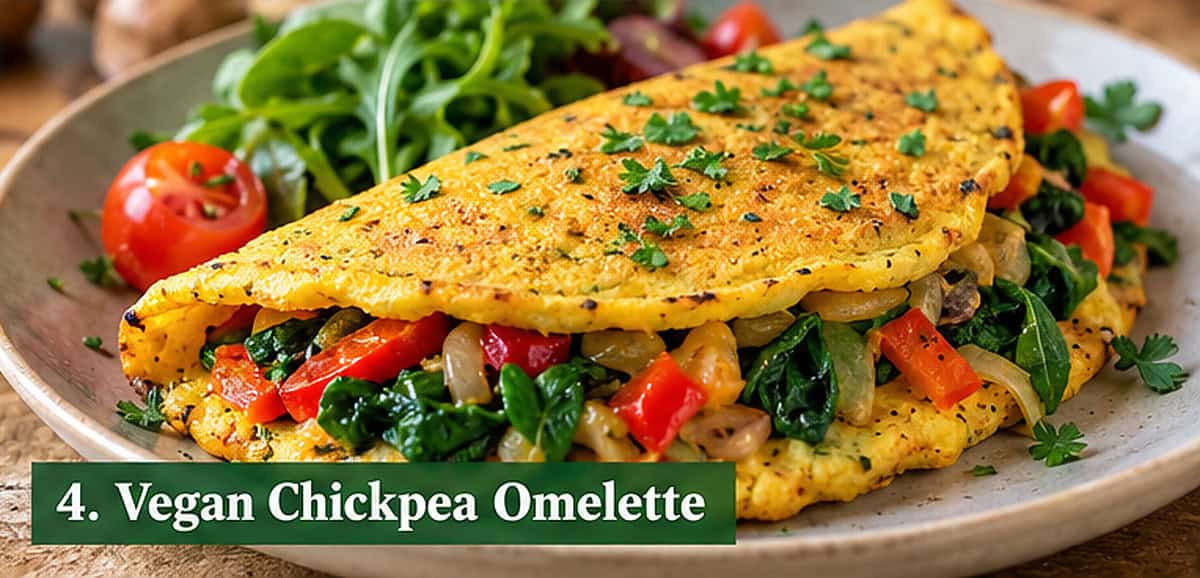
Recipe 4: Vegan Chickpea Flour Omelette with Vegetables (No Eggs)

Vegan chickpea flour omelette filled with spinach, mushrooms and peppers
Recipe 4: Vegan chickpea flour omelette

Want a vegan omelette without eggs? Chickpea flour, sometimes labeled besan or gram flour, makes a savory batter that cooks into an omelette-style pancake. It is not identical to an egg omelette, but it’s a practical, filling option when you want a fully plant-based breakfast.

Best for: An egg-free, dairy-free veggie breakfast
Serves: 1 | Prep: 8 minutes | Cook: 10 minutes | Total: about 18 minutes
Diet: Vegan; contains chickpeas (a legume)

Ingredients

For the batter

  • ½ cup (about 45 g) chickpea flour
  • ½ cup (120 mL) water
  • 1 tablespoon nutritional yeast, optional
  • ¼ teaspoon baking powder, optional, for a lighter texture
  • ¼ teaspoon garlic powder
  • ⅛ teaspoon ground turmeric
  • ¼ teaspoon fine salt, or to taste
  • A pinch of black pepper

For the vegetables

  • 1 teaspoon (5 mL) olive oil, divided
  • 2 tablespoons finely diced bell pepper
  • 2 tablespoons finely sliced mushrooms
  • 2 tablespoons chopped baby spinach
  • 1 tablespoon chopped scallion or spring onion

Instructions

  1. Whisk the chickpea flour, water, nutritional yeast (if using), baking powder (if using), garlic powder, turmeric, salt and pepper until smooth. Let stand for 5 minutes while you cook the vegetables. If the batter looks unusually thick, whisk in water 1 teaspoon at a time until pourable but not runny.
  2. Heat half the oil in a small nonstick skillet over medium heat. Sauté the bell pepper and mushrooms for 3 minutes, until softened. Add the spinach and scallion for the final minute, then transfer to a plate.
  3. Add the remaining oil and reduce the heat to medium-low. Pour the batter into the skillet, gently spreading it into an even round.
  4. Scatter the cooked vegetables over one half of the batter. Cover the pan with a lid and cook for 4–5 minutes, until the surface looks mostly set and the bottom is golden.
  5. Carefully loosen the omelette with a wide spatula. Fold it in half, then cook another 2–3 minutes, turning gently if needed, until the center is fully cooked and no raw batter remains.
  6. Serve hot with herbs, salsa or avocado.

Helpful note: Chickpea flour needs thorough cooking. Don’t taste the raw batter; the FDA advises against eating or tasting raw flour, dough or batter. For a different flavor, add a small pinch of kala namak (black salt) after cooking; it has a sulfurous, egg-like aroma. Check that every topping or sauce is vegan if you’re serving this to someone avoiding all animal products. For more plant-based protein ideas, see our guide to high-protein vegetarian meals.

How to Customize Your Own Veggie Omelette

Once you know the basics, you can create dozens of combinations without following a new recipe every time. Start with the two-egg base, or the chickpea flour batter for an egg-free version, and choose one or two vegetables, one herb and an optional topping.

If you like… Try this combination
Earthy flavors Mushrooms + spinach + thyme
Sweet vegetables Roasted red pepper + onion + basil
A little heat Jalapeño + tomato + cilantro
Fresh, green flavors Zucchini + scallion + parsley
Rich, salty flavor Spinach + feta + dill
A dairy-free topping Avocado + salsa + fresh herbs

What about leftovers? Small amounts of cooked broccoli, roasted squash or sautéed peppers can work well. Drain any excess liquid and reheat vegetables before adding them to the egg mixture. Cool and refrigerate cooked leftovers within 2 hours, and see the storage notes in the FAQ below.

Common Veggie Omelette Mistakes (and Easy Fixes)

My omelette is watery. Tomatoes, spinach, mushrooms and zucchini can release moisture. Cook them separately and remove excess liquid before adding them to the eggs or chickpea batter.

The eggs tear when I fold them. The pan may be too hot, the omelette may be stuck, or the filling may be too heavy. Use a good nonstick skillet, lower the heat, and spread the fillings over only one half.

My chickpea omelette breaks apart. Let the batter rest briefly, use a small pan, and wait until the underside forms a firm crust before trying to fold it. A lid helps the top set without burning the bottom.

The filling tastes bland. Season the vegetables as you sauté them. Add herbs, pepper or a small squeeze of lemon after cooking, and adjust salt carefully when using salty cheeses or olives.

Frequently Asked Questions About Veggie Omelettes

What vegetables are best in an omelette?

Spinach, mushrooms, bell peppers, onions, tomatoes, zucchini and cooked broccoli all work well. Choose vegetables you like and chop them small, so they cook quickly and fit inside the folded omelette.

Should I cook vegetables before adding them to an omelette?

Usually, yes. Precooking makes firmer vegetables tender and removes moisture from mushrooms, spinach and zucchini. That helps prevent a watery omelette or a filling that’s still raw when the eggs have finished cooking.

How many eggs do I need for one vegetable omelette?

Two large eggs are a convenient starting point for one serving in an 8-inch (20 cm) skillet. Use three eggs and a slightly larger pan if you prefer a more substantial meal, and adjust the fillings accordingly.

Can a veggie omelette be vegan?

A traditional vegetable omelette made with eggs is vegetarian, not vegan. For an egg-free version, use chickpea flour batter or another clearly labeled vegan egg alternative, and leave out dairy-based cheese and butter. Our guide to what veganism is and what vegans eat has more background.

What can I use instead of cheese?

Try avocado, hummus on the side, sautéed mushrooms, fresh herbs or a dairy-free cheese alternative. Cheese is optional in all four recipes; flavor comes from well-seasoned vegetables too.

How do I stop my omelette from sticking?

Use a clean, well-maintained nonstick skillet, a small amount of oil, and medium-low heat once you add the eggs. Avoid moving or folding the omelette before the bottom has set.

Can I make veggie omelettes ahead of time?

You can wash and chop the vegetables ahead of time and refrigerate them, which speeds up breakfast. Cooked egg omelettes are best served fresh. If you do have leftovers, the USDA says to refrigerate perishable food within 2 hours, use most cooked leftovers (including omelettes) within 3 to 4 days, and reheat leftovers to 165°F (74°C). Its leftovers guidance has the details.

Is chickpea flour the same as regular flour?

No. Chickpea flour is made from chickpeas and behaves differently from wheat flour. Its flavor and structure make it useful for an egg-free savory omelette, but you should not replace it with all-purpose wheat flour in the vegan recipe without adjusting the method.

Your Turn: Share Your Favorite Veggie Omelette Recipe!

The original 2007 version of this post asked readers to email in their vegetarian and vegan omelette recipes, and we’d still love to build that community collection.

Have a veggie omelette combination we haven’t tried? Tell us in the comments below! Whether it’s a family favorite, a five-minute breakfast or a creative vegan twist, you’re welcome to share it.

To help other readers recreate your recipe, please include:

  • Your recipe name and where you’re writing from (optional)
  • Ingredients and approximate amounts
  • Simple cooking steps and estimated prep and cooking time
  • Whether your recipe is vegetarian or fully vegan
  • One useful tip, variation or story behind the recipe

Please don’t post private contact details in a public comment. If we’d like to feature your recipe in a future roundup, we’ll ask your permission first.

Which veggie omelette should we try next? Share your recipe and help other readers discover a new favorite breakfast.