Yoga Equipment for Beginners: What You Need and What You Can Skip
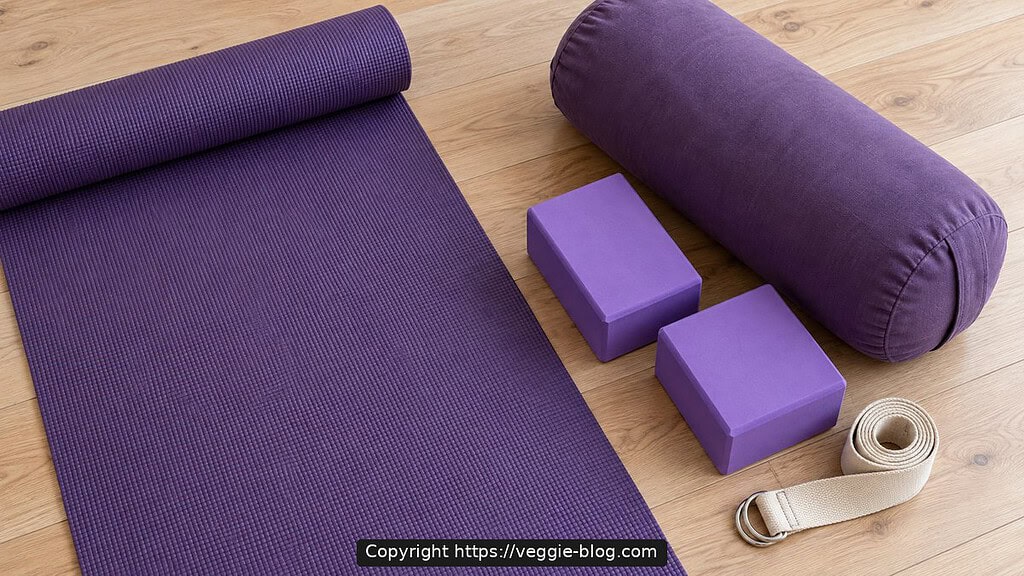
The old version of this post was titled simply “Equipment,” and it mixed beginners’ tips with a list of props. Some of it was useful, such as using a mat, strap and blocks. Other parts were vague or hard to follow. This rewrite puts the advice in order: what you actually need for your first weeks of yoga, what is optional, and how to set up a calm space at home.
What is the one thing you need?
A yoga mat. Cleveland Clinic points out that mats provide a non-slip surface that reduces the risk of slipping or falling as you move from one pose to the next, and many have some cushioning. The old post said the same: you want something to rest on so you do not slide around on the floor. A mat is especially useful on wood or tile. On carpet, a mat is still helpful because it gives you a clear space and a little extra grip. Look for one that does not slip under your hands in a pose such as downward dog.
Which props are worth buying?
Props are tools to make poses more accessible, not signs that you are doing something wrong. According to Cleveland Clinic, blocks and straps are the universal go-tos, while blankets and bolsters appear more often in restorative yoga. Blocks bring the floor closer to your hands in standing poses such as triangle pose. Straps extend your reach, for example in a seated forward fold, so that you can keep your back straight instead of rounding it to reach your feet. The old post described belts or ropes used to pull the legs into a better stretch, and blocks to prop yourself up, which is the same idea. Blankets give cushioning for your knees and can lift your hips when you sit cross-legged.
Can you use things from around the house?
Yes. Cleveland Clinic says a rolled-up towel can replace a blanket, and neckties or T-shirts can replace a strap. Stacked books can stand in for blocks, though a sturdy, non-slip one is safer. If you are unsure whether you will keep up the practice, borrow props from a studio class or buy only a mat at first. You can add more once you know what you use.
How do you set up a space at home?
The old post gave a good list, which I have kept in a shorter form. Choose a quiet spot and switch off your phone. Wear comfortable clothes that let you stretch; our post on choosing fitness apparel covers what to wear for yoga as well as other sports. Practice barefoot, which gives you more grip and helps you feel your balance. Pull long hair back so that it does not fall in your face. Keep the lights low or use daylight, and play soft music only if it helps you. Some people like a scent such as lavender or an essential oil, but that is personal preference. I could not find reliable research showing that aromatherapy clears the mind, so I have not repeated that claim.
Should you take a class?
The old post said that some people prefer a class so that they are guided properly, and that this is fine. That is good advice. The National Center for Complementary and Integrative Health says that yoga is generally safe when done properly under the guidance of a qualified instructor, and that most injuries are sprains and strains. It advises beginners to avoid extreme practices such as headstands and forceful breathing. A teacher can also show you how to use props correctly, which saves you guesswork. If you prefer to learn at home, read the basic yoga postures and their variations and our warm-up guide before you start: before you start yoga.
Will you always need props?
No, and the old post made that point as well. As flexibility and strength improve, many people use fewer props, or use them only on tight days. Just remember that the goal is not to reach a perfect shape. Tension in a stretch is normal, but sharp pain is not. Never push into discomfort to match a picture in a book. Yoga also includes the mind and the breath, so a pose done calmly with a block is worth more than a pose forced without one. When you are ready for a short routine to use your new equipment, try a gentle morning routine for beginners.
Leave a Reply