How to Find Vegetarian and Vegan Restaurants Anywhere in the World
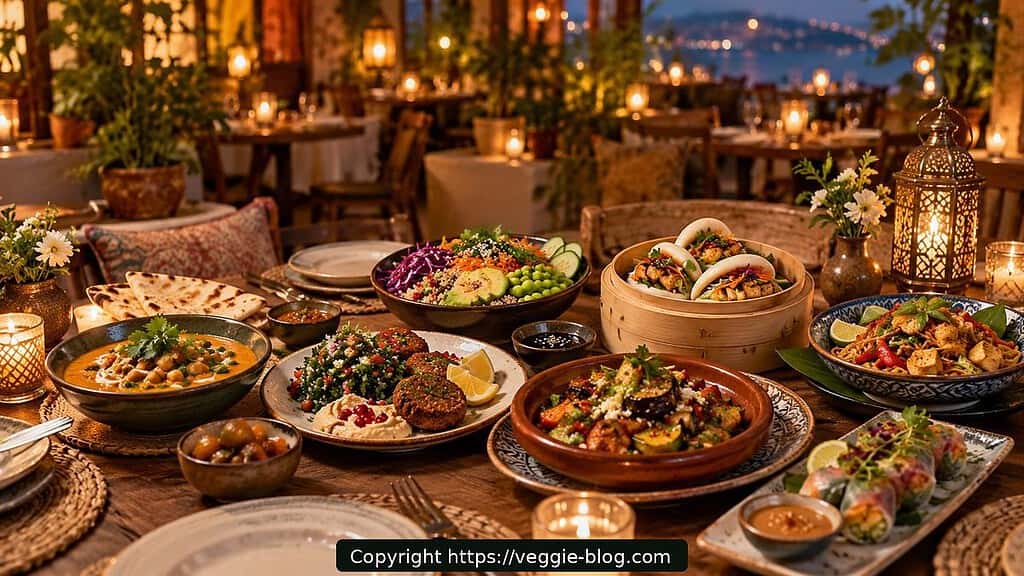
Finding a good vegetarian or vegan restaurant in an unfamiliar city should be part of the fun of traveling, not a guessing game at the dinner table. Whether you need a vegan restaurant near you, a vegetarian-friendly lunch during a layover, or somewhere your entire group can eat, a few search tools and the right questions make the search much easier.
The key is to know the difference between a fully vegan restaurant, a vegetarian restaurant, and a conventional restaurant with vegan options. All three can be useful, but they are not the same. A listing that says “vegetarian-friendly” is a starting point, not proof that every dish is vegan.
This guide shows how to search with HappyCow, Google Maps and Tripadvisor; read restaurant and menu labels; spot ingredients that are easy to miss; and ask staff clear questions before ordering. For background on the terms themselves, see our guides to vegetarian and vegan definitions and what veganism means.
Quick answer: what’s the easiest way to find vegan and vegetarian restaurants?
For an unfamiliar destination, start with HappyCow’s restaurant search, which lets you search a place and filter by Vegan, Vegetarian or Veg-Options. Then cross-check promising places on Google Maps for the location, the restaurant’s own menu, recent photos and opening details. Tripadvisor can add other travelers’ experiences, especially when a fully vegan restaurant is not nearby.
Before setting out, check the restaurant’s own website or contact details. Reviews and directory listings can be outdated, menus change, and “plant-based” does not always explain every ingredient or kitchen practice.
1. Use HappyCow to search by vegan and vegetarian category
HappyCow is a directory built around vegan and vegetarian food. Its categories describe what a business serves rather than only its cuisine or price range, so you can search by destination, look at a map and narrow down the type of business.
HappyCow’s published owner and manager FAQ explains how it classifies restaurants. The search page labels these categories Vegan, Vegetarian and Veg-Options; the FAQ calls the last one “Options”:
| HappyCow category | What the FAQ says | Best for |
|---|---|---|
| Vegan | A business with a permanent location that serves fully vegan food, with no animal products used in the kitchen. | Diners who prefer a dedicated vegan kitchen. |
| Vegetarian | A business with a permanent location where some food is made 100% from plants, but where dairy, egg and/or honey are used in some preparations. | Vegetarians, and vegans willing to check individual menu items. |
| Veg-Options | A business where some food is 100% plant-based while meat, dairy and/or egg are used in other items. The menu must include three or more fully plant-based options to be listed. | Mixed groups, or destinations with few dedicated vegan restaurants. |
HappyCow itself advises contacting businesses directly for clarification on matters such as ingredient cross-contamination at vegetarian and veg-option businesses. A vegetarian restaurant is not necessarily fully vegan, and a restaurant in a “vegan-friendly” result is not necessarily a vegan-only business. Check the exact category on the listing before choosing.
A practical search routine
- Enter your destination, ideally a neighborhood rather than a whole country.
- Select the category that matches your needs.
- Open a few listings and read recent reviews that mention the dishes you would order.
- Look at menu photos and any notes about moving, closing or changing menus.
- Confirm the final address and opening times with the business itself.
If the area has few results, widen your search to vegetarian restaurants and places offering vegan options. That is often more effective than assuming a destination has nothing suitable.
2. Search Google Maps with more specific phrases
Google Maps is helpful when you are already out exploring and want something within walking distance of your hotel, station or attraction. Google’s Maps Help page on searching for places explains that you can search for a type of business or place, filter results (for example by price or by places that are currently open), and open a place to see details such as hours, a website, and ratings or reviews. Note that on the results map, Google marks square pins as ads.
Try searches such as:
vegan restaurant near mevegetarian restaurant near mevegan breakfast [city]vegetarian Indian restaurant [neighborhood]vegan options [airport or station name]plant-based restaurant [city]
The more specific the situation, the easier it is to identify realistic choices. Features can differ by device and change over time.
Do not judge a menu from the first photograph. Open the restaurant’s current menu if available, scan recent customer photos and check the date of any review that mentions vegan options. Google’s help page on dishes in Maps notes that not every dish gets added to Maps.
A restaurant with only one tofu dish may be less useful than one with several clearly identified plant-based mains, even if both appear under a broad search for “vegetarian.”
3. Compare traveler reviews on Tripadvisor and other platforms
Tripadvisor’s restaurant pages include a Dietary restrictions filter with options such as Vegetarian friendly and Vegan options. Because these tags can include restaurants that also serve meat, fish, eggs and dairy, treat them as a lead, then read the actual menu and the latest detailed reviews.
Look for reviews answering practical questions: Did the restaurant understand what vegan meant? Could the staff explain sauces and broths? Were there complete meals, or only a side salad? Did the review mention the same branch you plan to visit?
Other local guides, neighborhood forums and restaurant websites can add context. An old five-star review does not confirm today’s ingredients or opening times.
4. Understand vegetarian, vegan, plant-based and vegan-friendly labels
Restaurant language varies widely between countries, and similar-looking labels may follow different rules.
| Menu description | What to expect | What to check |
|---|---|---|
| Vegan | No meat, fish, dairy, eggs, honey or other animal-derived ingredients in the dish. | Sauces, toppings, cooking practices and your own requirements. |
| Vegetarian | No meat or fish, but dishes may contain dairy, eggs or honey. | Cheese, cream, egg noodles, gelatine and animal-derived rennet. |
| Plant-based | Usually emphasizes ingredients from plants, but the term is used inconsistently. | Whether every ingredient is free from animal products. |
| Vegan-friendly / vegan options | Some dishes are intended to be vegan; the whole kitchen may not be. | Which items are vegan and whether staff can confirm them. |
| Dairy-free | Does not contain dairy by the establishment’s stated criteria. | Egg, meat, fish, honey and other animal ingredients. |
| Vegetable / meat-free | Describes the prominent ingredients, not necessarily the full recipe. | Stock, fish sauce, shrimp paste, dressings and garnishes. |
A small green leaf symbol is not a universal certification; its meaning depends on the restaurant. Likewise, “organic,” “healthy,” “sustainable” and “gluten-free” are not synonyms for vegan. A MICHELIN Green Star, for example, recognizes sustainability efforts; the Guide’s own feature on Green Star restaurants includes meat-focused and seafood-focused kitchens, so the award is not a vegan certification.
In some countries labels follow national rules. In India, for instance, the food-labelling regulations for packaged food define non-vegetarian food as containing any part of an animal or eggs, and exclude milk, milk products and honey from that definition (FSSAI labelling regulations). In other words, a green “vegetarian” mark there can still mean dairy.
What do the Vegan Trademark and V-Label mean?
Two recognized certification systems can help with labelled products and, in some cases, individual menu items:
- The Vegan Society’s Vegan Trademark: Its published standards cover animal-derived ingredients and animal testing, and require brands to minimize cross-contamination as far as is reasonably practicable. The Vegan Society says restaurants and caterers can register individual menu items. A certified dish does not automatically mean the entire restaurant is vegan.
- V-Label: The international V-Label criteria define vegan and vegetarian separately. A vegetarian label may allow milk, eggs and honey, so check which category the label actually states.
Always distinguish an independently certified product or dish from a restaurant’s own leaf icon. If a menu says it uses a certified vegan ingredient, that alone does not certify the completed meal.
5. Watch for hidden animal ingredients
A dish can look vegetarian or vegan but still use ingredients you cannot see. These examples are common reasons to ask before ordering:
| Cuisine or dish | Ingredient to check | A useful question |
|---|---|---|
| Thai noodles and curries | Fish sauce, shrimp paste, oyster sauce, egg | “Can you make it without fish sauce, shrimp paste or egg?” |
| Japanese noodle soups, dipping sauces | Fish-based dashi or bonito stock | “Is the broth entirely plant-based?” |
| Korean kimchi or stews | Fish sauce, salted seafood, anchovy or meat broth | “Does this kimchi or broth contain seafood or meat?” |
| Indian curries and breads | Ghee, butter, cream, paneer, yogurt | “Can it be made without dairy or ghee?” |
| Italian pasta and risotto | Cheese, egg pasta, butter, meat stock | “Is the pasta egg-free and the stock vegetable-based?” |
| Mexican rice, beans and tortillas | Lard, chicken stock, dairy toppings | “Are the beans and rice made without lard or animal stock?” |
| Salads, soups and dressings | Anchovies, honey, egg-based dressing, meat broth | “What is in the dressing and stock?” |
These are possibilities, not claims that every restaurant or recipe in a cuisine uses the same ingredients. The point is to check the actual dish. Official and specialist guidance backs up several of the examples: the Japan National Tourism Organization warns that dishes in Japan can contain hidden meat or bonito flakes, including in dashi stock; the Korea Tourism Organization says that kimchi seasoning most often contains salted seafood, fish sauce, meat broth or similar flavoring; and the Vegetarian Resource Group suggests asking whether lard or chicken broth is used at Mexican restaurants.
Specialty cuisines can provide helpful starting points, such as a South Indian vegetarian restaurant, a Buddhist vegetarian café or a Middle Eastern restaurant offering falafel, but there is still no substitute for checking ingredients. Even an apparently vegan dish may be served with yogurt, cheese, egg or a non-vegan sauce.
6. Ask restaurant staff these seven questions
Most restaurant staff can give a more useful answer when you name the specific ingredients you avoid instead of relying on an unfamiliar dietary label alone. The conversation does not need to be complicated.
- “Which dishes on your menu are completely vegan?” Start with what they already know how to prepare.
- “Does this dish contain meat, fish, seafood, eggs, dairy or honey?” This spells out what “vegan” means for your order.
- “What is the soup or curry broth made from?” Stocks are easy to overlook.
- “Does the sauce contain fish sauce, shrimp paste, oyster sauce or anchovies?” Especially useful for some Asian and Mediterranean dishes.
- “Can the cheese, butter, egg or yogurt be left out, and does the rest of the recipe remain vegan?” Removing one topping might not solve the whole dish.
- “Is the vegan dish prepared on shared equipment? Can you explain your procedures?” Useful when kitchen separation is important to you.
- “Could you show me which menu items are vegan, or ask the chef to confirm?” Helpful if the server is uncertain.
A short ordering script: “I eat vegan food, so I don’t eat meat, fish, seafood, eggs, milk, cheese, butter or honey. Could you please confirm which dishes are made without those ingredients, including the sauce and broth?”
When traveling internationally, translate that sentence into the local language ahead of time. Show it to the server, then ask for clarification rather than treating a machine translation as a guarantee. Tourism authorities in Japan and Korea both suggest naming the specific ingredients you cannot eat and carrying a written explanation in the local language.
Vegan does not automatically mean allergy-safe
If you have a food allergy, explain the specific allergen and any cross-contact precautions you require. For example, a vegan dish may contain soy, wheat, sesame, peanuts or tree nuts. A food labelled “dairy-free” is not automatically safe for every person with a milk allergy unless the restaurant can address their needs. The food-allergy organization FARE explains cross-contact and why to speak with restaurant staff about it.
If the staff cannot reliably answer a serious allergy question, choose a safer option rather than guessing.
7. Plan vegetarian or vegan meals before a trip
Finding suitable food gets easier when you build a small backup plan rather than relying on one restaurant.
Before departure: Search the area around your accommodation and save two or three restaurants for breakfast, lunch and dinner. Consider places near transit hubs or attractions, not only the most famous destination restaurants. Take screenshots of menus or save official websites so you can find them if mobile data is poor.
On arrival: Recheck the addresses and opening details. Public holidays, seasonal schedules and branch closures can affect restaurant plans. If a listing points to an unfamiliar address, confirm the entrance and current location rather than trusting an old pin.
With a mixed group: Look for a restaurant with several explicitly vegan options instead of searching only for fully vegan establishments. That can make meals easier when some travelers want meat or dairy dishes.
On a budget: Search for lunch specials, markets and food halls, but check that clearly vegan options really exist. A cheap vegetable dish that uses meat broth is not a bargain if it does not meet your dietary needs. Grocery stores, fruit shops and simple takeaway meals can be useful backups where restaurants are limited.
Away from city centers: Expand the search radius and use local-language keywords. In smaller towns, a restaurant that is not labelled “vegan” may still prepare an appropriate meal, provided its staff can confirm every ingredient.
8. Search in local languages and understand regional terms
English search phrases do not always reveal a city’s best vegetarian choices. Trying a local word can surface additional menus and listings:
- India: Search for pure veg or vegetarian restaurant, but check dairy, ghee and paneer if you are vegan. A vegetarian label there does not mean dairy-free (see the labelling note above), and eggs are generally treated as non-vegetarian. Our guide to Hindus and vegetarianism gives more background on why vegetarian food is so widespread.
- Thailand: Look for yellow flags with the red character jay (เจ), linked to the Vegetarian Festival tradition and usually stricter than ordinary vegetarian food, or for mangsawirat (มังสวิรัติ) for vegetarian food. Confirm a dish’s ingredients and the particular kitchen’s practices. Our guide to eating vegetarian and vegan in Thailand explains the terms in more detail.
- Japan: Search for vegan alongside the city name, and ask about dashi; “vegetable” in a menu name does not guarantee a plant-based broth.
- Spanish, Italian and Portuguese: vegano/vegana means vegan and vegetariano/vegetariana means vegetarian. Still confirm the dish rather than relying only on a label.
Local terms are discovery tools, not guarantees. Religious, traditional and restaurant-specific definitions sometimes differ from the dietary requirements a traveler expects.
9. How to decide between two vegan-friendly restaurants
When several places look promising, do not rely on a single ranking or a star rating. Ask which one is a better fit for the meal you actually want.
First, check menu depth: are there satisfying mains, or only side dishes? Next, check ingredient clarity: are vegan items clearly labelled, and will the kitchen answer questions? Then consider location and reliability: how far is the restaurant, and do recent reviews agree it is still operating? Finally, look at price, accessibility, reservation requirements and your group’s preferences.
A dedicated vegan restaurant may be the simplest choice for someone who wants to avoid animal ingredients. A vegetarian café can be excellent for a mixed vegetarian-vegan group if its vegan dishes are clearly identified. A standard restaurant with reliable vegan options may be the most convenient choice when traveling with people who eat differently.
The best choice is the one that fits your actual requirements, not the first listing in an app.
Frequently asked questions about finding vegan and vegetarian restaurants
Which tools can I use to find vegan restaurants worldwide?
HappyCow is a directory focused on vegan and vegetarian food and separates vegan, vegetarian and veg-option businesses. Google Maps is useful for nearby restaurants and logistics, while Tripadvisor can provide additional traveler reviews. Cross-check the restaurant’s own menu before visiting.
How can I find vegan restaurants near me?
Search “vegan restaurants near me” in Google Maps or enter your area in a vegan and vegetarian directory. Look at the location, the exact listing category, recent reviews and the official menu. If there are no fully vegan restaurants nearby, search for restaurants with clearly labelled vegan options.
Is a vegetarian restaurant always suitable for vegans?
No. Vegetarian restaurants may use cheese, milk, eggs, butter, honey and other animal-derived ingredients. Ask which particular dishes are fully vegan.
What does “vegan-friendly restaurant” mean?
It usually means a restaurant offers some vegan choices while possibly serving non-vegan food too. The label is not an assurance that everything on the menu, or in the kitchen, is vegan.
Are all plant-based menu items vegan?
Not necessarily. “Plant-based” is used inconsistently in marketing. Ask whether the finished dish contains any dairy, eggs, honey, fish-based sauces, meat stock or other animal ingredients.
How do I know whether a vegan restaurant listing is up to date?
Compare the directory with the restaurant’s current website or social profile. Check recent menu photos, addresses and reviews, and contact the business if the details conflict.
Can a non-vegan restaurant serve a fully vegan meal?
Yes. Restaurants that also serve animal products may offer entirely vegan dishes. Read the exact ingredient list and ask about sauces, stocks and any preparation practices important to you.
Does a green leaf symbol mean a dish is certified vegan?
No. Many restaurants use their own icons. Certification marks, such as The Vegan Society’s Vegan Trademark or V-Label, follow defined criteria, but you must check which product or dish is covered and whether the category is vegan rather than vegetarian.
What should I do if the staff do not understand “vegan”?
List the ingredients you avoid and ask about the specific dish. A short translated card can help when abroad. If the restaurant still cannot confirm what is in the meal, choose another dish or place.
How can I find vegan food at airports or train stations?
Search for the specific terminal or station name plus “vegan options.” Check food-court menus and stores nearby. Because opening times and concessions change, confirm available options on the day of travel and carry a suitable snack when practical.
Are vegan and allergy-friendly the same thing?
No. Vegan refers to avoiding animal-derived products; it does not mean food is free of common allergens or safe from cross-contact. Tell the restaurant about any medically relevant allergy separately.
The takeaway: search widely, verify carefully, enjoy the meal
You do not need a single worldwide directory to find vegetarian and vegan restaurants. Start with a vegan and vegetarian directory such as HappyCow, double-check the location and latest menu on Google Maps and the restaurant’s website, and use traveler reviews for context. Learn the meaning of vegan, vegetarian and vegan options, then ask clear questions whenever ingredients are uncertain.
With a little preparation, finding plant-based meals becomes a normal part of exploring a new city, not the hardest part of your trip.
Tool features, listing categories and certification rules can change, and menus and opening times change more often. Details in this guide were checked against the linked sources in October 2026; confirm current information with the restaurant or the tool itself.
Leave a Reply