Four Yoga Postures for Computer Users: Diamond, Locust, Downward Dog and a Seated Twist

Sitting still for hours stiffens the back, hips and shoulders, and a few minutes of movement can make a difference. This guide covers four classic yoga postures that suit people who work at a screen: the diamond posture, the locust, the downward-facing dog and a seated twist. Each is described step by step, with notes on who should take care. Move slowly, breathe normally, and stop if anything hurts.
What should you know before you start?
Follow the basic stretching rules from Harvard Health Publishing: warm up for five to ten minutes with light activity, do not bounce, expect tension but not pain, and hold each posture for roughly 30 seconds, which is about five slow breaths. The National Center for Complementary and Integrative Health says that yoga is generally safe when done properly under a qualified instructor, and that sprains and strains are the most common injuries, most often in the knee or lower leg. It also suggests beginners avoid extreme practices such as headstands and forceful breathing. If you have a medical condition, check first with your doctor.
How do you do the diamond posture (Vajrasana)?
Kneel on a carpet or folded blanket with your knees together and sit back on your heels. Lift your chest so your ear, shoulder, elbow and hip are in one line, and rest your hands on your thighs. Stay for a few minutes and breathe. Many people find this a calm way to sit, but it asks a lot of the knees and ankles. If kneeling hurts, put a folded blanket between your calves and thighs or skip it, and do not do it if you have a knee injury.
How do you do the locust (Salabhasana)?
Lie face down with your chin or forehead on the floor and your arms by your sides, palms down. Exhale and lift your legs a few inches, squeezing your buttocks and stretching the legs back. Hold for a few breaths, lower with control and repeat two or three times. This posture strengthens the muscles of the back and legs, but it is not for everyone. MedlinePlus lists leg lifts while lying on the stomach among the exercises to avoid while you recover from a back injury unless your provider or physical therapist says it is all right, so skip it if you have back pain.
How do you do the downward-facing dog (Adho mukha svanasana)?
Start on hands and knees with your hands under your shoulders. Tuck your toes, press into your hands and lift your hips up and back so that your body forms an upside-down V. Keep your knees slightly bent if your hamstrings are tight, push the floor away and let your head hang between your arms. Hold for about five breaths, then lower your knees slowly. This stretches the backs of the legs and the shoulders. If you have wrist pain, high blood pressure or an eye condition such as glaucoma, ask your doctor first, because NCCIH lists severe high blood pressure and glaucoma among the conditions that may call for changes to poses.
How do you do a seated twist?
The traditional twist, Bharadvajasana, starts from a kneeling position. A simpler version works in a chair. Sit tall on the front half of the chair with your feet flat on the floor. Place your right hand on the outside of your left knee, hold the back of the chair with your left hand and turn gently to the left, looking over your left shoulder. Keep your hips facing forward and your spine long. Hold for three to five breaths and repeat on the other side. The old version of this article said to do the twist once an hour if you have lower back pain. I have removed that advice, because there is no basis for it. A better habit is to get up and move often, in line with the Physical Activity Guidelines for Americans, which tell adults to sit less.
Where can you learn more?
Our post on basic yoga postures explains more poses, and yoga postures and styles gives an overview of the main styles. For a standing stretch that suits a desk break, try the triangle pose, and read what yoga is if you are just starting out. The photo below shows the downward-facing dog.
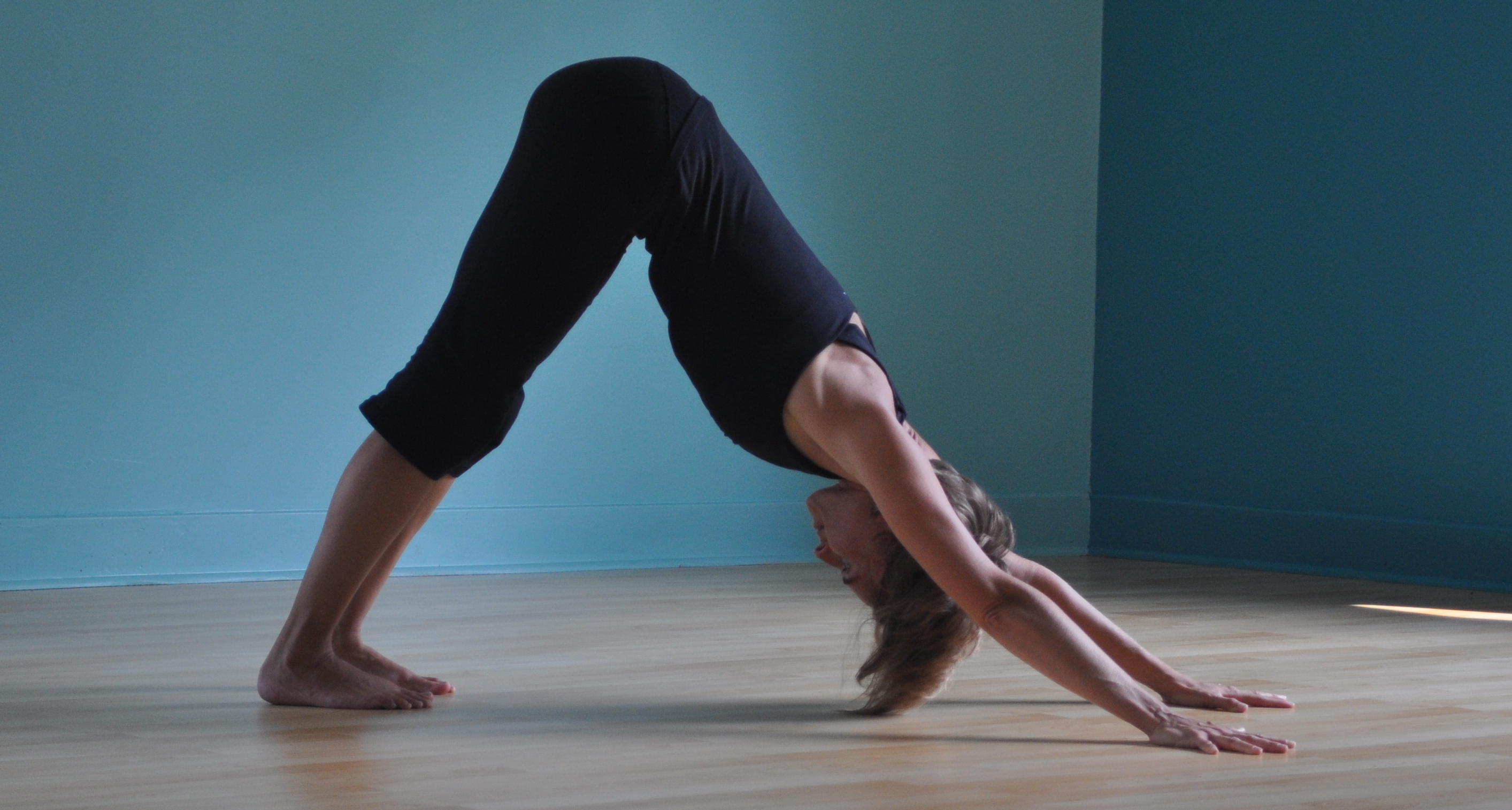
Adho mukha svanasana Yoga for Computer Users
Book: Yoga for Computer Users by Sandy Blaine
View this book on Amazon (affiliate link: we may earn a commission at no cost to you)
Leave a Reply