Author Archive

Yoga and Diabetes: How to Start Safely

by on Monday, April 18th, 2011

How to start yoga with diabetes

Yoga can be fun, healthy and calming. It is a mind-body discipline that people have practiced for thousands of years, and even a little progress can bring a sense of ease and calm. If you have diabetes, you can enjoy it too, as long as you start with a few sensible precautions.

How can you learn yoga?

You can find audio and video recordings that teach breathing and relaxation techniques at health food stores, bookstores, online and by mail order. It is probably fine to learn breathing and relaxation from a recording or a booklet, but do not try the yoga postures without a skilled teacher. A teacher can correct you, warn you when necessary and help you adapt poses to your body.

It is worth spending some time finding an instructor who is right for you. Your diabetes educator or another health care professional may be able to recommend one. Ask for referrals as you would for any professional you might consult. Yoga instructors do not have to be certified, but many are, through a range of different programs. Ask prospective teachers whether they are certified. A certified teacher is not necessarily better than one who is not, but it is something to consider.

How can you exercise safely with diabetes?

Most people with diabetes can exercise safely, but all physical activity carries some risk. These precautions help to tip the balance in your favor.

Have a medical check-up before you start, especially if you have heart disease, are over 35, have high blood pressure or high cholesterol, smoke, or have a family history of heart disease. Your doctor will tell you whether you need tests such as an exercise stress test with an ECG, which is more likely if you plan vigorous activity.

Tell your doctor about any symptoms that you notice during or after exercise, such as discomfort in your chest, neck, jaw or arms, nausea, dizziness, fainting, unusual shortness of breath or short-term changes in vision.

If you have diabetes-related complications, ask your health care team about special precautions. Consider exercising in a medically supervised program at first if you have peripheral vascular disease, retinopathy, autonomic neuropathy or kidney problems, and ask which poses to avoid.

Learn how to prevent and treat low blood glucose (hypoglycemia). If you take insulin or diabetes pills that can cause lows, check your blood glucose before, during and after exercise. Blood glucose can keep dropping for hours afterward. Keep fast-acting carbohydrate, such as glucose tablets or juice, within reach.

If you have type 1 diabetes and your blood glucose is above 250 milligrams per deciliter, check for ketones. Do not exercise if moderate or large amounts of ketones are present, because activity can raise the risk of ketoacidosis, a medical emergency.

Always warm up and cool down, and avoid exercising outdoors when the weather is extremely hot and humid, or extremely cold. Be careful with hot yoga rooms. Check your feet afterward for sores or blisters.

What can yoga do for you?

Gentle yoga can be a way to move more, relax and manage stress. It does not replace your medication, your meal plan or the advice of your health care team, so keep following them and share your plans. If you are curious about the basics, our post on what yoga is is a good place to start, and our guide to basic yoga postures shows some of the poses you may learn. For more on living with diabetes, see our posts on diabetes and diabetes-friendly recipes.

View this book on Amazon (affiliate link: we may earn a commission at no cost to you)
Gentle Detox Habits vs. Harsh Cleanses: What Is Worth Trying

by on Friday, April 15th, 2011

When you feel drained, achy and low on energy, the idea of a detox is tempting. We are told that a cleanse will give us clearer skin, a sharper mind and a stronger immune system. It is worth knowing what actually happens in your body before you try one, because the gentlest options are also the ones with the best track record.

What does your body already do?

Detoxification is something your body does all day, every day. The liver breaks down and packages waste, the kidneys filter the blood and make urine, the intestines clear solid waste, the lungs breathe out gases, and the skin loses some waste through sweat. You do not need to “switch this on.” What you can do is avoid overloading it, and give it what it needs to work well.

Are juice and water fasts a good place to start?

Many detox plans start with a juice fast or a water fast. The idea is that giving the digestive system a rest will let the body clean itself. In reality, there is little evidence for it. The National Center for Complementary and Integrative Health explains that juice and detox diets can lead to a quick initial weight loss because of the very low calorie intake, but people tend to regain weight when they return to normal eating. Fasting can also cause headaches, fainting, weakness and dehydration, and drinking large amounts of water and herbal tea without food for several days can cause dangerous electrolyte imbalances.

There are other risks. Juice that has not been pasteurized can carry harmful bacteria, which is a particular problem for children, older people and anyone with a weak immune system. Some juices are high in oxalate, which can matter for people prone to kidney stones, and anyone with diabetes should not change their eating without talking to their health team. You will also see claims that you can lose 30 to 40 pounds on a 30-day juice fast, but that kind of weight loss is neither healthy nor lasting.

What helps lower the load on your body?

The simplest step is to cut back on things that put a strain on your body: cigarettes, alcohol, and too much sugar and saturated fat from fast food and processed snacks. Use household and personal care products as directed on the label and keep your home ventilated. You cannot remove every chemical from your life, and you do not need to, but the habits above make a real difference to your health.

Which gentle habits are worth trying?

Change what is on your plate. Replace packaged and fast food with whole grains, fruit, vegetables, beans and nuts, which are rich in fiber and nutrients and low in fat and sugar.

Sweat a little, if you like. Saunas are used in many cultures, and some people find them relaxing. They are not proven to remove chemicals from your cells. If you have heart disease, low blood pressure or are pregnant, ask your doctor first, and always drink water.

Try skin brushing as a pleasant routine. A soft, natural-bristle brush used on dry skin before a shower can remove dead skin cells and feel stimulating. There is no good evidence that it moves toxins or “stimulates the lymph” in a meaningful way, and you should not use it on broken or irritated skin.

Practice yoga. Gentle yoga has been linked to better mood, sleep and stress, according to the NCCIH review of yoga. Twists and stretches will not “wring out” your organs, but they do relax you and keep you moving.

What is the bottom line?

If you want to feel better, the plan is not exotic. Eat more plants, drink water, sleep, move, and limit alcohol and tobacco. Read the full NCCIH guide to detoxes and cleanses if you are considering a program. Our posts on body detox the easy way, detox herbs, balancing pH and detox and body cleansing and detox for body and mind go into more detail.

Weight Loss Surgery: Understanding the Health Risks

by on Tuesday, April 12th, 2011

Weight loss surgery and its health risks

If you have been watching your weight climb for years and are worried about it, you may wonder whether weight loss surgery works. Can it stop future weight gain? Here is what you should know before you decide.

What is weight loss surgery?

Weight loss surgery, also called metabolic and bariatric surgery, is a group of operations that change your digestive system to help you lose weight. Some of them make your stomach smaller, so that you feel full sooner. Others change the small intestine, so that your body absorbs fewer calories. Surgery can also affect hormones that control hunger. Surgical techniques and monitoring have improved over the years, but it is still major surgery with real risks.

For this reason, appearance should not be the main reason for having it. It is meant for people with obesity who have not been able to lose weight and keep it off in other ways, and its main aim is to improve health problems linked to obesity, such as type 2 diabetes.

Who is it for?

According to the US National Institute of Diabetes and Digestive and Kidney Diseases, it may be an option for adults with a body mass index (BMI) of 40 or more, or a BMI of 35 or more together with a serious health problem linked to obesity, such as type 2 diabetes or sleep apnea. In some cases it is considered for people with a BMI of 30 to 35 whose type 2 diabetes is hard to control.

How much weight do people lose?

It varies. Studies show that many people lose, on average, 15 to 30 percent of their starting weight, depending on the type of operation. No method, including surgery, is sure to work. Some people lose less than they hoped, and over time some regain part of the weight. How well it works depends on your weight before surgery, the type of operation, your age, your ability to exercise, your overall health, your commitment to follow-up care and the support you get from family and friends.

What are the risks?

Side effects right after surgery can include bleeding, infection, leaks where the stomach or intestine was stapled or sewn, diarrhea and blood clots in the legs that can travel to the lungs or heart. Follow-up procedures or hospital stays are fairly common, affecting about one in three patients within five years. Rarely, complications can be fatal.

Problems can also appear later. Your body may not absorb enough nutrients, especially if you do not take the vitamins and minerals you are prescribed, which can lead to anemia or osteoporosis. This matters for vegetarians, who need to plan their intake of vitamin B12, iron, calcium and protein with a dietitian. Gallstones can form after rapid weight loss, gastric bands can slip, and some patients develop strictures (a narrowing that makes it hard to eat) or hernias. Some research suggests that gastric bypass may change how the body handles alcohol.

How can you prepare?

Learn as much as you can. Talk to an experienced bariatric surgeon, or at least a family doctor who knows the field, and ask about the types of surgery, the risks and the follow-up. Speak to a dietitian, and consider seeing a psychologist or psychiatrist for advice on long-term goals, since eating habits and emotions play a big part in the results. Make sure that you have people around you who will support you.

What happens after surgery?

Surgery is a tool, not a cure. To keep the weight off, you still need lifestyle changes: healthy eating, regular exercise, your vitamins and regular check-ups. Read our posts on a weight loss plan, natural weight loss and weight loss tips for ideas that work for the long term. For a summary of surgery types, risks and benefits, see the NIDDK guide to weight-loss surgery.

View this book on Amazon (affiliate link: we may earn a commission at no cost to you)

What Is Yoga?

by on Sunday, April 3rd, 2011

What is yoga?

Yoga, a Sanskrit word often translated as union or discipline, is an ancient practice from India. The sage Patanjali compiled the Yoga Sutras, one of its key texts, many centuries ago (scholars date it somewhere between about 200 BC and AD 400). The aim of yoga is to stretch the muscles, exercise the body and improve concentration. It can also help you relax, if you have trouble doing that.

No wonder this ancient practice has become popular among entertainers and athletes. Depending on who practices it, yoga can be simply a set of exercises or a whole way of life.

Discipline and breathing

Some who study yoga, called yogis, try to use it to reach a higher level of consciousness. They respect certain abstentions (things not to do), such as not lying, stealing, being greedy or harming other people. They also practice certain observances (things to do), such as being clean, content, self-controlled, studious and devoted.

Physical control is also important in yoga. Yogis train themselves to take full, deep breaths. They regard breathing as a life force, counting a lifespan not in years but in the number of breaths taken.

Yoga poses

Unlike exercises that focus only on strength, yoga also helps the body become flexible. Some yoga exercises (called asanas) look rather odd, and you may think you need to be a human pretzel to do them. Not so. You just have to relax.

In yoga, you do gentle stretches, never forcing yourself. The “no pain, no gain” rule does not apply. You do only the best you can at the moment, and at some later moment you will do more.

All yoga poses involve balance. And since you can’t balance if you’re thinking about last night’s TV show, yoga also demands concentration. Learn to concentrate in yoga, and you will be better able to concentrate in baseball, tennis or even school.

Yoga exercises borrow from nature. Many yoga poses can be traced to the shapes of animals, such as the cobra, cat, dog, tortoise, crab and eagle.

In the cobra pose, for example, you ask yourself, what would it feel like to be a cobra? You lie on your stomach with your forehead on the floor. As you inhale, you slowly lift your head and chest, supporting yourself with your hands. You hold that pose, then come down slowly, trying to move as a snake would move.

All yoga exercises develop skill and calmness. The effect of each move on a muscle or joint is carefully worked out.

You can choose exercises to ease typical aches, such as the stiffness from back-packing or the leg strain from jogging. Yoga can also help prepare you for skiing, and it may help you manage stress and feelings of fear or low mood, although it is no replacement for treatment if those feelings are strong.

Any good book on yoga will describe different asanas and explain how each works. You may already have done some yoga exercises without knowing it. Ever done a handstand, or the wheel? Many exercise programs borrow from yoga.

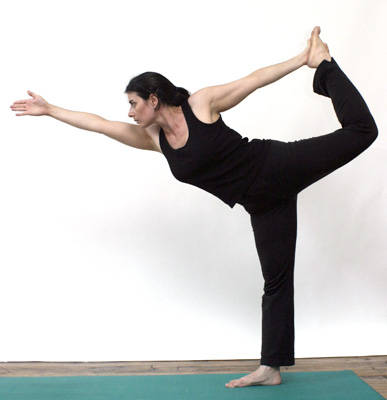
Woman practicing yoga balance pose, demonstrating flexibility and focus.

What is Yoga

How to Choose a Yoga Video: Healing, Gentle and Power Yoga Titles Compared

by on Friday, April 1st, 2011

The old version of this post said there were more than a hundred yoga videos on the market, “from nude yoga to postnatal yoga,” and then reviewed two of them. Today there are far more, on DVD, streaming apps and video sites, and the old reviews are worth reading mainly for what they teach about choosing one. Below I keep the useful points from those reviews and remove the health claims the research does not support.

Why are there so many kinds of yoga videos?

Yoga is practiced in many styles, from slow, restorative sessions to fast-moving power yoga, so videos range from relaxing stretches to workouts that leave you sweating. The label on the box rarely tells you how hard a video really is. Reading the description, checking the length and watching a preview are better guides than the title alone.

What did the old post say about a “healing yoga” video?

It described a 35-minute video for common health conditions, presented by two instructors who take turns demonstrating. It was split into three parts: breathing and stretching, strength poses such as downward-facing dog, and relaxation. The reviewer liked the calm voices, the clear explanations, the modifications that make poses easier, and the fact that none of the poses was very difficult. I have not been able to confirm the instructors’ names or that this video is still sold, so I have left them out.

The old description also said that the video “promises” to improve circulation, to help with diabetes symptoms and cholesterol, and to boost metabolism. A video cannot promise that. According to the National Center for Complementary and Integrative Health, research suggests that yoga may help with stress, neck pain, headaches and some other problems, but it is not a replacement for medical care. If you have diabetes or high cholesterol, ask your health care provider before you start, and see our post on yoga and type 2 diabetes for what the research shows.

What about a power yoga video “for beginners”?

The second video reviewed was a 20-minute power yoga session led by Rodney Yee, set against mountains in Maui, built around a series of sun salutations. The reviewer’s warning is still good advice: do not assume that “for beginners” means easy. The workout was short but demanding, with poses that need upper-body strength, and the reviewer complained that the teacher never showed an easier version of each pose or explained how to build up to them. That is the biggest weakness a yoga video can have, because there is no teacher in the room to adjust you. I could not confirm which Rodney Yee title was meant, so use this as a lesson rather than as a recommendation.

How do you pick a safe video?

The NCCIH says yoga is generally safe for healthy people when it is done properly under the guidance of a qualified instructor, and that learning on your own without supervision has been linked to a higher risk of injury. The most common injuries are sprains and strains, and older adults need to be especially careful. A video is not a live teacher, so look for these things before you press play:

Does the instructor offer easier and harder versions of each pose? Are the instructions clear about where your knees, back and neck should be? Is the level honestly labeled, and can you do the first five minutes comfortably? Does the teacher have recognized training? Also stop if something hurts, and skip any pose you are not ready for. If you have a health condition, are pregnant, or are over 65, talk with your provider first.

Where can you read more?

Our guide to yoga videos and how to pick one that loosens tight muscles and our tips on choosing a beginner yoga video go into more detail, and learning yoga online covers websites and teachers as well.

View this book on Amazon (affiliate link: we may earn a commission at no cost to you)