Author Archive

Atkins Diet Foods: What You Can Eat, What to Check on the Label and How to Plan

by on Sunday, March 27th, 2011

Atkins is a low-carbohydrate way of eating, and the foods you choose depend on which phase you are in. The old version of this post gave a muddled description of the “Atkins pyramid” and told readers to rely on the diet’s own products. This updated guide sticks to what Atkins itself publishes, and adds what independent sources say about labels and balance.

What does an Atkins plate look like?

The Atkins company describes the plan in terms of net carbohydrates, which it defines as total carbohydrate grams minus fiber grams, and in its low-carb foods also minus sugar alcohols. Protein foods such as meat, poultry, fish and eggs, together with fats such as olive oil and butter, are the base of each meal. Carbohydrates come mainly from what Atkins calls “foundation vegetables,” which are non-starchy vegetables such as leafy greens, asparagus, peppers, celery, cucumbers and cruciferous vegetables like broccoli and cauliflower. Avocados and olives count too. Root vegetables such as potatoes, sweet potatoes, parsnips, carrots and beets are not foundation vegetables. You can see the list on the Atkins healthcare professionals page on foundation vegetables.

Which foods are limited at the start?

In the first phase, Induction, Atkins allows 20 grams of net carbohydrates a day, with 12 to 15 grams coming from foundation vegetables. It asks people to avoid sugar, white flour and other refined grains, whole grains, most fruit (other than avocado, tomatoes and olives), legumes, starchy vegetables and milk. Berries and other foods are added back in later phases. The old post said that fruits are used sparingly in the early stages and whole grains only occasionally, which is in line with this. Our post on Atkins diet basics explains the four phases, and the Induction rules are covered in a separate post on the first two weeks.

Can you rely on low-carb labels?

Not blindly. The old post warned that manufacturers put “low carb” on labels to sell products, and that is a fair concern. The Ohio State University Wexner Medical Center notes that neither the FDA nor the American Diabetes Association endorses the idea of “net carbs” and that they advise people to look at total carbs on the nutrition label. Even so, it can be useful to know net carbs if you have diabetes or are trying to lose weight. A good habit is to read the Nutrition Facts label and the ingredient list, check the serving size, and subtract fiber from total carbohydrate yourself. See the OSU article on tracking net carbs.

How can you plan meals and shop?

Write a list of acceptable foods and keep it with you, so that you are not trying to remember what you can eat when you are hungry. Plan meals for the week and shop from a list. The old post suggested using Atkins cookbooks and online menu planners, many of which are written by companies selling food, so judge them as you would any diet advice. Our posts on planning meals for Atkins, low-carb swaps and eating low-carb on a budget give practical ideas.

Is it a balanced way to eat?

That depends on how you do it. Plenty of non-starchy vegetables, fish, eggs and nuts can be part of a healthy diet, but a plan built on processed meat, butter and packaged low-carb bars may not be. Talk to your doctor or a dietitian before starting, especially if you have diabetes, kidney disease or take medicine for blood pressure or cholesterol. The Atkins site itself says that the weight loss phases should not be used by people on dialysis and that you should consult a doctor before beginning.

View this book on Amazon (affiliate link: we may earn a commission at no cost to you)
High Cholesterol: When Lifestyle Is Enough and When Medicine Helps

by on Wednesday, March 23rd, 2011

Nobody can lower cholesterol overnight, and a number of things that raise it are out of your hands. Still, there is a lot you can do, and for some people a doctor will add medicine on top. This post explains what pushes LDL, the so-called “bad” cholesterol, up, what lifestyle changes realistically do, and what you should know about statins before you talk to your doctor.

What makes LDL cholesterol rise?

Some causes you cannot change. Your cholesterol tends to rise as you get older, and after menopause a woman’s risk goes up because her levels of protective female hormones fall. High cholesterol also runs in families, and an inherited condition called familial hypercholesterolemia causes very high levels from an early age. Diabetes, kidney disease and some medicines can raise LDL as well. The causes you can change are mainly what you eat, how much you move and your weight. A diet rich in saturated fat from fatty meat, full-fat dairy and fried or processed food raises LDL more than anything else in the diet, according to MedlinePlus.

Can you lower it instantly?

No. The idea that diet and exercise are “a waste of time” because they do not work at once is a myth. Eating less saturated fat, adding fiber from oats, beans and fruit, losing extra weight and moving more all lower LDL gradually over weeks and months, and they also help your blood pressure and blood sugar. Your doctor will usually repeat the blood test after a few months to see how far you have come. Start with our guides on what you can do to lower your cholesterol, how to lower cholesterol through diet and exercise and cholesterol.

When do doctors add medicine?

If changes to your lifestyle do not bring your LDL down enough, or if your risk of heart disease is high, your doctor may prescribe a statin. Statins lower LDL by slowing down how much cholesterol the liver makes, and they help the liver remove LDL already in the blood. Studies have shown that they lower the risk of heart attack and stroke in people with high LDL. Statins usually cause no side effects. They may raise the risk of type 2 diabetes, mostly in people who are already at high risk of it, and they can cause abnormal liver blood tests, although real liver damage is very rare. Muscle damage is also rare. You should not take statins if you are pregnant or breastfeeding. Grapefruit and grapefruit juice can interfere with some statins, so ask your doctor or pharmacist. See the MedlinePlus page on statins for more detail.

You may see exact percentages quoted for one brand-name statin in drug company announcements. Results differ with the drug, the dose and the person, so do not expect to match a figure from an advertisement. Other medicines exist too, such as ezetimibe, which blocks cholesterol absorption in the gut, and bile acid sequestrants. Which one suits you is a decision for you and your doctor.

What should you tell your doctor?

Before you start any cholesterol medicine, tell your doctor about any liver or kidney problems, and whether you are pregnant or planning to be. Mention how much alcohol you drink, whether high cholesterol or early heart disease runs in your family, and whether you have diabetes, a thyroid condition or a past heart attack or stroke. List every other prescription, over-the-counter medicine and supplement you take, including antacids. Mild side effects such as an upset stomach or muscle aches should be reported, and they often settle or improve if the drug or dose is changed.

Which cooking oil is best?

Some articles claim that coconut oil is the best oil for cholesterol. That is not what the evidence shows. A 2017 advisory from the American Heart Association found that coconut oil raises LDL cholesterol, as butter and palm oil do, and it advises against using it. The advisory recommends replacing saturated fats with unsaturated ones, and olive oil, which is low in saturated fat, is one good choice. Other plant oils such as canola, sunflower and soybean oil also work.

The bottom line: aim to change your habits first, have your cholesterol checked regularly, and treat medicine as an extra tool when your doctor thinks you need it, never as a replacement for healthy eating and exercise.

Book: Lower LDL Cholesterol Naturally with Food by Michael Greger and Kristine Dennis
View this book on Amazon (affiliate link: we may earn a commission at no cost to you)

The Tao of Detox: Daniel Reid’s Natural Way to Purify the Body

by on Wednesday, March 16th, 2011

The Tao of Detox: Daniel Reid’s natural way to purify the body

Most people believe that they are completely safe in their homes, or in any other place they are used to. But it may be time to think twice. Why?

Our world is no longer the planet it was a very long time ago. When civilizations were just beginning to form, there was no industrial pollution. Because of the rapid changes that have taken place in almost every part of the world, our air, water and food now carry pollutants that earlier generations never met.

Who would not want to live a long life? Very few people reach 120 years or more, and despite popular legends, people did not routinely live that long in the past either. In fact, average life expectancy today is far higher than it was a century ago, thanks to better hygiene, nutrition and medicine.

Still, modern lifestyles take a toll on the whole body. With the hectic way of life many of us have grown used to, the body takes in more alcohol, additives and pollutants than is good for it. Normally the liver and kidneys clear these substances efficiently. Detox advocates such as Reid argue that when the body cannot keep up, these chemicals stay in the body and form build ups.

According to this view, such build-ups create imbalances in the body, and over time complications may arise. You may wonder how this could happen, but the answer, Reid says, lies in everyday habits.

Look at your daily life. Many of the foods you are used to eating contain additives, and drinks like soda, coffee and alcohol are not good for you in large amounts. Smokers take in harmful substances with every cigarette, and everyone breathes in exhaust from cars, trucks and other vehicles. Some hygiene products and the side effects of medicines add to the load. Note, though, that the idea of an “acid build-up” from these sources is not supported by medical science; your body keeps its acid balance within tight limits.

With so many harmful things around us, it is no surprise that many people get sick and look for a natural way to stay well. The wish for natural healing is shared by a great many people.

A body detox, in Reid’s view, is a way to rid your body of harmful chemicals that have been inside it for some time. A healthier lifestyle and better eating habits can certainly undo some of the damage caused by unhealthy habits, although no detox can reverse it all.

There are many detox resources you can turn to for guidance on the road to a healthier life. The book The Tao of Detox: The Natural Way to Purify Your Body for Health and Longevity, written by Daniel Reid, offers a holistic approach to cleansing the body. Reid argues that we need to clean our insides just as we need to clean our environment (and the whole planet).

The book offers a way to build up and look after your own health, which Reid believes is best achieved through detoxification.

If you want to lead a healthier life, this book may be a helpful guide to detox habits and to changing an unhealthy lifestyle. Talk to your doctor before starting any strict cleanse or fast.

Book: The Tao of Detox by Daniel Reid
View this book on Amazon (affiliate link: we may earn a commission at no cost to you)

Four Yoga Postures for Computer Users: Diamond, Locust, Downward Dog and a Seated Twist

by on Tuesday, March 15th, 2011

Sitting still for hours stiffens the back, hips and shoulders, and a few minutes of movement can make a difference. This guide covers four classic yoga postures that suit people who work at a screen: the diamond posture, the locust, the downward-facing dog and a seated twist. Each is described step by step, with notes on who should take care. Move slowly, breathe normally, and stop if anything hurts.

What should you know before you start?

Follow the basic stretching rules from Harvard Health Publishing: warm up for five to ten minutes with light activity, do not bounce, expect tension but not pain, and hold each posture for roughly 30 seconds, which is about five slow breaths. The National Center for Complementary and Integrative Health says that yoga is generally safe when done properly under a qualified instructor, and that sprains and strains are the most common injuries, most often in the knee or lower leg. It also suggests beginners avoid extreme practices such as headstands and forceful breathing. If you have a medical condition, check first with your doctor.

How do you do the diamond posture (Vajrasana)?

Kneel on a carpet or folded blanket with your knees together and sit back on your heels. Lift your chest so your ear, shoulder, elbow and hip are in one line, and rest your hands on your thighs. Stay for a few minutes and breathe. Many people find this a calm way to sit, but it asks a lot of the knees and ankles. If kneeling hurts, put a folded blanket between your calves and thighs or skip it, and do not do it if you have a knee injury.

How do you do the locust (Salabhasana)?

Lie face down with your chin or forehead on the floor and your arms by your sides, palms down. Exhale and lift your legs a few inches, squeezing your buttocks and stretching the legs back. Hold for a few breaths, lower with control and repeat two or three times. This posture strengthens the muscles of the back and legs, but it is not for everyone. MedlinePlus lists leg lifts while lying on the stomach among the exercises to avoid while you recover from a back injury unless your provider or physical therapist says it is all right, so skip it if you have back pain.

How do you do the downward-facing dog (Adho mukha svanasana)?

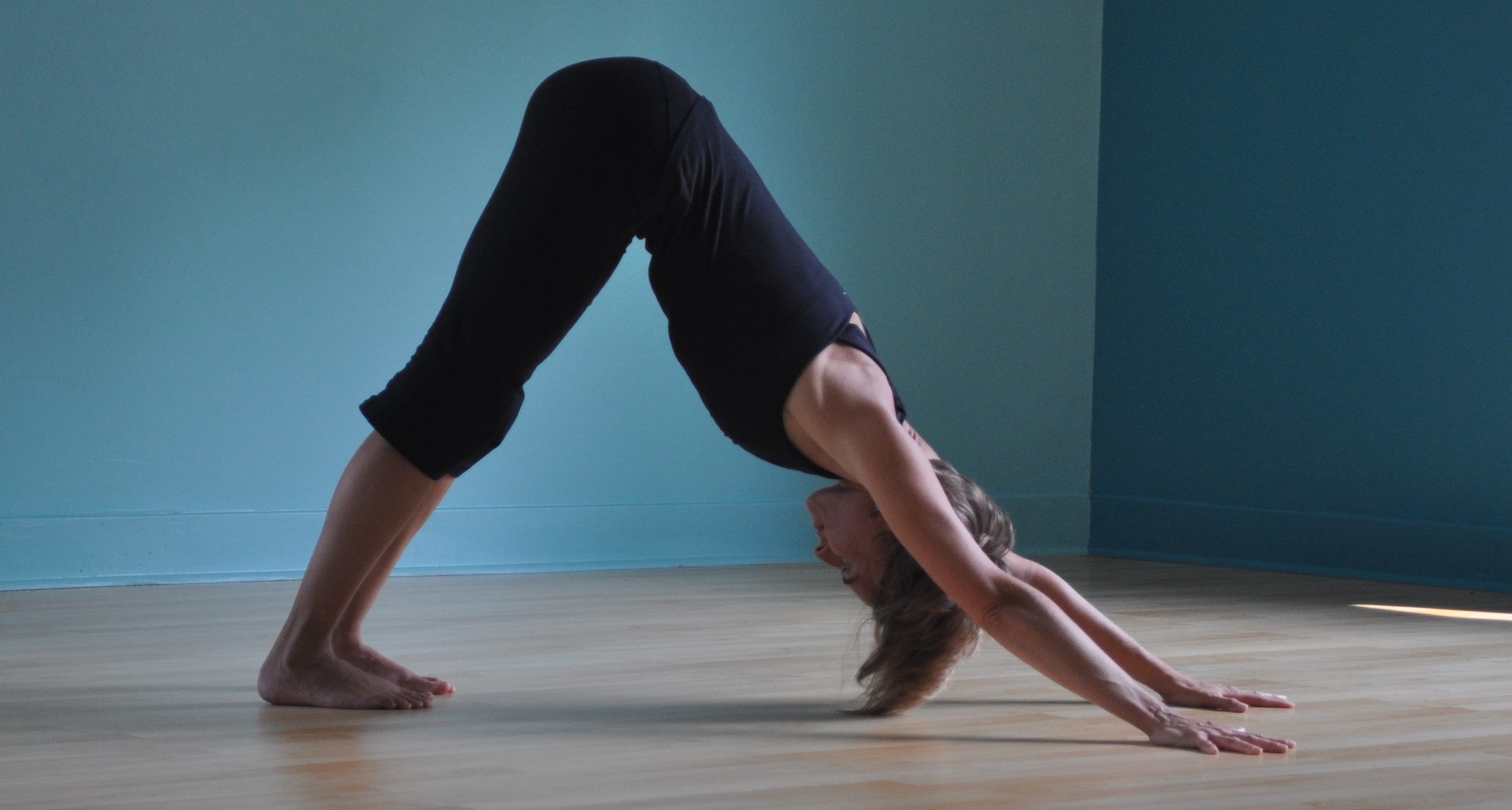
Start on hands and knees with your hands under your shoulders. Tuck your toes, press into your hands and lift your hips up and back so that your body forms an upside-down V. Keep your knees slightly bent if your hamstrings are tight, push the floor away and let your head hang between your arms. Hold for about five breaths, then lower your knees slowly. This stretches the backs of the legs and the shoulders. If you have wrist pain, high blood pressure or an eye condition such as glaucoma, ask your doctor first, because NCCIH lists severe high blood pressure and glaucoma among the conditions that may call for changes to poses.

How do you do a seated twist?

The traditional twist, Bharadvajasana, starts from a kneeling position. A simpler version works in a chair. Sit tall on the front half of the chair with your feet flat on the floor. Place your right hand on the outside of your left knee, hold the back of the chair with your left hand and turn gently to the left, looking over your left shoulder. Keep your hips facing forward and your spine long. Hold for three to five breaths and repeat on the other side. The old version of this article said to do the twist once an hour if you have lower back pain. I have removed that advice, because there is no basis for it. A better habit is to get up and move often, in line with the Physical Activity Guidelines for Americans, which tell adults to sit less.

Where can you learn more?

Our post on basic yoga postures explains more poses, and yoga postures and styles gives an overview of the main styles. For a standing stretch that suits a desk break, try the triangle pose, and read what yoga is if you are just starting out. The photo below shows the downward-facing dog.

Yoga pose for computer users stretching back and hamstrings.

Adho mukha svanasana Yoga for Computer Users

Book: Yoga for Computer Users by Sandy Blaine
View this book on Amazon (affiliate link: we may earn a commission at no cost to you)

Antiaging Skin Care

by on Friday, March 11th, 2011

Antiaging skin care

Antiaging skin care is a very popular idea in today’s world. Everyone wants to slow down signs of aging using antiaging skin care routines (and many people get good results). However, antiaging skin care is not achieved with a magic potion. It is about discipline and about being proactive: it slows down the visible signs of aging. Here are a few tips for proactive antiaging skin care:

Healthy habits

1. Maintain good eating habits: a balanced diet is the key to a healthy metabolism. Eat plenty of fruits and vegetables; they are a good source of fibre and nutrients. Limit oily and fatty food; it is often low in nutrients and, eaten in excess, contributes to weight gain and other health problems.

2. Beat stress: this is one of the most important antiaging measures. Long-term stress affects sleep and overall health, and it shows in your skin. Sleep, exercise and a relaxing bath are all good ways of beating stress. Many people also find aromatherapy relaxing.

3. Drink enough water: antiaging skin care cannot get simpler than this. Water keeps your body working well; your kidneys use it to remove waste. How much you need depends on your size, activity and the climate, and there is no single amount that suits everyone.

4. Regular exercise is good for your skin as well as your body. Besides toning your muscles, it improves blood flow. Shower after exercise to wash off sweat and dirt.

Choosing and using products

5. Avoid harsh, chemical-based products on your skin. Natural skin care products are an option, but natural does not automatically mean gentle, so choose products that suit your skin, home made or commercial.

6. Do not overuse skin care products. Applying too much, or too often, can irritate your skin.

7. Do not ignore skin disorders; they can lead to lasting skin damage. Try an over-the-counter treatment, and if that does not help, visit a dermatologist and ask for advice.

8. Vitamin C based skin care products are a popular antiaging ingredient. However, they oxidise quickly, which makes them less effective and can irritate the skin. So store them properly. If the product turns yellowish brown, the vitamin C has oxidised and the product is no longer suitable for use.

9. Protect your skin against UV radiation: UV rays are the main cause of visible skin aging. So a broad-spectrum sunscreen should be part of your daily antiaging skin care routine.