Author Archive

A Low Cholesterol Diet Plan That Lasts: Targets, Foods and a Simple Weekly Template

by on Sunday, November 6th, 2011

The old version of this post said that high cholesterol is linked to a long list of diseases, that most people eat a diet high in saturated fat and “LDL,” and that a low-cholesterol diet plan should not be a fad. The advice to treat the diet as a long-term habit is good, but LDL is not a food, so I have rewritten the post to follow what health agencies actually recommend.

Why follow a low-cholesterol diet plan?

MedlinePlus explains that too much LDL (“bad”) cholesterol in the blood can build up on artery walls and raise your risk of coronary artery disease. The old post called heart disease the number one killer in the U.S., and that is still true: the CDC reports that heart disease was the leading cause of death in 2023. Food is one of the main things you can change. According to the National Heart, Lung, and Blood Institute, the Therapeutic Lifestyle Changes (TLC) and DASH eating plans can help you lower your LDL.

What does the TLC plan ask for?

The numbers from MedlinePlus are a good guide for a plan:

Get 25 to 35 percent of your daily calories from fat, with less than 7 percent from saturated fat (about 13 grams on a 2,000-calorie diet). Eat less than 200 milligrams of dietary cholesterol a day. Aim for 10 to 25 grams of soluble fiber. Include about 2 grams of plant stanols and sterols, omega-3 fish twice a week, and no more than 2,300 mg of sodium a day. Limiting salt will not lower cholesterol, but it lowers blood pressure and heart risk.

Which foods do the work?

The old post says that fiber “soaks up” cholesterol and carries it out of the body, and names apples, oranges, pears, oats and carrots. MedlinePlus describes it this way: soluble fiber helps prevent your digestive tract from absorbing cholesterol. Its list of high-fiber foods includes oatmeal and oat bran, apples, bananas, oranges, pears, prunes, kidney beans, lentils and chickpeas. Carrots are a healthy vegetable, but they are not on that list. Saturated fat, found in some meats, dairy products, baked goods and fried foods, raises LDL more than anything else in your diet, so swap it for unsaturated oils such as olive or canola oil. For specific meals, see how a good diet can lower cholesterol: one example day.

What could one week look like?

This is my own template, not a prescription, and portion sizes depend on your calorie needs. Start the day with oatmeal and fruit. For lunch, have lentil or bean soup with a salad. Eat fish such as salmon or canned tuna twice a week. Make vegetables half the dinner plate, and snack on an apple or a handful of nuts. Keep dessert occasional. The NHLBI recommends preparing foods with little or no salt and eating a variety of nuts. For a longer list of foods to choose, read how to lower cholesterol through diet.

Is diet enough?

Sometimes it is not. The NHLBI says that your provider may also recommend medicines, and that adults with overweight can lower LDL and raise HDL by losing 3 to 5 percent of their body weight. Genes, other conditions and some medicines also affect cholesterol. Ask for a test, and use understanding your cholesterol numbers to read the results. For more recipes and swaps, see MedlinePlus on lowering cholesterol with diet.

View this book on Amazon (affiliate link: we may earn a commission at no cost to you)
Personal Skin Care: A Simple Daily Routine

by on Friday, November 4th, 2011

Personal skin care is a process

We all understand the importance of personal skin care, but the advice on how to do it differs from person to person. Some people believe that going to the beauty parlour every other day is personal skin care. Others think it is just a matter of applying some cream or lotion every now and then. Some think it is something you do once a month or once a year, and still others spend all their time on it. In fact, personal skin care is not that complicated, and it is not that expensive either, considering how useful it is. It simply means following a routine for taking care of the needs of your skin.

Before you start a routine, you need to find out your skin type (oily, dry, sensitive, normal and so on) and choose the skin care products that suit it. You may have to experiment with a few products. Here is a routine that should work for most people with normal skin.

Step 1: Cleansing

The first step of any routine is cleansing. A cleanser contains three basic ingredients: oil, water and surfactants (wetting agents). The oil and surfactants lift dirt and oil from your skin, and the water rinses it away. You may have to try a couple of cleansers before you find the one that suits you best. Choose a soap-free cleanser and use lukewarm water, because water that is very hot or very cold can irritate your skin. Take care not to over-cleanse, which can damage your skin as well.

Step 2: Exfoliation

The second step is exfoliation. Your skin constantly removes dead cells and replaces them with new ones, and exfoliation simply helps with that process. A layer of dead skin cells on the surface can make your skin look dull and can keep products from reaching the fresh skin underneath, so removing it makes your other skin care products work better. Exfoliation usually comes after cleansing. As with every part of the routine, it matters how much you do. How often depends on your skin type and on the method you use: start gently, for example once a week, and the stronger the exfoliation, the less often it should be done. Dry or sensitive skin needs less. If your skin gets red or sore, cut back.

Step 3: Moisturizing

The next step is moisturizer, one of the most important parts of personal skin care. Even people with oily skin need it. A moisturizer helps seal moisture into your skin and can also draw some from the air. Too much can clog the pores and cause problems, so use a thin layer. It works best when applied to skin that is still slightly damp.

Step 4: Sunscreen

The last step is sunscreen. Many day-time moisturizers include UV protection, so you get two benefits in one. Use sun protection every day, whether it is sunny or cloudy. Look for a broad-spectrum sunscreen with SPF 30 or higher, and put on enough of it.

What works best for you depends on your skin type and on how much of each product you use, so adjust the routine as you learn. If you have a skin problem of any kind, talk to a dermatologist before you start using new personal skin care products.

A Short History of Yoga: From Ancient Texts to Hatha Classes and a Record Number of Americans

by on Thursday, October 27th, 2011

The old version of this post was only a few short paragraphs. It said yoga began in India 3,000 to 4,000 years ago, that it has never been a religion, that about 5 million people in the United States practice it, and that many health professionals feel it can be part of a treatment plan. This rewrite expands each claim and checks the numbers.

How old is yoga, and where did it begin?

The word comes from the Sanskrit for “to join” or “union,” as the old post says. Historians agree that yoga began in India, but they disagree about when. In their introduction to Roots of Yoga, Mallinson and Singleton write that systematic yoga techniques are hard to find in South Asian sources before about 500 BCE, and that popular claims that the oldest Vedic texts prove an ancient yoga practice are speculation. The 3,000 to 4,000 years in the old post is therefore an estimate that cannot be proved. A safer statement is that texts about yoga-like practices date from the first millennium BCE. Our post on Patanjali’s Yoga Sutras covers the best-known classical text.

What are the three parts of hatha yoga?

The old post says that hatha yoga, the kind you see in a gym or YMCA, has three parts: poses (asanas), breathing techniques and relaxation. That matches Harvard Health’s description of a typical class, which starts with breathing exercises, moves on to poses and ends with a final relaxation called savasana. Hatha texts themselves began to appear in the Middle Ages (historians place the first ones between roughly the ninth and eleventh centuries), and the Hatha Yoga Pradipika, written by Svatmarama in the 15th century, is the best known. If you want to know what a modern hatha class looks like, read what hatha yoga is.

Is yoga a religion?

The old post says that yoga has never been a religion. That is partly right. Yoga developed within Indian philosophical and religious traditions, including Hindu, Buddhist and Jain ones, and Britannica describes it as something that may be atheistic or theistic and can adopt different principles. In most American classes it is taught as exercise and relaxation, with some teachers adding chanting, meditation or philosophy. If you are unsure, ask the teacher what a class includes and whether you can skip any part you are not comfortable with.

How many Americans practice yoga?

The old figure of 5 million is out of date. According to the National Center for Complementary and Integrative Health, the share of U.S. adults who practiced yoga rose from 5.0 percent in 2002 to 15.8 percent in 2022, based on a national survey, which is roughly one adult in six. In 2012, 94 percent of adults who practiced it did so for wellness-related reasons. Our post on how yoga became popular in America tells that story.

Do health professionals recommend yoga?

The old post said that you may be given yoga postures by a physical therapist, and that many health professionals feel it can be part of a treatment plan. That is a fair statement if it is read carefully. The NCCIH says that research suggests yoga may help with stress, neck pain and some other problems, but the evidence is mixed in places, and it is not a replacement for medical care. Some therapists do use yoga-based movements, so ask your provider whether a gentle practice suits your condition. For the full picture, see yoga explained: what it is, who practices it and what the research supports.

View this book on Amazon (affiliate link: we may earn a commission at no cost to you)

Yoga for Stress: How It Works and Why So Many People Try It

by on Wednesday, October 19th, 2011

The old title of this post promised a “cure” for modern-day stresses. Yoga is not a cure for stress, and I have changed the headline. It can still be a helpful part of the way you manage stress, and many people take it up for just that reason. This article explains what yoga is, what the research says about stress, and how to start at home or in a class.

What is yoga?

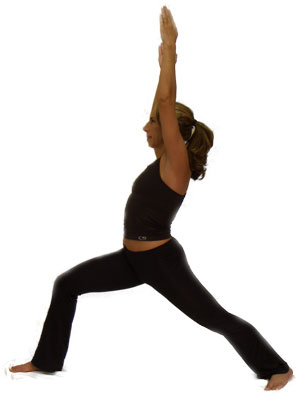
Yoga is an ancient practice that began in India. As the National Center for Complementary and Integrative Health (NCCIH) puts it, yoga as practiced in the United States typically emphasizes physical postures, breathing techniques and meditation. There are many styles. Hatha yoga, one of the best known in the West, focuses on postures that stretch and strengthen the body and build balance, flexibility, body awareness and concentration. Raja yoga is traditionally the yoga of meditation. Other forms, such as mantra yoga, use chanting. If you want a longer introduction, see what yoga is and yoga explained.

What does the research say about yoga and stress?

The National Center for Complementary and Integrative Health (NCCIH) reports that a 2020 review of 12 studies of yoga for stress management, with 672 healthy adults in total, found beneficial effects on perceived stress in all of the studies. It also says that some, but not all, studies of yoga for stress have shown improvements. So the picture is hopeful but mixed. Studies have also suggested possible benefits of yoga for mental and emotional health and for sleep. The differences from ordinary exercise are the attention to breathing and the meditative quality, and some people find those parts calm them more than a workout does. NCCIH adds that people with a stressful life should talk to a health professional if the stress does not go away.

Can children and families try it too?

Yes, with suitable adaptations. The old post suggested that when family members are quarreling, you invite them to stop what they are doing, raise their arms overhead, lean forward and breathe deeply. That is a reasonable calming break, though the research on yoga is mostly from adults. NCCIH says research suggests yoga may have several potential benefits for children. A 2020 review of 27 studies with 1,805 children and adolescents found reductions in anxiety or depression in 70 percent of the studies, but the quality of the studies was relatively weak and the results cannot be considered conclusive. Slow breathing is easy to teach and costs nothing, and any program for a child should be led by a qualified person.

How do you start?

Try a short routine at home or take a beginner class. Our guide to basic yoga postures shows simple poses, and the gentle morning routine is easy to follow. Before you start, read about warming up and listening to your body. Keep a few safety points in mind from NCCIH: yoga is generally safe for healthy people when done properly with a qualified instructor, injuries are usually sprains and strains, and beginners should avoid extreme practices such as headstands and forceful breathing. Pregnant women, older adults and people with health conditions should talk with their provider first.

Is yoga enough on its own?

No. Yoga is one tool among several. Sleep, regular physical activity, time with other people and a manageable workload all matter for stress, and so does professional help if you feel anxious or low for weeks. If you are in distress in the United States, you can call or text 988 at any time. For more ideas about slowing down, read about a mind and spirit practice that you can fit into everyday life.

Cure for Modern Day Stresses

Cure for Modern Day Stresses

Seven Fitness Tips for Women: Set Realistic Goals, Build Strength and Stay Motivated

by on Saturday, October 15th, 2011

The old version of this post, “7 Tips for Fitness Women,” was a list that opened by asking whether you would like to be an effective fitness woman. The tips were sensible, but the text was hard to follow. This rewrite keeps the seven ideas, checks them against the national guidelines and explains each one more clearly.

1. Does the program fit you?

Every woman is different, and a program that suits one person may be wrong for another. The old post advises consulting a qualified trainer to be sure that the plan will not hurt you. If you have a medical condition, are pregnant or have not been active, check with your health care provider first. MedlinePlus says the same: check with your provider before you start, especially if you have trouble moving or balancing or worry that exercise might not be safe.

2. Are your goals realistic?

Changing your shape in a month is not realistic, and the old post warned that false hopes lead to frustration and injury. Think about what blocks you in daily life, such as time or energy, then set goals and timelines you can meet. The Physical Activity Guidelines for Americans give a starting target: 150 to 300 minutes of moderate aerobic activity a week, plus muscle-strengthening activities on two or more days.

3. Which exercises give the most return?

The old post suggests building muscle with multi-joint exercises, such as squats, rows and presses, and with weights, and says more muscle means you burn more calories. Muscle-strengthening exercise is recommended for all adults, and multi-joint moves save time because they train several muscle groups at once. Extra muscle does raise the calories you burn at rest, but only a little (this is general physiology, not a figure from the sources above), so treat strength training as a way to get stronger and healthier, not a fast route to weight loss. If you are unsure how to do an exercise, ask a trainer to show you. Our guide to full-body workouts shows how to train in two or three sessions a week.

4. Are you making the work harder over time?

Repeating the same exercises with the same weight will give less and less. MedlinePlus’s exercise basics advise building up slowly and challenging yourself by lifting slightly heavier weights, adding minutes or increasing your pace. The old post suggested keeping a daily log so you can see how far you have come, which also helps confidence. A simple notebook or phone note is enough. Increase gradually to protect your joints.

5. How should you perform each repetition?

The old post recommends sets of around 10 repetitions, with as little momentum as possible. Slow, controlled movement makes the muscles do the work instead of swinging. A good check is to see whether you are swinging the weight to lift it. Ten is a starting point, not a rule. What counts is that the last few repetitions feel challenging and your form stays good. For a deeper look at reps and sets, read muscle myths: what the evidence says about reps and sets.

6. Do you vary your workout?

Changing your exercises, goals or sets every so often keeps the work interesting and prevents boredom, as the old post says. MedlinePlus also recommends mixing up your workouts to keep things interesting and help prevent injuries or burnout. Include aerobic, strength, balance and flexibility work, and read preventing sports injuries for habits that keep you training.

7. How do you stay motivated?

The old post says that people stay motivated when they feel a sense of control and ownership, and that you should be consistent and learn to appreciate your own efforts. That fits MedlinePlus’s advice to show up regularly, even for short sessions. There is no program that is best for everybody; pick one you enjoy and adjust as you go. For health habits beyond exercise, such as screenings and sleep, see women’s health habits that matter.

View this book on Amazon (affiliate link: we may earn a commission at no cost to you)