The Seven Chakras: Names, Locations and Meanings

The seven chakras
What are chakras?
The word chakra is Sanskrit for “wheel” or “disc”. In yoga, Hinduism and Tantric Buddhism, chakras are described as energy centers in the body, lined up along the spine from its base to the crown of the head. Encyclopaedia Britannica describes them as focal points where psychic forces and bodily functions meet. They belong to a spiritual tradition and are not organs that you can see on a scan. Some texts speak of thousands of chakras, but seven main ones get most of the attention in modern yoga.
Each chakra is linked to an area of the body, a set of emotional and behavioral themes, a color and many other qualities, such as identity, goals and rights. Colors and meanings differ a little between traditions, and the rainbow scheme is the one most common today.
The lower chakras: root, sacral and solar plexus
Muladhara, the root chakra, is at the base of the spine. It is linked to stability, security and survival, and its color is usually red.
Svadhisthana, the sacral chakra, is in the lower abdomen, the pelvic area and the lower back and hips. It is linked to emotions, creativity and pleasure, and is usually shown in orange.
Manipura, the solar plexus chakra, is in the upper abdomen. It is linked to confidence, willpower and personal power, and is usually yellow.
The upper chakras: heart, throat, brow and crown
Anahata, the heart chakra, is at the center of the chest. It is linked to love, compassion and connection with others, and is usually green.
Vishuddha, the throat chakra, is in the throat. It is linked to communication and self-expression, and is usually blue.
Ajna, the brow chakra, sits between the eyebrows and is often called the third eye. It is linked to intuition and insight, and is usually indigo.
Sahasrara, the crown chakra, is at the top of the head. It is linked to spiritual awareness and a sense of connection with something larger than yourself, and is usually violet or white.
What is kundalini?
In the tradition, a spiritual energy called kundalini lies dormant at the base of the spine, in the root chakra. It is often pictured as a coiled snake. Yogic practices aim to raise it step by step through the chakras until it reaches the crown, which is the stage of self-illumination. The chakras are described as valves or pumps that regulate the flow of this energy through your system.
How does yoga come into it?
Teachers of this tradition say that the movements, postures and breathing of yoga, together with meditation, can help you focus on each center in turn and bring a sense of balance to your mind, body and spirit. These are traditional beliefs, and there is no scientific proof that chakras exist as physical structures. You can read more about how people work with them, and what research says, in our companion post on chakras and yoga. If you are new to yoga, start with our post on what yoga is and learn about the history in the origins of yoga.
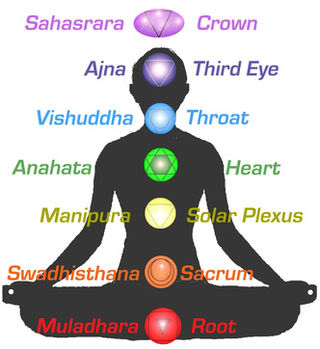
The seven chakras
Leave a Reply