Author Archive

Hypnosis Weight Loss: What It Can and Cannot Do

by on Monday, June 20th, 2011

Hypnosis weight loss: what it can and cannot do

Controlling your weight and avoiding weight gain as you get older are important ways to prevent a number of weight-related health problems.

Indeed, if you are well above a healthy weight, you are at higher risk of a range of potentially serious conditions, including diabetes, high blood pressure, coronary heart disease, endometrial cancer, obstructive sleep apnea and breast cancer.

What’s more, many people who are overweight tend to avoid exercise, and that avoidance only adds to the price paid for the extra pounds.

If you have a sedentary lifestyle and are overweight, you are at a higher risk of cardiovascular disease and other health problems. And if you already have a medical condition such as high cholesterol, being overweight puts you at higher risk of complications.

The good news is that even modest weight loss can improve your health significantly. Losing 5 to 10% of your body weight can help lower blood pressure, cholesterol, triglycerides and blood sugar levels.

Where hypnosis fits in

Today there are many methods that can help people lose weight. One of them is hypnosis.

However, there are many misconceptions about hypnosis for weight loss. Because it does not involve drugs, medication or surgery, many people think that losing weight through hypnosis must be one of the safest and easiest weight loss programs.

To understand more about hypnosis and what it can do for your weight, here are some facts that will give you an idea of what to expect.

1. Hypnosis is generally safe, but it should be done properly and by someone trained in it.

Even if many people understand that hypnosis does not pose a direct danger to their health, it is still important to know that the person doing it is properly qualified and knows what to consider beforehand. Hypnosis may not be suitable for people with some mental health conditions, so check with your doctor first if this applies to you.

2. Hypnosis alone cannot remove excess fat from the body or make someone lose weight.

Most health experts agree that hypnosis should only be one part of a complete weight loss program. It should never be used as the only method.

Moreover, one session of hypnosis will have little effect on a person’s weight. Studies suggest that hypnosis combined with other methods, such as cognitive behavioural therapy and diet advice, gives a modest extra benefit compared with those methods alone. This is because hypnosis is simply a deeply relaxed and focused state of mind, in which you are still in control of your own body.

How hypnosis works

3. Hypnosis is a way of reaching the subconscious mind. In a hypnotic state, the mind is more responsive to suggestion because of its focused concentration.

However, this does not mean that hypnosis can simply reprogram a person’s mind.

In reality, hypnosis ranges from simple self-hypnosis to sessions led by a professional hypnotherapist. It should not be seen as paranormal or magical in its effects.

In short, people should be aware that hypnosis is not a weight loss treatment on its own. It is more of a support for other methods.

Therefore, it should be combined with a healthy diet and regular exercise to help people lose excess weight. Used this way, it may help some people stick to their plan with a more relaxed and positive state of mind.

As they say, a healthy mind lives in a healthy body.

View this book on Amazon (affiliate link: we may earn a commission at no cost to you)
Weight Loss Tips: Pointers on Losing Weight Safely

by on Friday, June 17th, 2011

Pointers on losing weight safely

People who want to lose weight usually start by cutting down on the amount of food they eat. This can work, but it is not the best approach. Depending on how much you cut, it can even be dangerous to your health. So how do you lose weight effectively and safely? Here are some points to consider:

Beware of crash diets

Many people think that cutting calories sharply is the quickest way to shed unwanted fat, probably because of all the advertising for low-calorie foods and drinks. What people do not realize is that eating far fewer calories than your body needs is risky. Very low calorie intake can lead to fatigue, dizziness and nutrient shortages, and it may weaken the immune system. Your body may also slow down the way it uses energy.

Crash diets also cost you muscle, not only fat. People who go back to their old eating habits afterwards often gain back some or all of the weight they lost, and the regained weight is mostly fat. Since fat takes up more space than muscle of the same weight, they can end up weighing the same as before but looking bulkier. When losing weight, you should aim to lose excess body fat only and keep your muscle.

A better way is to eat regular meals of sensible size. Some people find that smaller meals at more frequent intervals help them feel full, which is fine, but the total amount and quality of food matter more than how often you eat.

Eat properly

Once you have given up crash dieting, you should still pay attention to what you eat. Variety is important, so that you get the nutrients you need. It is healthier to eat food that is baked, steamed or grilled rather than fried. It is also important to include plenty of fiber in the diet, and to drink enough water.

Build up your muscle mass

Muscle burns calories when it works, and a little even at rest. Muscle tissue uses more energy at rest than fat tissue does, although the difference is modest. Unlike fat, which just sits around the waist and hangs under the arms, muscle is active tissue. With this in mind, you can support weight loss by building muscle: the more muscle you have, the less room there is for fat. You can build muscle with resistance exercises.

Add aerobic exercise

Aerobic exercise improves your heart and lung fitness and burns calories, which helps to reduce excess body fat, while resistance training is what mainly builds muscle. Regular aerobic activity also keeps your body using energy efficiently over the long term, so the benefit lasts if you keep doing it.

Be careful with an extra “push”

Some people believe that spicy food and caffeine help with weight loss. Any effect is small, and too much caffeine can cause jitters, poor sleep and a racing heart, so they may do more harm than good. Food supplements sold for weight loss are not a safe shortcut either. Most have little or no proof that they work, and some are unsafe, so talk to your doctor before trying one.

On taking diet pills

Over-the-counter diet pills may affect how much weight you lose and how well you keep it off, but the effect is usually small and they can have side effects. You must follow the instructions on the package exactly. It is also wise to consult your doctor before trying them, to find out which type, if any, is best for you.

Losing weight does not have to mean terrible suffering. It is about starting a fuller, healthier life, where you do not feel bad about how you look or about what you cannot do. It may take a few adjustments and some discomfort, but the aim is a healthier life, not punishment. Besides fat, what have you got to lose?

Can You Lower Cholesterol Naturally? What Works, What Is Unproven and When to Add Medicine

by on Thursday, June 9th, 2011

The old version of this post said that high cholesterol is a growing problem, that heart disease is “highly preventable,” and that lowering cholesterol naturally is possible through diet, exercise and supplements. That is partly true, and this rewrite keeps the question and checks each part against reliable sources.

Why does cholesterol matter?

MedlinePlus explains that too much cholesterol in your blood can stick to the walls of your arteries and narrow or even block them, which raises your risk of coronary artery disease and other heart diseases. According to the CDC’s National Center for Health Statistics, heart disease was the leading cause of death in the United States in 2023, with 680,981 deaths, or 22.0 percent of all deaths. The old post said heart disease is “highly preventable.” A healthy lifestyle lowers your risk, but it cannot guarantee that you will avoid it, especially if your genes or other conditions are involved.

Which natural steps have good evidence?

The National Heart, Lung, and Blood Institute lists these lifestyle changes for lowering LDL (“bad”) cholesterol:

Eat heart-healthy foods, such as in the Therapeutic Lifestyle Changes (TLC) and DASH eating plans, which limit saturated fat and favor whole grains, fruits, vegetables and nuts. Get regular physical activity, which can lower LDL and triglycerides and raise HDL (“good”) cholesterol. Aim for a healthy weight, because losing only 3 to 5 percent of your body weight can lower LDL and raise HDL. Manage stress, quit smoking, sleep 7 to 9 hours a night and limit alcohol. This matches the old post’s advice on diet, exercise and quitting smoking, and adds weight, sleep and stress.

What about the foods the old post named?

The old post recommended soy products, vegetables, fruit and high-fiber foods. MedlinePlus agrees that soluble fiber helps prevent your digestive tract from absorbing cholesterol, and suggests 10 to 25 grams a day from foods such as oatmeal, oat bran, apples, oranges, pears, beans and lentils. It also recommends keeping saturated fat below 7 percent of your daily calories. For a food-by-food guide, see eating to lower cholesterol with oats, fruit, beans and healthy fats.

Do niacin and lecithin work?

The old post said B-complex vitamins, niacin in particular, and lecithin can lower cholesterol. This is the weakest part of the old text. Niacin in doses high enough to affect cholesterol is a drug-level dose and should be used only under a doctor’s supervision, and I could not find solid evidence that lecithin supplements lower cholesterol. Our post on cholesterol, vitamins and drugs looks at the evidence for both.

When is medicine needed?

The old post said drugs are mostly for high-risk patients. The NHLBI puts it differently: your provider may recommend lifestyle changes and medicines, and the plan depends on your cholesterol levels, your risk of heart disease, other medical conditions and your lifestyle. Statins are the most common medicine and, according to the NHLBI, lower the risk of heart attack and stroke in people with high LDL cholesterol. If you have a strong family history of high cholesterol, lifestyle changes may not be enough on their own. Never stop a prescribed medicine without talking to your provider.

What should you do next?

Ask for a cholesterol test and learn what the numbers mean in understanding your cholesterol numbers. Add exercise and cholesterol to your routine, and use the CDC’s data brief on U.S. deaths in 2023 as a reminder of why it matters.

Eating Right for Your Cholesterol: Cut Back on Fried Food and Cook Smarter

by on Monday, June 6th, 2011

Big portions, fried snacks and fast food have changed how many of us eat, and our arteries pay for it. Too much saturated fat and too many calories lead to high LDL cholesterol, weight gain, high blood pressure and a higher chance of heart disease and stroke. The encouraging part is that most of this can be changed in your own kitchen, one habit at a time.

Do diet and exercise both matter?

Yes, and they work best together. Eating better helps your cholesterol, and regular activity helps it too: the National Heart, Lung, and Blood Institute notes that physical activity can lower LDL and triglycerides and raise HDL, the “good” cholesterol. Adults need at least 150 minutes of moderate activity a week, such as brisk walking, and our post on exercise and cholesterol explains how activity changes your numbers. If you have been inactive or have a heart condition, ask your doctor what level is right for you, and build up gradually. See the NHLBI page on treating high cholesterol for more.

Why eat less fried food?

Fried food, such as chips, fries, fried chicken and fried fish, soaks up oil and adds many calories. The oil itself, if it comes from plants, contains no cholesterol, but the batter, the animal fat and the extra calories all work against you, and frying often goes together with saturated fat. Cooking methods that need little fat are better: boiling, steaming, baking, braising and grilling. Grilled food is fine too. Our post on foods to avoid to lower cholesterol lists more of the usual culprits.

What about meat and poultry?

Fatty meat and the skin on poultry are rich in saturated fat. If you eat meat, choose lean cuts, trim visible fat and take the skin off chicken or turkey. Even better, eat meat less often and replace it with beans, lentils, tofu or fish. Plant foods contain no cholesterol, and they add fiber.

Why are vegetables so useful?

Vegetables have no cholesterol and almost no fat, and they are a good source of fiber, vitamins and minerals. Eat them raw, steamed or lightly sautéed rather than fried or covered in a rich sauce, and try to fill half your plate with them. Oils and creamy dressings can turn a healthy salad into a high-fat dish, so use them sparingly.

Does portion size matter?

It does. Eating a bit less at each meal, and cutting out extra snacks, helps you lose weight, which is closely tied to cholesterol levels. If you do snack, reach for fruit, a few nuts or raw vegetables. For carbohydrates, such as rice, cereal and bread, choose whole-grain versions like brown rice and whole-wheat bread, which give you more fiber than refined ones.

What is a good way to start?

Do not try to change everything in one week. Pick one habit, for example a baked rather than fried dinner three nights a week, and keep it up for a month before you add another. See our example of a day of eating to lower cholesterol to see how this can look in real life, and talk to your doctor or a dietitian if your cholesterol is high. Regular checkups are the only way to know if your changes are working.

The Seven Chakras: Names, Locations and Meanings

by on Sunday, May 29th, 2011

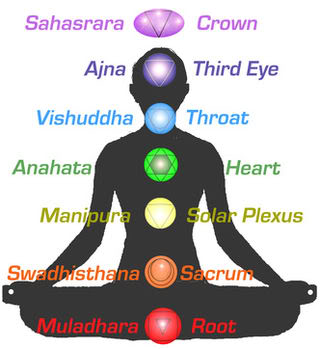
The seven chakras

What are chakras?

The word chakra is Sanskrit for “wheel” or “disc”. In yoga, Hinduism and Tantric Buddhism, chakras are described as energy centers in the body, lined up along the spine from its base to the crown of the head. Encyclopaedia Britannica describes them as focal points where psychic forces and bodily functions meet. They belong to a spiritual tradition and are not organs that you can see on a scan. Some texts speak of thousands of chakras, but seven main ones get most of the attention in modern yoga.

Each chakra is linked to an area of the body, a set of emotional and behavioral themes, a color and many other qualities, such as identity, goals and rights. Colors and meanings differ a little between traditions, and the rainbow scheme is the one most common today.

The lower chakras: root, sacral and solar plexus

Muladhara, the root chakra, is at the base of the spine. It is linked to stability, security and survival, and its color is usually red.

Svadhisthana, the sacral chakra, is in the lower abdomen, the pelvic area and the lower back and hips. It is linked to emotions, creativity and pleasure, and is usually shown in orange.

Manipura, the solar plexus chakra, is in the upper abdomen. It is linked to confidence, willpower and personal power, and is usually yellow.

The upper chakras: heart, throat, brow and crown

Anahata, the heart chakra, is at the center of the chest. It is linked to love, compassion and connection with others, and is usually green.

Vishuddha, the throat chakra, is in the throat. It is linked to communication and self-expression, and is usually blue.

Ajna, the brow chakra, sits between the eyebrows and is often called the third eye. It is linked to intuition and insight, and is usually indigo.

Sahasrara, the crown chakra, is at the top of the head. It is linked to spiritual awareness and a sense of connection with something larger than yourself, and is usually violet or white.

What is kundalini?

In the tradition, a spiritual energy called kundalini lies dormant at the base of the spine, in the root chakra. It is often pictured as a coiled snake. Yogic practices aim to raise it step by step through the chakras until it reaches the crown, which is the stage of self-illumination. The chakras are described as valves or pumps that regulate the flow of this energy through your system.

How does yoga come into it?

Teachers of this tradition say that the movements, postures and breathing of yoga, together with meditation, can help you focus on each center in turn and bring a sense of balance to your mind, body and spirit. These are traditional beliefs, and there is no scientific proof that chakras exist as physical structures. You can read more about how people work with them, and what research says, in our companion post on chakras and yoga. If you are new to yoga, start with our post on what yoga is and learn about the history in the origins of yoga.

The seven chakras

The seven chakras